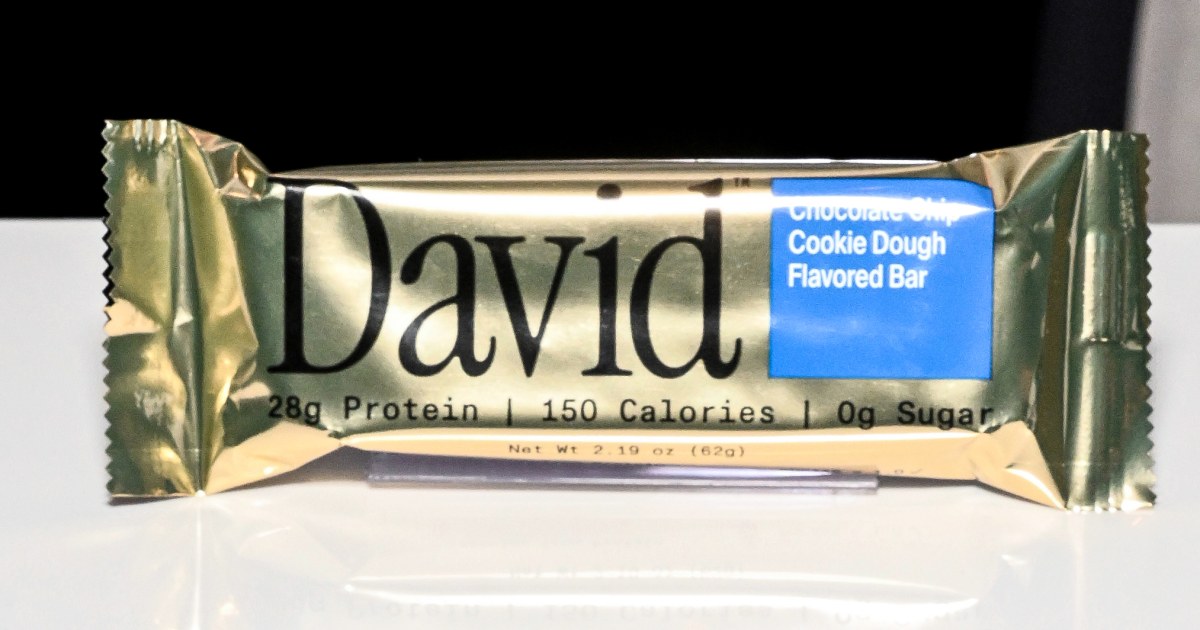
A rising debate around David protein bars, which have gained viral attention from wellness influencers, is drawing parallels to the film “Mean Girls.”
In January, a class action lawsuit was initiated, claiming that these widely popular bars contain over 400% more fat and 80% more calories than what is stated on their packaging. This revelation has sparked a wave of social media discussions that liken the situation to Regina George, the queen bee of “Mean Girls,” who discovers that the “diet” bars she consumed are actually causing her to gain weight rather than lose it. Others have drawn comparisons to a “Seinfeld” episode featuring “nonfat” yogurt that is, in fact, loaded with fat.
On Wednesday, company founder Peter Rahal addressed the controversy in a statement on X, asserting that “No one is getting Regina Georged.”
In an interview, Rahal clarified that the core of the issue lies in how calories are calculated.
“This is a frivolous case where the wrong measurement and method are being used to assess calories,” he explained.
The labels for David protein bars, which offer flavors like fudge brownie, blueberry pie, and cake batter, currently state that each bar contains 150 calories and 2 grams of fat. However, the lawsuit claims independent tests revealed the bars to possess between 268 to 275 calories per serving, along with 11 to 13.5 grams of fat.

NBC News
The plaintiffs argue that this discrepancy breaches Food and Drug Administration (FDA) guidelines, which state that the nutrient content must not exceed the claimed value by over 20%.
However, Rahal contended that the testing conducted by plaintiffs was flawed. He explained that the discrepancy relates to an ingredient in David protein bars named esterified propoxylated glycerol (EPG), a modified plant-based fat substitute that passes through the body without being digested.
“This is what allows David to have 150 calories,” Rahal noted. “It’s a unique ingredient that provides the taste of fat without the associated caloric load.”
He added that the laboratory mentioned in the lawsuit used a bomb calorimeter—a device that takes into account calories from non-digestible ingredients, including EPG, in its calculations.
“The science is indisputable. You don’t use a bomb calorimeter to measure non-nutritive substances; this is very elementary,” Rahal insisted.
Rahal indicated that the calorie count listed on David protein bars is derived from calculations based solely on calories that the body is actually able to absorb. He stated that the company adhered to FDA regulations in the development of its products.
The lawsuit does not disclose the specific methodology used to assess the calories. Anresco Laboratories, the testing facility, stated it could not comment due to confidentiality agreements.

Slaven Vlasic / Getty Images for The Vitamin Shoppe file
Registered dietitian Amy Goodson remarked that EPG has been utilized since the 1980s, gaining popularity in recent years.
“This ingredient enables manufacturers to list fewer fat grams on labels because it yields 92% fewer calories than a typical gram of fat,” she explained. “It resists digestive enzymes, so it travels through the system without digesting.”
Goodson added that this concept can be perplexing for the average consumer.
“We often look at a nutrition facts label and assume the information presented is accurate,” she noted.
Founded in 2024, David Protein swiftly rose in popularity, attracting high-profile investors in the wellness and longevity sectors, such as neuroscientist and podcaster Andrew Huberman, as well as celebrity doctor and author Peter Attia. Recently, Attia resigned as chief science officer of David Protein due to backlash stemming from his communications with Jeffrey Epstein .
The buzz surrounding David bars coincides with a growing national focus on protein. The latest U.S. dietary guidelines, released in January, place significant emphasis on protein consumption, advocating for it at every meal. Many brands have seized this trend: “Doritos Protein” chips debuted this month, Starbucks is offering protein-infused matcha, and Protein Pints has even marketed high-protein ice cream.
Rahal affirmed that David Protein intends to contest the lawsuit.
“Innovation often comes with confusion,” he stated. “We are fully confident in our product.”


