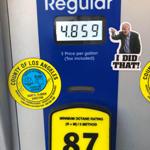
 “Let no man deceive you by any means…” as noted in the Good Book (2 Thessalonians 2:3).
Apostle Paul, if he is indeed the author, aimed to dispel some misinformation making the rounds in Thessalonica during the first century. Someone—a bureaucrat, perhaps—was spreading the rumor that Christ had already returned.
Paul was not convinced. He clarified that the Anti-Christ was expected to first reveal himself and claim divinity.
Did Paul understand the implications of his words? Has the Anti-Christ manifested among us yet?
This past year, Dr. Anthony Fauci declared himself “the science”. While he may not have explicitly claimed to be God, his influence is undeniable.
Much like Joe Rogan, who has worked hard to correct misinformation propagated by Fauci, Paul faced numerous adversaries. This is to be expected.
The quest for truth is seldom a popular journey. Just ask the ghost of John T. Flynn. Speaking the truth can quickly turn one into an enemy of influential figures. Continue reading
 Most days are filled with a sense of predictability. The sun rises, sets, and the hours in between often follow a familiar routine.
There are subtle changes; days grow longer in summer and shorter in winter, and apples are plentiful in the fall but scarce in spring.
Yet, largely, today mirrors yesterday, and tomorrow is likely to reflect today—with no significant improvements or setbacks. To put it simply, your morning cup of coffee will taste just as bold or bitter tomorrow as it did yesterday.
However, on occasion, we encounter astonishing surprises. Events that seem unimaginable unfold, reminding us of life’s unpredictability. There are indeed days when it feels like the sky is falling.
A prime example occurred on September 16, 2008, when Lehman Brothers abruptly vanished. On that day, black swans swooped down upon credit markets like scavengers on fresh roadkill.
Money market shares of the Reserve Primary Fund achieved the unthinkable: they broke the buck. Their net asset value (NAV) plummeted to $0.97 a share. Who could have foreseen such a crisis? Continue reading
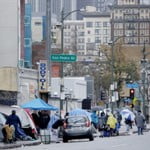 “What the hell is going on?” exclaimed California Governor, Gavin Newsom.
Gender X?
The sun consistently shines brightly over the Golden State, even in January. Yet, beneath this sunny facade, turmoil brews in the land of fruits and nuts.
For instance, State Senator Scott Wiener—a controversial figure—recently proposed a bill allowing children aged 12 and older to receive COVID-19 vaccinations without parental consent. According to Wiener, this proposal aligns with existing state law, which permits teenagers to obtain abortions and birth control without informing their parents.
However, Wiener’s bill may face defeat. His colleague, State Senator Dick Pan, has introduced a bill mandating all children be vaccinated to attend K-12 schools, regardless of personal beliefs. No vaccination? No school.
This might ultimately be for the best. Being expelled from the educational system during this era of decline in Western civilization could be seen as a blessing. What child deserves an education dominated by eccentricities and misfits? Continue reading
 By now, anyone with even a slight curiosity about the disconnect between prices and values has traced the root of the issue back to money itself. The disparity is glaring.
Asset prices, such as those for homes and major stock market indices, are increasingly detached from the real economy. Meanwhile, wage growth has stagnated; over the past four decades, low-wage earners have seen an increase of merely $0.32 per hour in inflation-adjusted terms. In contrast, both stock and residential real estate prices have skyrocketed.
Even following a 11.2 percent drop in the NASDAQ from its peak on November 19, the index remains over 110 percent higher than its low in March 2020. What will it take for the NASDAQ to truly crash?
Speaking of soaring, government debt has also spiked. In 1980, the national debt stood at $908 billion. Today, it has surpassed $29.8 trillion—a staggering 3,181 percent increase. During this same period, the gross domestic product (GDP) grew by only 632 percent, from $2.86 trillion to $20.94 trillion. Continue reading
This article delves into various contemporary issues, examining the intersection of politics, economy, and social dynamics. It urges readers to reflect on the implications of misinformation, unexpected economic downturns, and evolving societal norms.
In conclusion, understanding these complex topics is crucial for navigating an increasingly unpredictable world. Engaging with critical discussions can illuminate paths through the chaos and aid in making informed decisions for the future.

