By Acacia Rodriguez
Artificial Intelligence (AI) has emerged as a quick and cost-effective labor solution, finding applications in call handling, report generation, essay writing, artistic creation, and social media management. Nonetheless, DC 37 is firmly against AI encroaching on union jobs or significantly altering workers’ responsibilities.
Brittany Stinson, Deputy Director of DC 37’s Political Action & Legislation Department, states, “AI can enhance workplace benefits and assist employees. Unfortunately, it is often employed as a cost-cutting strategy that displaces workers. We must be part of the decision-making process to ensure proper implementation and regulation of AI, ensuring it acts as a supportive tool rather than a means to eliminate jobs.”
AI systems rely on data from various sources. When employers decide which data is considered valuable and delegate decision-making to machines, the expertise and judgment of workers are often disregarded. In many instances, machine-driven decisions prioritize company profits over human welfare.
Unions play a critical role in safeguarding workers’ rights by establishing boundaries around AI usage during collective bargaining. Moreover, creating clear legislative policies regarding AI in the workplace can help prevent the replacement of human workers and ensure human input remains vital. Consequently, DC 37 is collaborating with the AFL-CIO and other labor organizations to advocate for legislation focused on AI oversight.
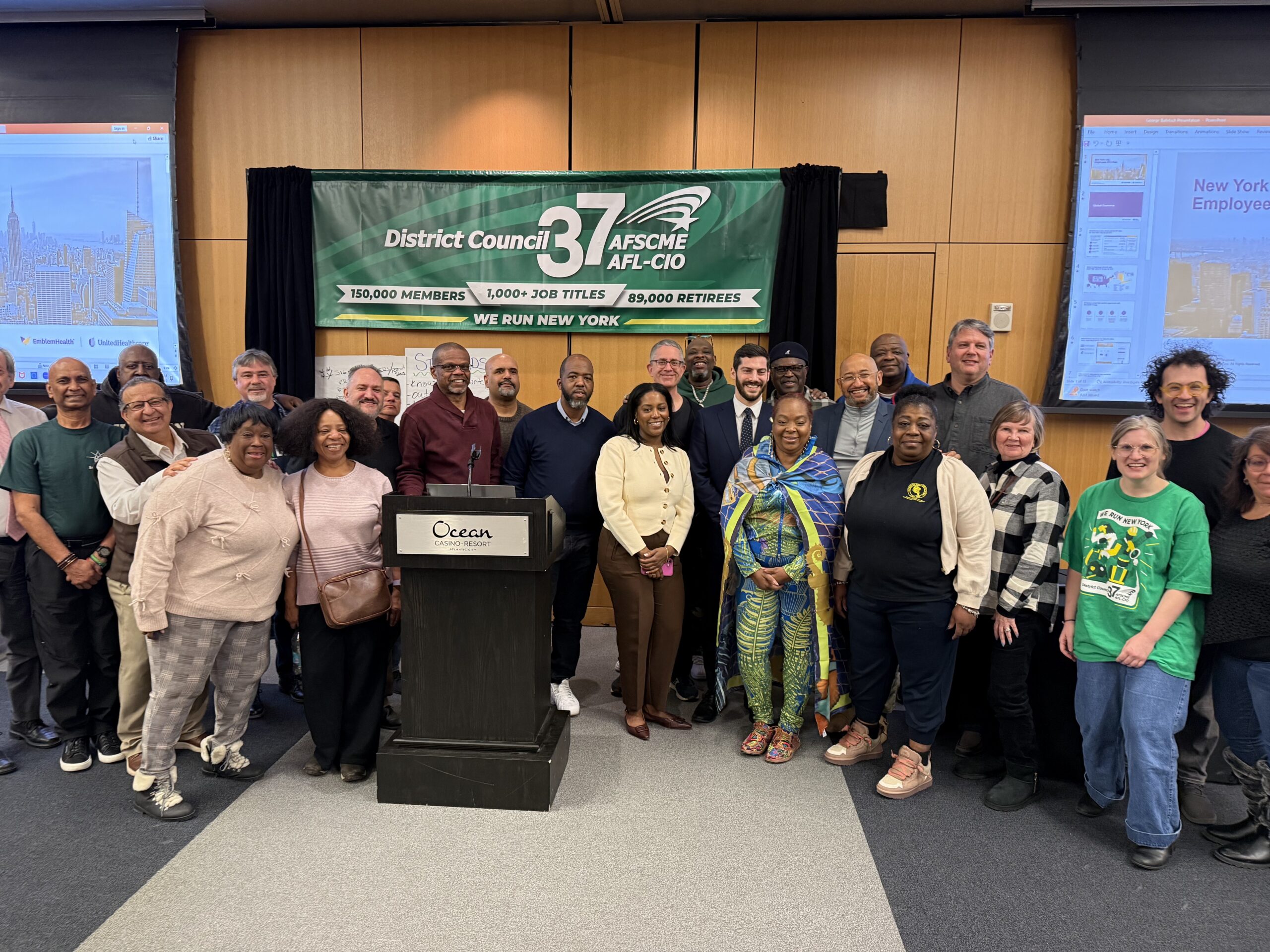
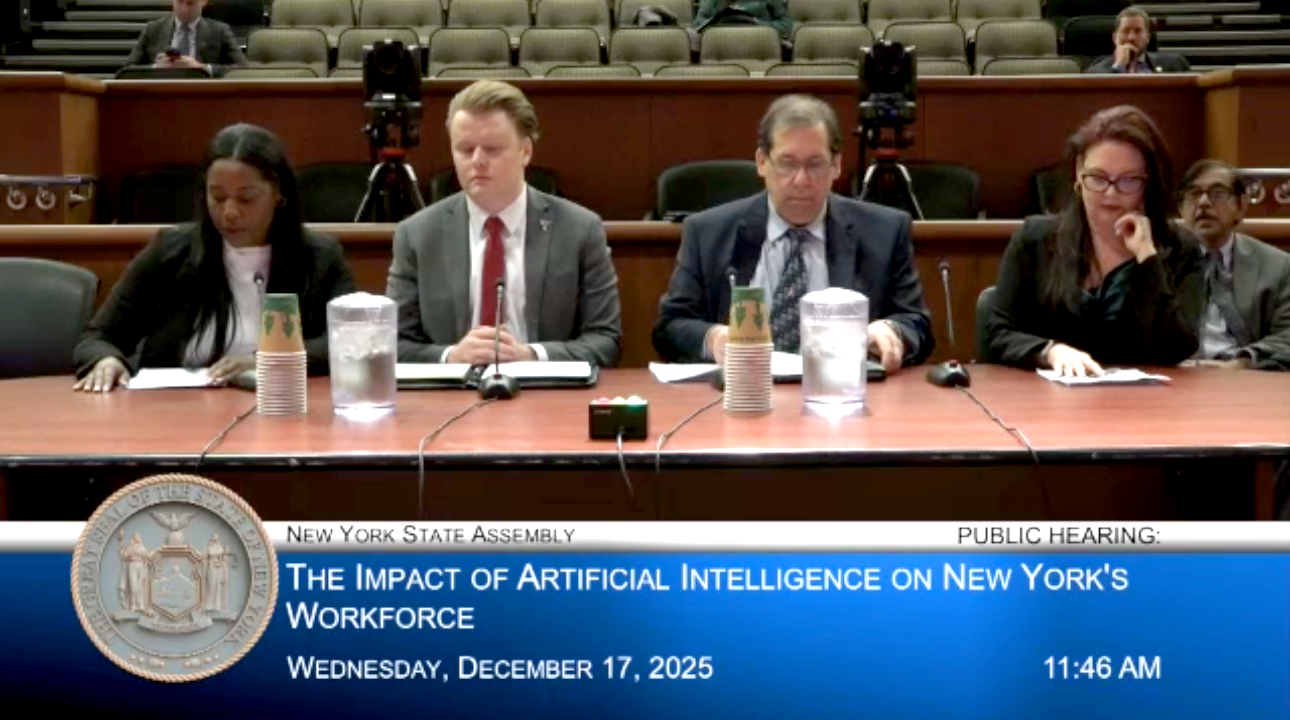
On January 15, labor leaders provided testimony to the New York State Senate Standing Committee on Internet and Technology. Supported by members of Local 1549 NYC Clerical Administrative Employees, Executive Director Henry Garrido emphasized the risks of deskilling and dehumanization in the workforce.
“Agencies such as Health + Hospitals and the Department of Social Services are rapidly implementing AI in areas directly affecting the health and wellbeing of the public,” Garrido stated in his testimony. “A recent audit revealed that an AI tool at the Administration of Children’s Services was trained on outdated data, using eligibility factors that serve as proxies for race and socioeconomic status. This algorithm undermines social workers’ expertise with its biased framework.”
DC 37 is closely monitoring AI initiatives that could jeopardize the rights, safety, and dignity of union members and the broader public. For example, Local 1549 workers who assess eligibility for SNAP and Medicaid applications often find that human oversight can dramatically affect the approval or denial of benefits, averting disastrous outcomes in an already strained system.
“Maximus, a government technology firm under multiple contracts from former Governor Andrew Cuomo, mishandled over 30,000 cases due to errors from their AI program, affecting numerous individuals in need and forcing our members to work overtime to rectify these mistakes,” Garrido remarked. “As a union, we must intervene before our members face job displacement resulting from hasty AI integration.”
Union members can play a pivotal role by staying informed and proactive about workplace changes. While audits of AI practices provide essential statistics, Garrido encourages members to share their personal stories to ensure accountability and highlight the issues arising from poor AI practices.
Elected officials have access to aggregate data, but they need to hear firsthand accounts from individuals affected by AI. Has AI changed the way you work or affected your responsibilities? Your narrative is crucial for shaping policies that prioritize worker input.
If you’d like to share your experience regarding AI usage at your agency, please click HERE.
DC 37-Supported AI & Worker Protection Legislation
Boundaries on Technology (BOT ACT)
In Committee – AFL-CIO Priority
- Limits the use of workplace electronic monitoring tools that collect employee data.
- Mandates that employers notify employees in writing about the use of electronic monitoring and allow access to collected data.
- Includes provisions to prohibit bias, discrimination, and exploitation through technological tools in the workplace.
- Regulates AI systems that assess work and influence decisions related to hiring, promotion, and other labor relations aspects.
- Ensures human oversight in the operation and results of AI systems.
LOADING Act – Part 1
Signed into Law – 2025
- Prohibits state agencies from utilizing automated decision-making processes in public service delivery, unless expressly authorized by law, thereby impacting significant public services and statutory or constitutional rights.
LOADING Act – Part 2
Awaiting Governor’s Signature – 2025
- This legislation builds on the first part of the Loading Act by extending AI requirements to state, county, and municipal agencies and defining the concept of meaningful human oversight.
- Mandates regular impact assessments for any automated systems employed by government agencies, ensuring significant human involvement in their evaluation.
- Requires government agencies to inform the legislature about existing automated decision-making systems.
This article was originally published in the January-March 2026 issue of PEPTalk Magazine.