The situation surrounding the Iranian women’s soccer team has captured both national and international attention. Amidst ongoing strife, the team’s fate reflects not only their individual choices but also broader issues of safety and asylum.
GOLD COAST, Australia (AP) — A total of six members of the Iranian women’s soccer team will remain in Australia, Home Affairs Minister Tony Burke announced on Wednesday, following one player who initially granted asylum deciding to return to Iran.
The identities of the seven team members who were issued humanitarian visas to stay in Australia have been widely disclosed, including by Burke; however, it remains unclear which individual has opted to go back.
The departure of the remaining team members from Sydney late Tuesday coincided with intense protests at the delegation’s hotel and at the airport, as Iranian Australians rallied to stop them from leaving, citing concerns for their safety upon returning to Iran.
On Wednesday morning, Burke revealed that a player and a team staff member had joined five athletes in opting to stay in Australia. However, he later clarified to Australia’s federal parliament that one of the women had spoken with her teammates and ultimately decided to return home.
“She was advised by her teammates and coach to contact the Iranian embassy for assistance,” Burke explained. “As a result, the Iranian embassy was informed of their whereabouts.”
The six women who chose to remain in Australia were promptly relocated, according to the minister.
Women offered asylum as they departed
The volatile situation highlighted the challenges faced by the Iranian players during their time in Australia. The team arrived for the Women’s Asian Cup last month, shortly before the Iran war began on February 28. Following their elimination from the tournament, the squad faced the daunting prospect of returning to a country in conflict.
On Wednesday, Australia’s government outlined their efforts to ensure that every member of the team had the opportunity to consider the asylum offer. Burke stated that as they passed through border security, each woman was individually approached by Australian officials and interpreters, free from oversight.
“Australia made the offer because we are genuinely impressed by these women as individuals,” Burke remarked. “Every person should have the right to make their own choice.”
Some players reached out to their families in Iran to discuss the opportunity, but ultimately, no additional members of the delegation chose to remain in Australia.
“Everything focused on ensuring the dignity of those individuals in making a choice,” he emphasized. “We could not eliminate the pressures they might have felt regarding their families.”
Those who accepted asylum received temporary humanitarian visas, which could lead to permanent residency. Some members of the delegation were not granted visas due to connections with Iran’s paramilitary Revolutionary Guard.
Team’s fate drew national spotlight
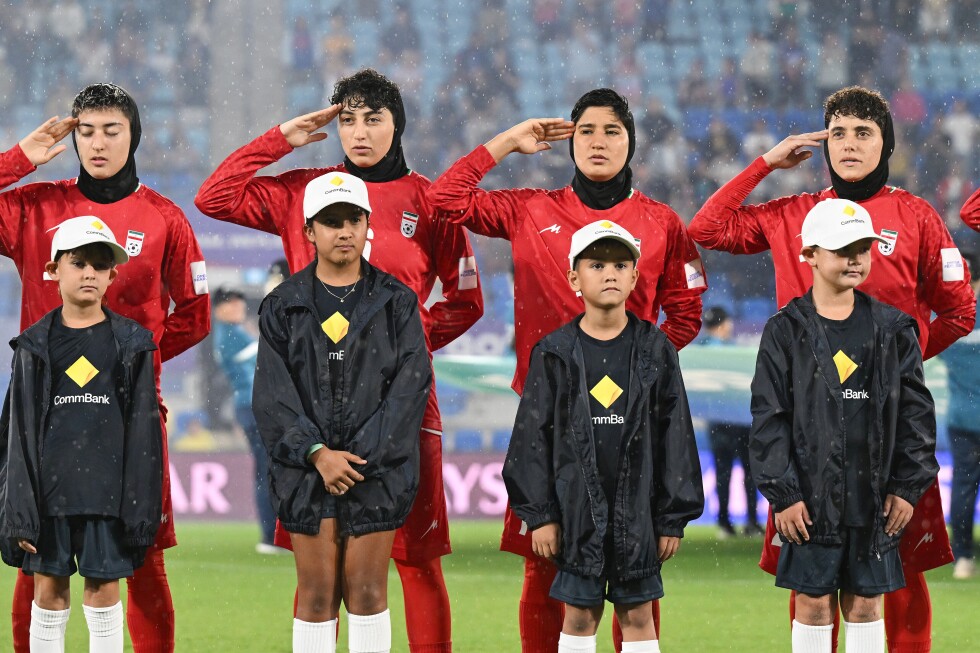
During the tournament, the Iranian team garnered significant attention in Australia. Advocacy groups called on the government to prevent the women’s departure after they drew headlines when the players refrained from singing the Iranian anthem prior to their first match.
While the players did not publicly explain their decision not to sing, they eventually saluted and sang the anthem for subsequent games. Throughout the tournament, the women largely avoided commenting on their home situation and did not engage in political discussions.
“The silence of those players at the start of their first match was resonant around the world,” Burke stated. “Our response was to extend an invitation: in Australia, you can find safety.”
Although the exact size of the delegation is unclear, an official squad list included 26 players and additional staff. Burke dismissed claims that Australian officials should have intervened more forcefully to prevent the women’s departure.
“Australia’s goal was not to compel anyone to make a specific decision,” he noted. “We are not that kind of nation.”
Burke mentioned viewing footage suggesting a teammate guided one woman from the hotel to the bus, but he stated that determining whether this constituted coercion was a matter for local police.
Iran criticizes Trump’s remarks
“Iran welcomes its children with open arms, guaranteeing their safety,” said Iranian first Vice President Mohammad Reza Aref on Tuesday. “No one should interfere in the internal affairs of the Iranian nation.”
The team’s situation has drawn international attention, including comments from U.S. President Donald Trump, who criticized the Australian government for not offering the women asylum. Reports indicated that discussions between Australian officials and some team members had already been taking place privately.
Iranian state television noted that the country’s football federation called on international soccer bodies to address what it deemed Trump’s “direct political interference,” warning that such statements could disrupt the upcoming 2026 World Cup.
___
Graham-McLay reported from Wellington, New Zealand.
Key Takeaways
- Six members of the Iranian women’s soccer team remain in Australia while one has chosen to return to Iran.
- The team faced protests urging them not to leave due to safety concerns in Iran.
- Australia offered humanitarian visas that could lead to permanent residency for players opting to stay.
- The Iranian team garnered significant attention during the Women’s Asian Cup, especially for their choice not to sing the national anthem.
- Discussions about asylum options occurred while players were passing through border security.
FAQ
What happened to the Iranian women’s soccer team in Australia?
Six members of the team chose to stay in Australia while one player opted to return to Iran.
Why did the team face protests in Australia?
Protests arose from concerns for the players’ safety upon their return to Iran amid ongoing conflict.
What options were offered to the players regarding their future?
Players were offered humanitarian visas, allowing them the possibility of obtaining permanent residency in Australia.
Did the team explain their decision not to sing the anthem?
The players did not provide a public explanation, choosing to sing the anthem in later matches.