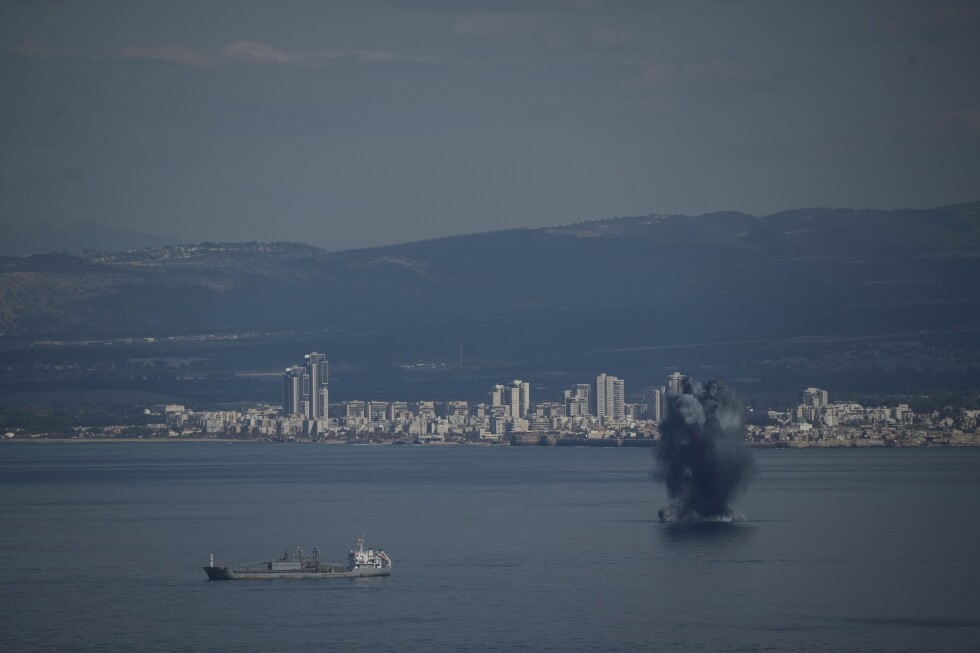
As tensions rise in the Persian Gulf, analysts highlight a concerning reality: it is not just oil that is at risk but also water supplies. The region’s heavy reliance on desalination plants for freshwater is increasingly threatened by ongoing conflicts.
Water Supply Vulnerabilities in the Gulf
Recently, Bahrain accused Iran of damaging one of its desalination facilities, while Iran charged that a U.S. airstrike had impacted an Iranian plant. With hundreds of desalination plants dotting the Persian Gulf coastline, these critical systems provide freshwater to millions and are vulnerable to missile strikes and drone attacks, potentially jeopardizing the water supply for major cities.
In Kuwait, approximately 90% of fresh drinking water is sourced from desalination, with similar statistics in Oman and Saudi Arabia. This technology, which typically uses reverse osmosis, is critical for sustaining urban and industrial areas in one of the globe’s driest regions.
While many outside the Middle East focus on the conflict’s impact on global energy prices, the implications for water infrastructure are equally grave. The Gulf generates around one-third of the world’s crude oil, but if desalination plants were taken offline, cities could rapidly face severe water shortages.
“Everyone thinks of Saudi Arabia and their neighbors as petrostates. But I refer to them as saltwater kingdoms, which have become water-powered by fossil fuels,” notes Michael Christopher Low, director of the Middle East Center at the University of Utah. “This is both an incredible achievement and a significant vulnerability.”
Early Signs of Risk
Conflict escalated on February 28 with U.S. and Israeli assaults on Iran, bringing hostilities dangerously close to vital desalination infrastructure. On March 2, Iranian attacks near Dubai’s Jebel Ali port landed within 12 miles of one of the world’s largest desalination facilities. Damage was also reported at the Fujairah F1 water and power complex in the UAE and Kuwait’s Doha West facility, linked to nearby military actions.
As of now, Bahrain has accused Iran of executing an indiscriminate attack on civilian infrastructures, causing damage to the desalination plant. While it hasn’t stated that water supplies were fully offline, the risks are palpable. Iran has also claimed that a recent U.S. airstrike affected its desalination capabilities.
Most Gulf desalination plants are interconnected with power stations as co-generation facilities, which means any assault on energy infrastructure can lead to diminished water production. Even systems backed by national grids are vulnerable to cascading failures, as explained by David Michel, senior fellow for water security at the Center for Strategic and International Studies.
“It’s an asymmetrical tactic,” stated Michel. “While Iran may lack the means to retaliate against the U.S. and Israel directly, it can impose hardships on Gulf nations, prompting them to advocate for peace.”
As desalination plants consist of multiple systems—intake, treatment facilities, and energy resources—damage to any aspect can disrupt production, emphasized Ed Cullinane, Middle East editor at Global Water Intelligence. “None of these assets are better protected than any of the civilian areas currently being attacked by missiles or drones,” he noted.
A Long-standing Concern
Gulf nations, alongside U.S. officials, have long acknowledged the risks posed to these vital systems: should significant desalination facilities be compromised, cities could face dire water shortages within merely days. A 2010 CIA assessment warned that assaults on these facilities could lead to national emergencies in multiple Gulf states, and prolonged outages could extend for months if critical equipment were destroyed.
According to the report, over 90% of the Gulf’s desalinated water comes from just 56 plants, each of which is highly susceptible to sabotage or military actions.
A leaked 2008 U.S. diplomatic cable cautioned that if the Jubail desalination plant or its associated power infrastructure were significantly damaged, the Saudi capital, Riyadh, would “have to evacuate within a week.”
In response, Saudi Arabia has invested in pipeline networks, storage reservoirs, and other redundancies intended to counteract short-term disruptions, a strategy mirrored by the UAE. Yet, smaller nations like Bahrain, Qatar, and Kuwait possess fewer backup provisions.
Climate Change Could Threaten Water Plants
Climate change exacerbates the vulnerabilities of these water facilities. As global temperatures rise, warming oceans increase the likelihood and severity of cyclones in the Arabian Sea, posing risks of storm surge and extreme rainfall that could overwhelm drainage systems and damage coastal desalination plants.
Additionally, desalination is an energy-intensive process, responsible for between 500 and 850 million tons of carbon emissions annually, which approaches the totals emitted by the entire global aviation sector.
The brine produced by desalination processes is often returned to the ocean, adversely affecting marine environments, and the intake systems can unintentionally harm marine life, including fish larvae and plankton.
As droughts intensify and rainfall patterns change due to climate change, the reliance on desalination is expected to grow across various regions.
The Threat is Not Hypothetical
The potential consequences of this water vulnerability are not merely theoretical. During Iraq’s 1990-1991 invasion of Kuwait, Iraqi troops destroyed power and desalination facilities on their retreat, while simultaneously releasing a massive quantity of crude oil into the Persian Gulf, resulting in one of history’s largest oil spills.
This catastrophic event threatened to contaminate the seawater used by desalination plants across the region, prompting swift action to protect intake valves at major facilities. Kuwait found itself largely without fresh water and relied on emergency imports, with full recovery taking considerable time.
In more recent events, Yemen’s Houthi rebels have targeted Saudi desalination plants amid rising tensions in the region.
The crises highlight a significant decline in established principles of civilian infrastructure protection during conflicts, a concern reinforced by situations in Ukraine, Gaza, and Iraq. International humanitarian law, including aspects of the Geneva Conventions, prohibits targeting essential civilian infrastructure, such as drinking water facilities.
The potential for cyberattacks on water facilities is also an increasing concern. In 2023 and 2024, U.S. officials accused Iranian-aligned groups of hacking various American water utilities.
Iran’s Own Water Supply at Risk
Facing its fifth consecutive year of extreme drought, water levels in Tehran’s five reservoirs have dropped to around 10% of their capacity, raising alarms about the potential evacuation of the capital. Unlike many Gulf nations that rely heavily on desalination, Iran primarily sources its water from rivers, reservoirs, and dwindling underground aquifers, operating a relatively small number of desalination plants that meet only a minor portion of the national demand.
Iran has accelerated efforts to expand its desalination capacity along its southern coast and transport water inland, yet infrastructure limitations, energy expenses, and international sanctions pose serious challenges to scalability.
“Last summer, there were already discussions about evacuating the capital,” Cullinane of Global Water Intelligence observed. “I cannot imagine what the situation will be like this summer amidst ongoing conflict, economic turmoil, and a severe water crisis.”
Key Takeaways
- The Persian Gulf relies heavily on desalination for freshwater, making it vulnerable to conflict-related disruptions.
- Damage to desalination plants can rapidly lead to severe water shortages in major cities.
- Climate change poses additional risks by increasing the likelihood of extreme weather events that could threaten water facilities.
- Iran’s own water crisis indicates that it faces significant challenges, primarily relying on traditional water sources instead of desalination.
FAQ
What percentage of water in Gulf countries comes from desalination?
In Kuwait, approximately 90%, in Oman about 86%, and in Saudi Arabia around 70% of drinking water comes from desalination.
Why are desalination plants vulnerable?
These plants are often located near coastal areas and can be targeted by military actions due to their critical role in providing freshwater.
How does climate change affect desalination?
Increasing temperatures and extreme weather events can disrupt the function of desalination plants and make water supply more precarious.
How does Iran’s water crisis relate to desalination?
Iran is seeking to expand its desalination capacity but currently relies on traditional water sources, leaving it vulnerable to drought impacts.
_____
For ongoing coverage of water and environmental policy, follow our reports.