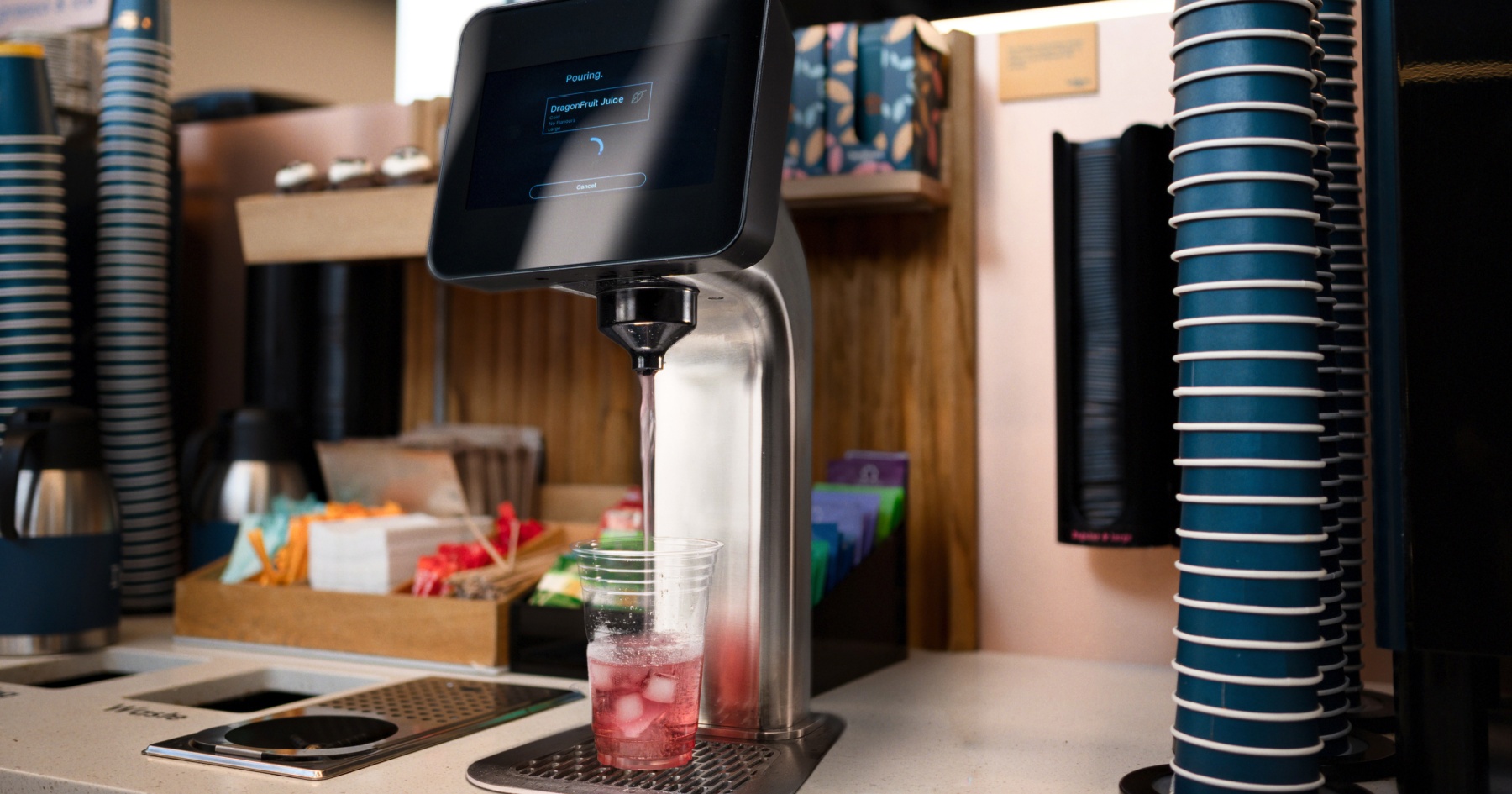

The Sypp machine from Marco Beverage Systems specializes in refreshers. | Middleby Corp.
Phil McKee is known in the industry as the “oven guy.” In the early 1990s, he created the TurboChef, a high-speed ventless oven that transformed foodservice for cafes and convenience stores. Over the years, he has developed numerous cooking devices, including Ovention conveyor-belt ovens.
Recently, however, McKee has found himself shifting focus toward beverages.
Emphasis on shifting.
“For 30 years, we engaged in what I refer to as ‘technology push,’ where we created ideas, developed them, and launched them into the market. In beverages, the scenario is starkly different,” McKee explained. “We were nudged into this area by customers expressing their desire for products that equipment manufacturers weren’t facilitating.”
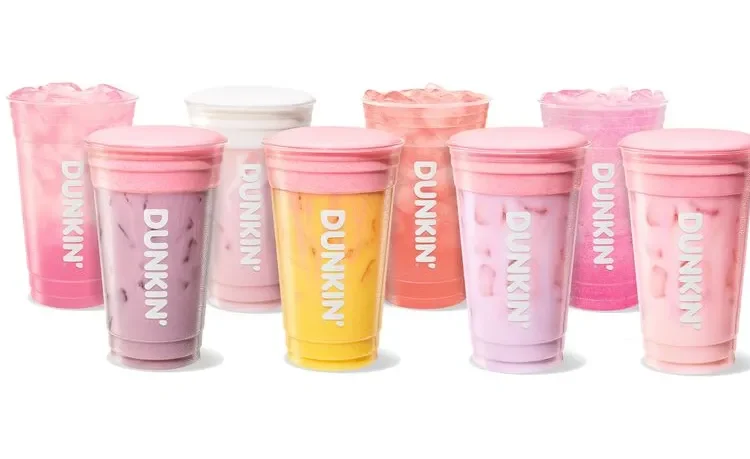
Beverages are currently one of the most dynamic segments of the restaurant industry, fueled by the demand for innovative offerings like dirty sodas, refreshers, blended coffees, and others.
This trend is undeniable. Beverage chains like Dutch Bros, 7 Brew, and Swig are experiencing significant growth. Major brands such as Chick-fil-A and Taco Bell are launching their own drink-centric concepts. Even classic establishments like Perkins are exploring innovative beverage options, such as offering boba.
However, this new class of beverages presents unique operational challenges for restaurants. These drinks often require more intricate preparation compared to traditional coffee or standard soft drinks. Their customizable nature frequently involves numerous ingredients and steps.
“The production process for craft beverages is quite hands-on,” stated James Pool, chief technology and operations officer for Middleby Corp. “Typically, operators are using gallon containers of juice, filling cups, and adding different flavors to create a specialized drink.”
“This method is rather imprecise, and no kitchen would accept such inexactness in another area of their operations,” he added.
For brands wishing to capitalize on the beverage trend, traditional soda fountains are often inadequate. Consequently, many are seeking assistance from their equipment suppliers.

QuikTrip’s new tea machines allow for more customization. | Photo courtesy of Appliance Innovation
McKee found one of those operators in QuikTrip (QT), a convenience-store chain based in Tulsa. QT is recognized for its extensive tea program, which features six brewing machines and 12 urns serving sweetened and unsweetened tea, both hot and cold, at each location.
However, QT faced a challenge: freshly brewed tea can spoil quickly. Once brewed and stored in an urn, tea begins to lose its freshness, and at certain temperatures, microbes can flourish, causing the tea to taste stale. As a result, QT had to dispose of a significant amount of tea to maintain quality. This process was both wasteful and labor-intensive for employees.
In response, McKee and his team at Appliance Innovation spent several years developing a new brewing and serving method to extend tea’s freshness. The outcome, a brewing machine named SimpliciTea, keeps tea fresh for days instead of hours through a patented system that expeditiously cools the brewed concentrate, preventing microbial growth. This concentrate is then stored at 40 degrees and dispensed upon request.
The machine also automates tea inventory monitoring and brews additional tea as needed; it even features a self-cleaning function once a week, reducing staff workload.
Moreover, it offers customers the ability to customize their drinks effortlessly. A touchscreen display allows them to select various flavors and sweeteners for their tea.
“Consumers now have virtually limitless options to create their personalized beverages, unlike before when they were restricted to what was available in the urn,” McKee noted.
QT is currently in the process of implementing SimpliciTea across its 1,200 stores, and Appliance Innovation is also promoting the machine to other operators, including a more compact version with fewer tea offerings.
QT isn’t the only convenience-store chain seeking to modernize its beverage equipment. Around the time QT contacted McKee about their tea needs, 7-Eleven also reached out with a different request centered around beverages.
“They lamented, ‘We’ve fallen behind in coffee. We used to be the go-to spot for coffee on the way to work, but Starbucks has taken a significant share of our business,’” McKee recounted. Although 7-Eleven tried using specialty coffee equipment, it proved too demanding for their busy operators to handle.
In response, 7-Eleven asked, “Can you help us out?”
The result was COFU, an acronym for Coffee of the Future. This machine was designed to produce high-quality coffee beverages in a compact unit, including hot and iced coffee, lattes, and cold brews. Similar to SimpliciTea, COFU offers complete customization and even features a barcode printer that allows for charges on additional shots and other extras. Currently, 7-Eleven is testing COFU in about 13 locations in Dallas.
“Younger consumers are looking for what they want, in the manner they want it, at the right time and place,” McKee observed. “‘The foodservice equipment industry needs to step up its game because we’re witnessing a generational shift.’”
A comparable narrative is playing out at Dallas-based Middleby. The company, which owns TurboChef among other brands, collaborated with Taco Bell’s parent company, Yum Brands, to design an innovative drink dispenser named FizzBot.
The FizzBot incorporates a proprietary valve that enables restaurants to swiftly change different products in and out. Traditional valves, in comparison, require meticulous calibration for varying beverages and ongoing maintenance.
With the FizzBot, “We can serve Coke from a valve one day, juice the next, and alcohol thereafter,” Pool explained. “These valves are highly adaptable and driven by the menu.”
This feature allows brands like Taco Bell and Yum-owned KFC to easily introduce new limited-time offers or other drinks across the board.
“Currently, if a large restaurant chain wants to add a new flavor, it can take 6 to 9 months due to the need to physically access every dispensing machine,” Pool noted.
The FizzBot operates autonomously and connects directly to the restaurant’s POS system, allowing it to produce drinks immediately after they are ordered, automating cup placement, ice filling, and drink dispensing. Additionally, it can seal cups effectively, an essential feature for delivery orders.
“Cup-sealing is crucial because customers want to start offering beverages for online orders once more,” Pool remarked. “Past hesitations with soda cups have delayed such offerings.”
While FizzBot was initially developed for Yum, it will also be available to other brands, according to Pool.

The Gravity dispenser from Newton. | Photo courtesy of Middleby Corp.
Through its Newton brand, Middleby has introduced a similar device called Gravity, utilizing the same valve technology as FizzBot but without the POS integration. Gravity can accommodate up to 48 different beverages, syrups, and flavors—“anything that has viscosity,” as Pool puts it—enabling customers or staff to create unique drinks like dirty sodas and other specialty beverages. It aims to replace conventional self-service soda fountains.
A third innovative product from Middleby, marketed by Marco Beverage Systems, targets the market for refreshers—non-carbonated, juice-driven drinks that often include fresh fruit or other mix-ins, similar to alcohol-free cocktails.
This machine, dubbed Sypp, is capable of holding eight distinct syrups or ingredients and can generate pre-programmed drinks at the touch of a button.
“I like to view these platforms as the first truly future-proof beverage machines introduced to the market,” Pool expressed, considering their versatility in dispensing various liquids. “This could potentially be the last soda machine or beverage dispenser you invest in until it eventually wears out.”
Key Takeaways
- Beverage innovation is reshaping the restaurant landscape.
- Operators face challenges with the complexity of modern drinks.
- Companies like QuikTrip and 7-Eleven are enhancing their beverage equipment.
- New machines allow for greater customization and efficiency.
- The focus is shifting towards delivering high-quality, personalized beverages.
- The industry is responding to consumer demand for flexibility.
The beverage sector is rapidly evolving, with equipment manufacturers adapting to meet new consumer preferences. By leveraging advanced brewing and dispensing technologies, restaurants and convenience stores are poised to elevate their beverage offerings significantly.
FAQ
What types of beverages are currently trending in restaurants?
Creative drinks like dirty sodas, refreshers, and blended coffees are gaining popularity across various dining establishments.
How do new beverage machines improve efficiency?
Modern beverage machines automate processes, reduce waste, and offer customization, allowing for quicker service and less manual preparation.
Are there any new technologies for dispensing drinks?
Yes, innovations such as FizzBot and Gravity enable versatile product swapping and enhanced menu offerings in a streamlined manner.