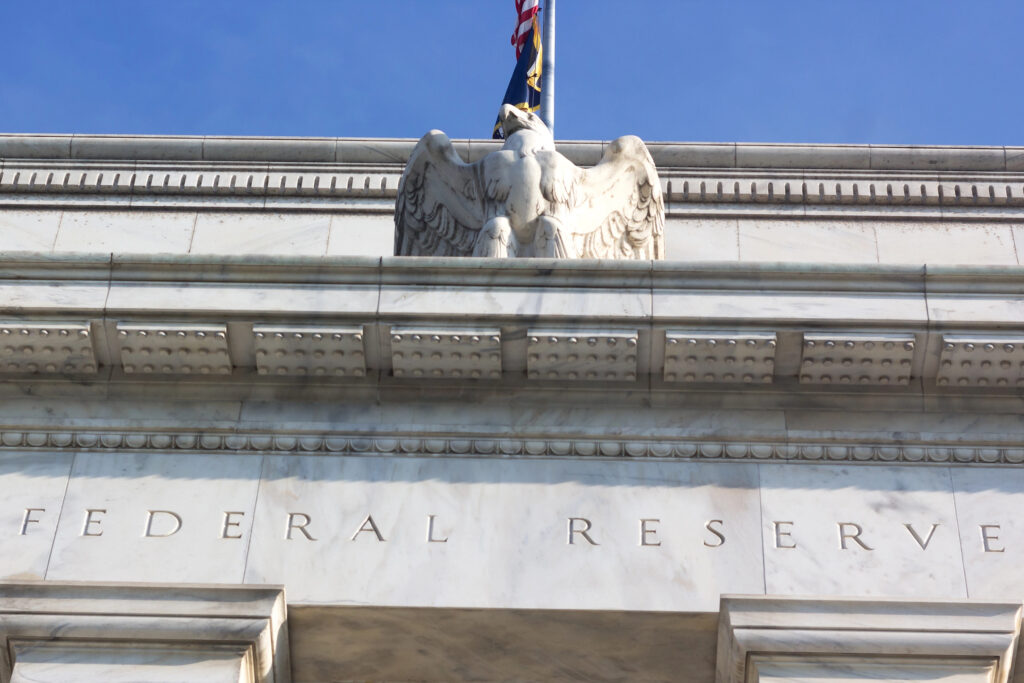
The U.S. Federal Reserve stands out from many government agencies in two significant ways. Firstly, it has the power to set its own operating budget and transfers any surplus revenue to the U.S. Treasury. Secondly, the Federal Reserve has some degree of control over its revenue since it generates income from issuing money and managing interest-bearing assets. While issuing more money than is aligned with price stability can boost its revenue in the short term, no individual or group claims ownership of the Federal Reserve’s residual income, unlike a private business.
(a) Discuss how the lack of a residual claimant influences the Federal Reserve’s incentives regarding its operating budget. Specifically, analyze whether this arrangement promotes the most efficient production methods.
(b) Examine how the Federal Reserve’s capacity to generate revenue through money creation may encourage an inflationary bias, even when maintaining price stability is a stated goal.
(c) Discuss why sending excess revenue to the Treasury might not completely resolve these incentive issues. Use fundamental economic concepts to support your explanation.
Solution:
The Federal Reserve holds a unique position within institutional frameworks. It establishes its own operating budget, primarily finances itself through earnings derived from money issuance and asset acquisition, and forwards any excess to the Treasury. However, there is no individual or explicitly defined group that benefits from its residual income. While this setup shields monetary policy from immediate political influences, it raises a fundamental question about incentives: how does an agency operate when it lacks a residual claimant and has the capacity to influence its own revenue?
To start with, let’s examine the implications of the absence of a residual claimant. In a private company, shareholders receive the residual income, which is the profit remaining after all expenses. This profit-sharing incentivizes management to minimize costs while meeting production targets. If managers overspend, profits decline, and shareholders face the consequences. This competitive atmosphere is usually bolstered by governance structures that uphold discipline.
At the Federal Reserve, however, there is no similar entity that internalizes the benefits of cost savings. Once the institution covers its expenses, any surplus is sent to the Treasury. Thus, a more efficient operating budget does not lead to personal financial advantages for decision-makers within the organization.
Public choice theory suggests that in such circumstances, managers may favor larger budgets (which can provide them with more staff, broader scope, greater influence, and enhanced prestige) even if those budgets do not lead to operational efficiency. The Fed’s autonomy to define its budget amplifies this tendency since it is not obligated to seek congressional appropriations annually. Although this independence safeguards its operational legitimacy, it diminishes external pressure to control costs, making the likelihood of inefficiency greater than in organizations where owners or funding bodies rigorously review spending.
Next, consider the Federal Reserve’s unique feature: its ability to influence its revenue.
In a standard agency, to increase spending, one generally needs to secure a larger appropriation. In contrast, the Federal Reserve earns income mainly through interest on the assets it holds. By creating base money, it can acquire more interest-bearing assets, leading to increased earnings. This connection between money creation, asset acquisition, and revenue provides the Fed with a degree of control over its income. However, such actions are not without limitations. Demand for money and the obligation to uphold price stability restrict the extent to which the Fed can expand its monetary supply and asset base without inciting inflationary pressures or political fallout. Nonetheless, these constraints do not eliminate the inclination for revenue expansion: to a degree consistent with its own interpretation of price stability, the Fed has the capacity to increase its balance sheet and, subsequently, its earnings stream for operational funding.
This dynamic is significant as it intertwines with the previously mentioned weak cost-control incentives. In most bureaucracies, the pressure to secure appropriations helps to moderate budget escalation, even when managers favor growth. At the Federal Reserve, however, the lack of such reliance on appropriations enables managers to increase earnings by holding more assets financed through money creation, thereby allowing for an enlarged operating budget. It is not necessary to assume that officials desire inflation to recognize the underlying incentive concern. The structural issue remains: the Fed combines subdued cost-minimization pressure with the ability to expand its revenue base, which funds its activities.
Finally, let’s explore why remitting surplus earnings to the Treasury does not fully address these issues. Such remittance occurs after the Federal Reserve sets its expenditures. The adoption of its operating budget precedes the transfer of any surplus. This order is crucial: the remittance obligation does not impose a strict budget constraint ex ante, as it does not inhibit the Fed from increased spending initially. Furthermore, it fails to establish a residual claimant within the organization. While the Treasury and taxpayers receive the surplus, they do not have direct oversight of the Fed’s internal budgeting decisions, and Congress cannot effortlessly monitor every aspect of spending. As a result, the principal–agent issue continues to exist.
Moreover, the requirement to remit does not eliminate the Fed’s revenue autonomy. Even if the Fed transfers its entire excess income, it still retains the authority to decide the size and structure of the balance sheet responsible for generating income. As long as the Fed is able to adjust its money creation and asset holdings within its mandate, it can shape the resources necessary to fund its operations. In summary, while transferring surplus may prevent the private appropriation of profits, it fails to restore the motivational dynamics associated with a residual claimant or implement a binding external budgetary process that would typically discipline standard agencies. Consequently, the Federal Reserve remains a unique type of bureaucracy: it possesses weaker incentives to minimize costs and, unlike most bureaucracies, has the ability to partially dictate the revenue stream that funds its budget.

