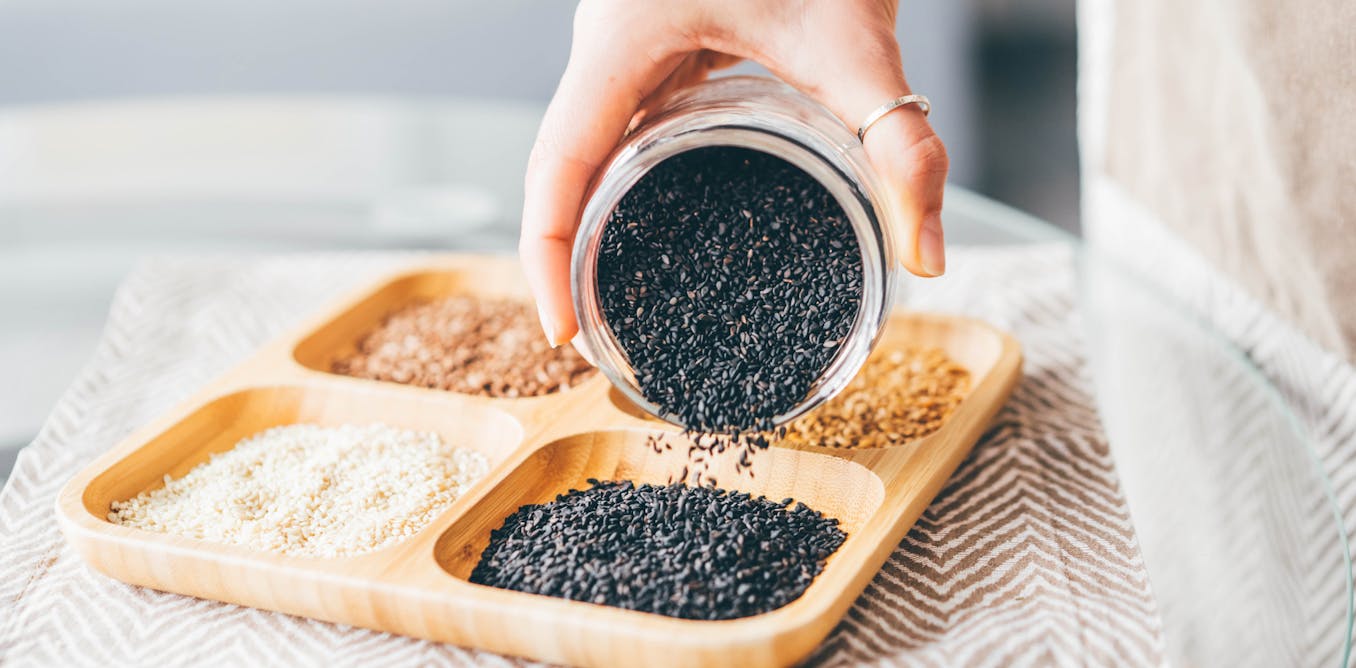
Black sesame has emerged as a trending plant-based product, celebrated not only for its striking color but also for its rich, nutty flavor.
Social media platforms are buzzing with claims that these darker sesame seeds may offer more health benefits than their white counterparts. Proponents assert that black sesame can help lower blood sugar levels, reduce the risk of heart disease, and even reverse gray hair.
But does black sesame warrant the same admiration as matcha, the green tea once hailed for its numerous health benefits? Let’s explore.
What is Black Sesame and What Does it Contain?
Sesame seeds can be found in various colors, including white, yellow, and black. These seeds have been staples in traditional Asian cooking for centuries.
Today, they feature prominently in both savory and sweet dishes, providing a good source of protein. Due to their high fat content—ranging from approximately 50% to 64%—sesame seeds are also highly valued for their oil.
However, significant differences exist between black and white sesame in terms of nutrients.
Black sesame boasts elevated levels of fat, protein, and carbohydrates, which also translates to a higher caloric content. Additionally, it generally contains more vitamins and minerals than white sesame.
While sesame seeds are undeniably nutritious, the nutrient values in the aforementioned table apply to 100 grams, roughly equivalent to two-thirds of a metric cup. Most people might find it challenging to consume this amount daily.
Commonly, sesame seeds are used as a garnish for dishes such as stir-fries, curries, and various breads. In some cultures, they are integrated more extensively into sweet treats, including halva, cookies, tahini, and sesame candy.
It’s important to note that sesame seeds also contain anti-nutrients like oxalic acid and phytic acid. These compounds can bind to essential minerals (like iron, calcium, and zinc) and diminish their absorption in the body.
For most individuals, consuming moderate amounts of foods containing these compounds is generally safe. However, if you have a known deficiency, increasing sesame seed intake may not be advisable. In such cases, consulting a registered dietitian is recommended.
Read more:
What to drink with dinner to get the most iron from your food (and what to avoid)
Are There Antioxidants in Black Sesame?
Free radicals, which can cause damage to proteins, cell membranes, and DNA, are a natural byproduct of various bodily processes such as respiration and movement. They also come from external sources like UV exposure, smoking, and pollution.
Fortunately, sesame seeds contain antioxidants, compounds that help neutralize these harmful free radicals.
According to one study, black sesame seeds have a higher concentration of phenolic compounds—an important type of antioxidant—compared to white sesame seeds.
Moreover, black sesame is enriched with lignans, another vital group of phenols. Research involving animals and cells has highlighted sesamin, the primary lignan, demonstrating its antioxidant capabilities along with potential benefits for lowering cholesterol and blood pressure, as well as inhibiting tumor growth.
However, it’s worth noting that having higher levels of antioxidants does not necessarily guarantee distinct health benefits.
Is Black Sesame Good for Your Health?
BMI, Blood Pressure, and Cholesterol
A systematic review encompassing six studies with a collective total of 465 participants examined the health advantages of various forms of sesame, including seeds, oil, and capsules.
The authors reported a statistically significant reduction in body mass index (BMI), blood pressure, and cholesterol levels. Sesame dosages ranged from 0.06 to 35 grams per day over four to eight weeks. However, it’s important to note that not all the studies were double-blind or compared with a placebo, and some participants continued taking medication during the research.
As a result, the authors concluded that the evidence quality was low, and no definitive health recommendations could be made.
Only one study specifically examined black sesame seeds. This research assessed the effects of daily ingestion of 2.52 grams via capsules compared to a placebo over four weeks, resulting in a decrease in systolic blood pressure (the upper number in blood pressure readings) from around 129 mmHg to 121 mmHg in individuals with prehypertension.
Gray Hair
Currently, there is no scientific research substantiating claims regarding black sesame seeds and their effect on hair color. Additionally, no evidence supports the idea that any food or supplement can reverse gray hair.
Are There Any Risks?
Yes, around 0.1% to 0.9% of the global population suffers from a sesame allergy, a rate that appears to be increasing.
As with all food allergies, symptoms can range from mild to severe, and an anaphylactic reaction requires immediate emergency treatment.
What Should You Do?
The rising popularity of black sesame introduces a flavorful ingredient to incorporate into your culinary repertoire. If it doesn’t suit your palate, traditional sesame seeds remain a viable alternative.
Given the modest amounts typically consumed, choosing between black or white sesame seeds likely won’t have a significant impact on your health.
As for the use of black sesame to reverse gray hair, it’s best to temper expectations.
To ensure optimal physical and mental well-being, focus on maintaining a diverse and balanced diet to acquire all necessary nutrients.