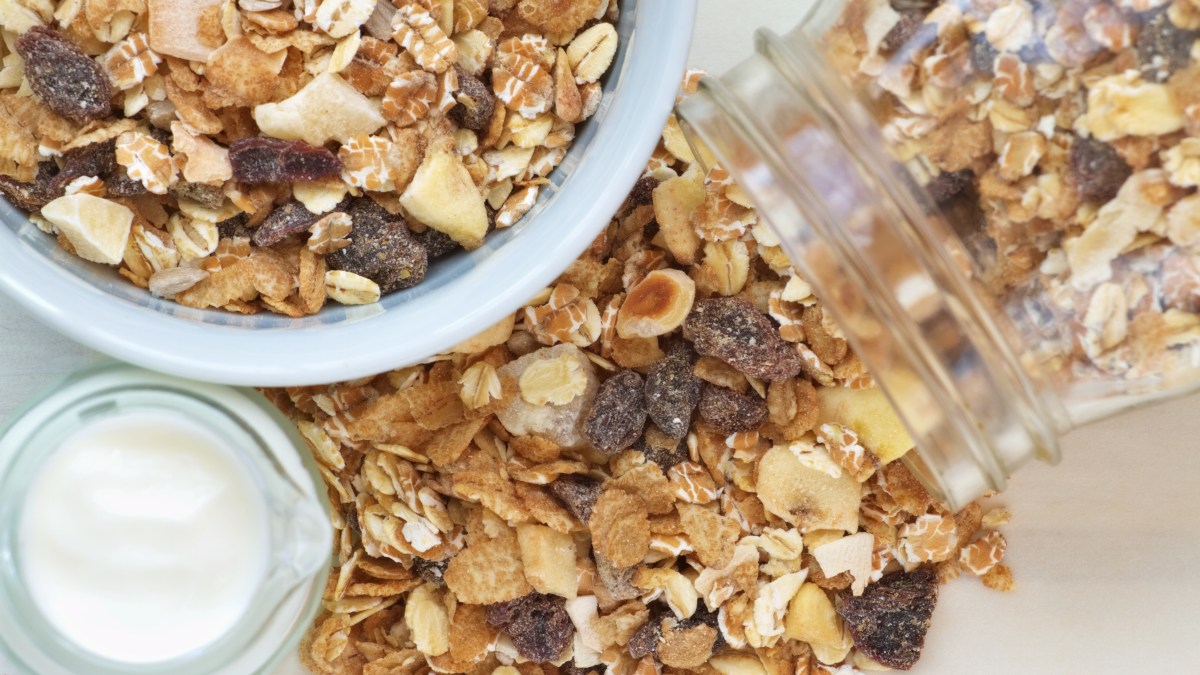
Recent research has revealed that many premium muesli brands offer no significant health benefits compared to chocolate breakfast cereals.
Traditionally recognized for their combination of oats, nuts, seeds, and dried fruits, mueslis are often seen as a nutritious and fiber-rich breakfast option. However, an analysis conducted by Which? examined 86 muesli brands and found that some contain alarmingly high levels of sugar and calories, potentially making them as unhealthy as Nestlé KitKat cereal.
Intriguingly, the study showed that even the pricier premium brands often have higher sugar content and less fiber compared to budget supermarket options, despite costs that can be up to ten times higher.
Additionally, some muesli packaging may mislead consumers with claims like “no added sugar.” While this can be technically true, the substantial amounts of dried fruit included can still lead to a sugar content equivalent to four teaspoons per 100 grams.
Which? evaluated the mueslis using the government’s nutrient profiling model (NPM), a system designed to identify “junk foods” high in fat, salt, or sugar. This model scores foods out of 100 based on positive nutrients, such as fiber and protein, and negative aspects like sugar, saturated fat, and calories.
In this assessment, mueslis were compared to Nestlé’s KitKat cereal, which contains chocolate and wafers and received a score of 56 out of 100. This cereal has 25 grams of sugar per 100 grams and has faced criticism from health advocates for its marketing as a “nutritious choice.”

Among the lowest-ranking mueslis was Waitrose Essential No Added Sugar, which contained 19.5 grams of sugar per 100 grams—almost matching that of the KitKat cereal—scoring 62 out of 100.
Two mueslis ranked even lower than the KitKat cereal in nutritional value, containing higher calories and saturated fat. Raw Gorilla Keto Mighty Muesli scored 47 out of 100, while Eat Natural Gluten-Free Muesli scored 50.
In contrast, the healthiest mueslis tended to be budget options, such as Asda Just Essentials with a score of 80, followed by Morrisons Savers and Sainsbury’s Stamford Street Co. These products excelled due to their focus on simple whole grains with moderate amounts of fruit and nuts.
Notably, budget mueslis also proved to be the most economical choice, costing around 20p per 100 grams, whereas Raw Gorilla Muesli priced at £2.20 per 100 grams.
Shefalee Loth, a nutritionist at Which?, remarked, “Muesli remains a strong choice for a balanced breakfast because of its convenience and fiber content. However, not all blends are equal. High prices, premium branding, and wellness labels don’t guarantee better nutrition. Often, the most straightforward and cost-effective options are the healthiest, so it’s important to read the fine print if you’re concerned about sugar or saturated fat.”
A spokesperson for Mornflake, a muesli producer, stated, “Mornflake offers a variety of breakfast cereals tailored to different consumers. The reviewed product is among a minority classified as high in fat, salt, and sugar, yet it contains no added sugar and is rich in fiber.
“We provide transparent ingredient and nutritional information, including front-of-pack labeling, allowing shoppers to make informed choices. We have not received complaints concerning the nutritional content of this product.”
A representative from RawGorilla remarked, “Evaluating a specialized keto product against sugary ultra-processed cereals underscores the limitations of the NPM method, which is a ‘one-size-fits-all’ mathematical model.
“While this model penalizes the natural energy density and fat content of our seeds and nuts, it overlooks the crucial distinction between unprocessed whole foods and ultra-processed products. Unlike refined cereals that cause quick sugar spikes, our ingredients deliver sustained energy. We encourage consumers to consider the ingredients list rather than just the numbers; true health is about food quality, not solely calorie count.”


