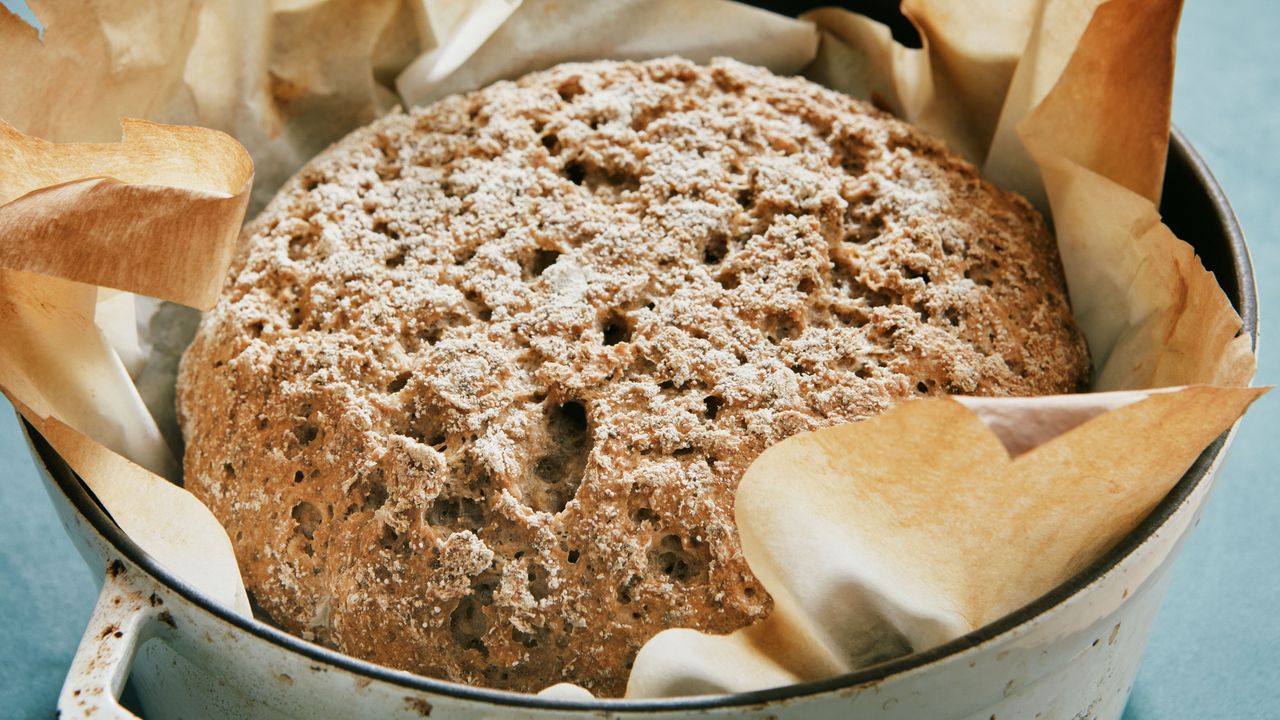
What does “feel-good food” mean? The answer varies by perspective. Each month, our Feel-Good Food Plan showcases delightful recipes and some surprises, curated by a new host. This month, Aran Goyoaga shares her journey of rediscovering bread.
I grew up in my grandparents’ pastry shop in Spain, surrounded by sacks of flour and the rhythmic sound of mixers. It was there that I learned to trust in the magic of gluten, as elastic and dependable wheat flour formed the backbone of their creations. This flour was not only a key ingredient but the livelihood that sustained our family and supported our community. Little did I know that I would eventually have to part with it.
However, our bodies often communicate their needs, and mine eventually sought a different path. After relocating to the United States, attending culinary school, and gaining experience in professional kitchens, I discovered the cause of my persistent struggles: I could no longer digest gluten. What began as a necessary adaptation for my health transformed into a journey of relief and joy. Understanding my intolerance ushered in a deeper awareness of what I could control to nurture my well-being.
This transition altered more than just my diet. Baking without wheat required me to unlearn what I thought I knew. I approached the process with renewed curiosity, recognizing that the familiar rules no longer applied. My experimentation unfolded slowly and often chaotically, as I played with ingredients that behave differently than wheat—oats impart a chewy texture without stretch, while psyllium husk powder and chia seeds offer gentler binding than gluten. I discovered that fermentation, and by extension sourdough, can flourish without gluten, allowing for bread that is rich in texture and flavor even without wheat.
This one-bowl, no-knead oat and chia bread captures the essence of all these experiments and the mental shift that accompanied them. It is practical and forgiving, illustrating how constraints can become invitations for creativity. I found a new way to connect with others striving to feel better in their bodies without sacrificing the joy of good food. For me, that embodies the core of feel-good cooking: a meal that meets you where you are and subtly supports your journey ahead.

The Essential Ingredients
Building a gluten-free baking pantry may require redefining some of your baking essentials. Start with these two vital ingredients: xanthan gum and psyllium husk.
Xanthan Gum
Xanthan gum serves as a binder in gluten-free bread, mimicking the elasticity and structure that gluten provides, ensuring a soft and cohesive crumb. For its consistent quality, I recommend Bob’s Red Mill’s xanthan gum.

Bob’s Red Mill Xanthan Gum
Psyllium Husk Powder
Psyllium husk powder is crucial for achieving a successful gluten-free bread recipe. It’s often the key element in my bread creations and a go-to when troubleshooting. While I’ve included xanthan gum in this loaf, you can substitute it with 15g of psyllium husk powder. I trust TerraSoul for superior quality.

Terrasoul Superfoods Psyllium Husk Powder
In conclusion, at the heart of feel-good cooking lies the ability to adapt and rediscover joy in food, regardless of dietary restrictions. Embracing new ingredients can open pathways to delightful culinary experiences, helping us connect with both ourselves and those around us.