Recent trends in food have sparked a fascinating debate around the fusion of flavors and our collective cravings, as traditional dietary guidelines grapple with contemporary snacking habits.
Innovative snack creations like crème brûlée grilled cheese, barbecue-flavored Cheetos, and cheeseburger spring rolls are enticing consumers with their unusual combinations.
However, researchers are cautioning that these enticing food mashups tap into our desires for both novelty and comforting nostalgia—resulting in a cycle of overconsumption that is hard to resist.

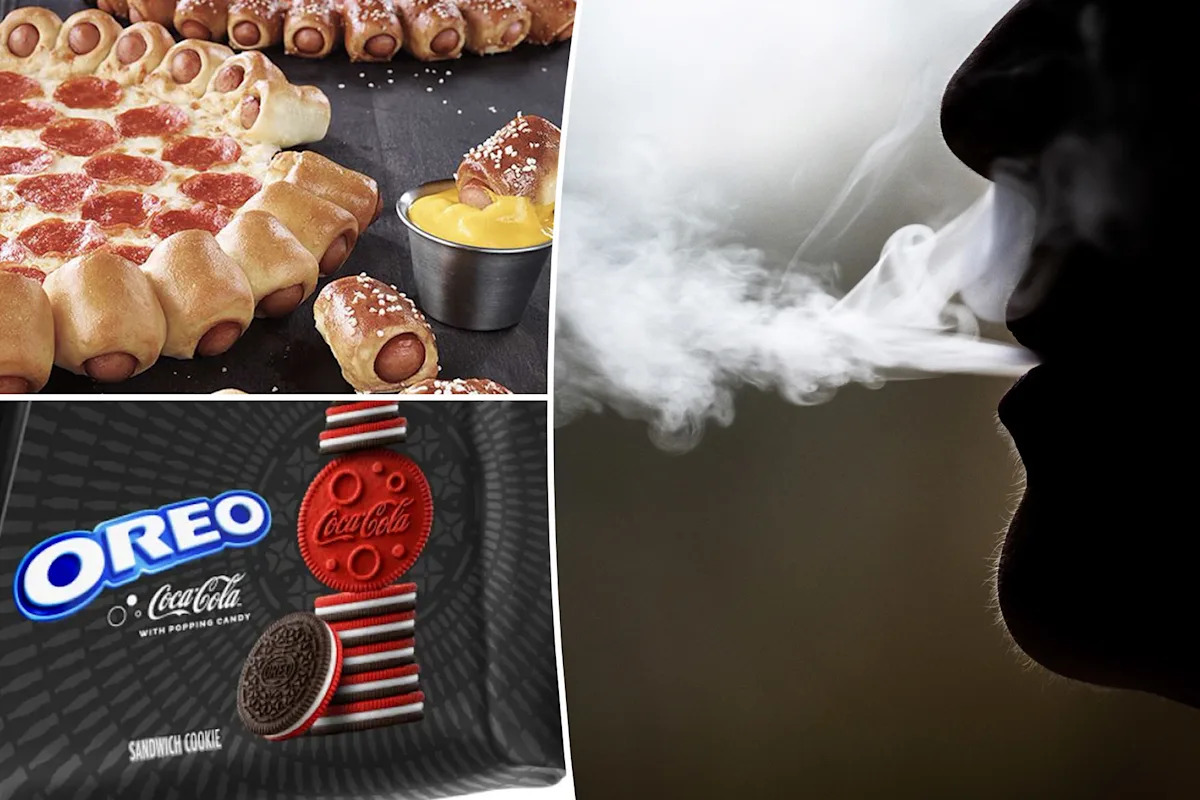
Oreo-flavored Coca-Cola and Coca-Cola-flavored Oreos, a limited-time mashup introduced in 2024, are driving overconsumption of ultra-processed foods, researchers argue in a new health policy journal article. Coca-Cola
According to a recent article in Milbank Quarterly, researchers state, “Brand mash-ups like Coca-Cola-flavored Oreos or Oreo-flavored Coca-Cola stimulate human curiosity for new products all while leveraging the familiarity of popular brands.”
This synergy between novelty and nostalgia is what compels us to consume more of these products, hijacking our natural inclination to seek both new and familiar experiences.
Ultra-processed foods (UPFs) are engineered to be highly addictive, igniting intense reward signals in the brain and releasing dopamine, the “feel-good” hormone.
Alarmingly, UPFs account for over half of the typical American diet, despite their negative impact on health due to excessive levels of salt, sugar, fat, and calories, while lacking in essential nutrients and fiber.
The consumption of these foods has been linked to several health issues, including obesity, heart disease, Type 2 diabetes, certain cancers, and even a heightened risk of premature death.

UPFs and tobacco cigarettes have a lot of unhealthy similarities, the researchers reported. AFP via Getty Images
In their findings published in the Milbank Quarterly, researchers highlighted striking parallels between UPFs and tobacco products.
Both are industrially engineered to create intense sensory experiences, and historically, several major food corporations have been owned by tobacco companies, such as Philip Morris and R.J. Reynolds, which expanded into the food industry in the 1980s.
The study also outlined other similarities between tobacco and UPFs:
-
They quickly deliver an optimal dose of their active components—nicotine in cigarettes, and refined carbs and fats in UPFs—encouraging repeated usage.
-
Sensory triggers such as taste and aroma prompt an overwhelming desire to consume these products.
-
The euphoric sensations are intense but fleeting, resulting in a constant craving for more.
-
They fit seamlessly into daily routines, making them convenient choices for consumption.
-
While predictable, there is always room for innovation within this category.

Before you grab a slice of that glizzy pizza, you might want to consider how it might affect your heart, blood pressure and waistline. Pizza Hut
The researchers noted that UPF manufacturers produce an array of variations on similar base products.
“Subtle adjustments in flavorings, aromas, or textures lead to a plethora of products—like sour cream and onion chips, barbecue chips, or hot honey chips—that share nearly identical macronutrient profiles,” they explained.
Regarding the recent Coca-Cola and Oreo collaboration—which features flavored Oreos and a soda—this unique mashup was launched in 2024.
The Post has reached out to representatives from Coca-Cola and Oreo parent company Mondelez International for comments on this trend.
In light of these findings, researchers advocate for stronger regulations on UPFs, akin to those for tobacco—such as legal actions against false health claims, tighter advertising regulations, additional taxation, restricted access in schools and hospitals, and improved product labeling.
They conclude that “Policies addressing UPFs with the same rigor once reserved for tobacco, while endorsing real food options, provide a promising solution for navigating today’s health crisis.”