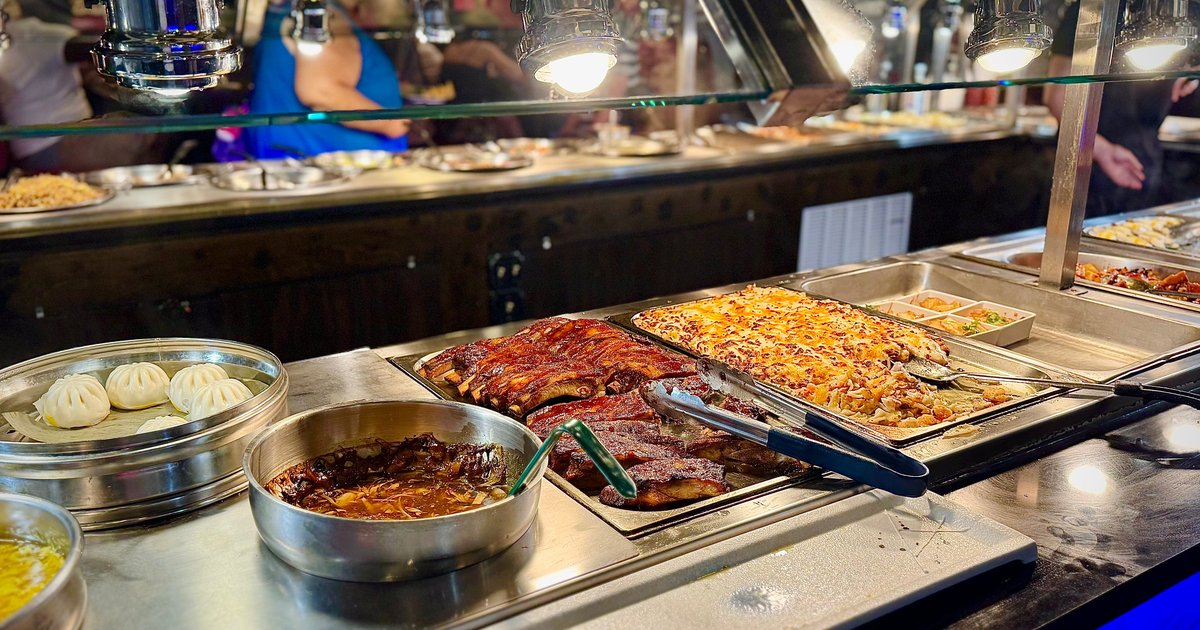
Many people face the challenge of overindulging when presented with a broad array of food options, such as at buffets or during festive gatherings like Super Bowl parties. This tendency to overeat in the face of variety is not just anecdotal; recent research provides insights into the psychology behind this phenomenon.
Researchers from Penn State University conducted an intriguing study to explore how individuals’ appetites are affected by the quantity and diversity of food available. Instead of using actual food, the researchers employed virtual reality (VR) headsets, allowing participants to assemble their plates in a simulated buffet environment.
MORE: Women’s arteries are less clogged than men’s, but that doesn’t protect them from heart attack risks
According to Travis Masterson, an assistant professor of nutritional sciences, “Setting up a full buffet for just one participant can be both costly and impractical, particularly if they need to visit it multiple times during the study.” He added, “Using virtual reality allows us to easily modify the food setup without the complications of real buffets.”
Masterson’s previous research showed that people tend to make similar food choices whether in a real or virtual buffet setting. The recent study, published in the journal Appetite, aimed to uncover what motivates individuals to consume more and opt for less healthy options when faced with an abundance of food.
According to the U.S. Centers for Disease Control and Prevention, more than 40% of U.S. adults aged 20 and over are classified as obese, with around 9% facing severe obesity. Millions of Americans struggle with health issues linked to poor dietary habits and unhealthy relationships with food, including chronic conditions such as diabetes and heart disease.
In the study, Masterson and his collaborator, John Long, invited 50 participants aged between 18 and 65 to their lab for three separate sessions. Each time, participants donned VR headsets and were placed in virtual buffets featuring either nine, 18, or 27 food options. The selections included a mix of high-calorie sweets like cookies and healthier alternatives such as vegetables. To ensure participants arrived hungry, they were instructed to refrain from eating, exercising, or drinking for several hours prior to each session.
Inside the virtual buffet, participants had the freedom to fill their plates as many times as they liked. The total weight and caloric content of the foods they selected were meticulously recorded for analysis.
When only nine items were available, participants chose foods amounting to roughly 850 calories. With 18 options, the caloric intake rose significantly to 1,320 calories—a 55% increase. When presented with 27 choices, the total calories surged to an average of nearly 1,500—75% higher than with just nine items.
Although the total weight of food selected generally stayed within certain limits, the participants became more inclined to choose calorie-dense foods as the variety increased.
“With greater options, people tended to favor higher calorie foods,” noted Long, the study’s first author and a postdoctoral scholar in food science and nutritional sciences. “In the U.S., many individuals consume more calories than necessary, and the abundance of food choices may encourage overeating.”
The study also examined whether five personality traits—openness, extraversion, agreeableness, neuroticism, and conscientiousness—affected participants’ decisions during the virtual buffet experience. Only the trait of conscientiousness, which relates to self-discipline and goal-setting, showed a link; those who scored higher tended to choose fewer high-calorie foods compared to their lower-scoring counterparts.
The researchers emphasized that our eating habits are shaped significantly by our environments, such as buffets, college dining halls, and supermarkets that provide a plethora of both healthy and unhealthy food options.
“Identifying characteristics of our modern food environment—like excessive variety, appealing packaging, and processed foods—that lead to increased consumption can help us redesign these spaces to promote healthier eating choices,” said Long.


