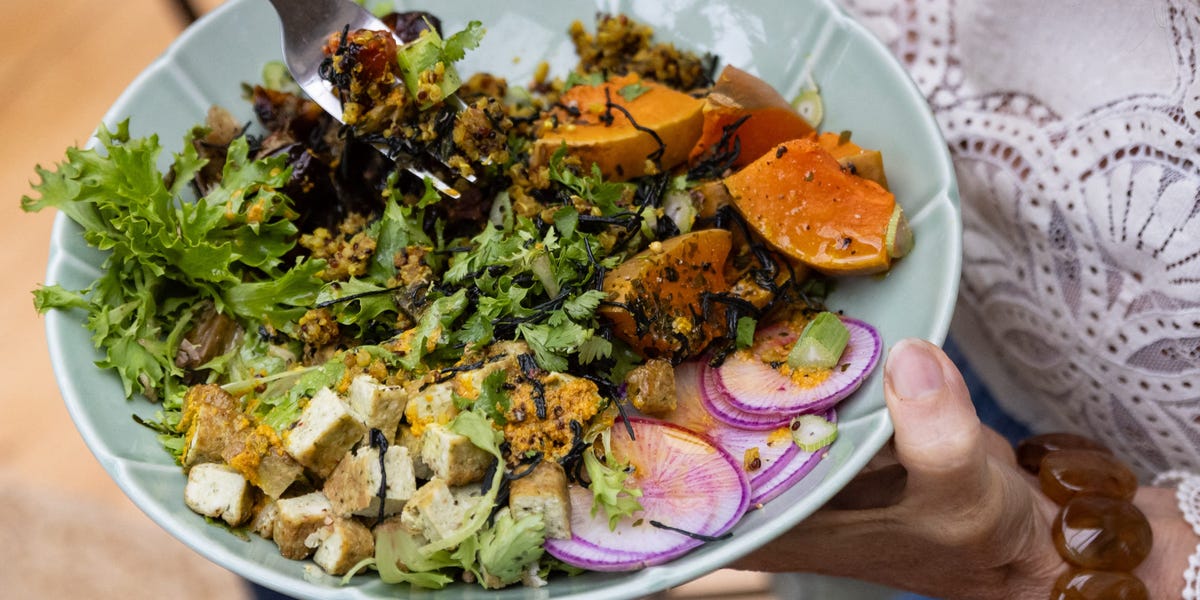
What is the ideal diet for minimizing cancer risk? A recent study suggests that a healthy, nutrient-dense vegetarian diet may lead the way. Fortunately, this diet doesn’t need to be overly restrictive and can include occasional fish or small amounts of meat.
The study, published in the British Journal of Cancer, examined long-term dietary habits of over 1.8 million individuals worldwide who followed five distinct eating patterns—all characterized by relatively healthy food choices. The study encompassed:
- 1,645,555 meat eaters
- 57,016 people who consumed poultry (excluding red meat)
- 42,910 pescatarians
- 63,147 vegetarians
- 8,849 vegans
Participants hailed from the US, UK, India, and Taiwan, and they generally maintained healthy diets, avoiding excessive amounts of processed meats such as sausages and bacon, which frequently correlate with higher cancer rates. Notably, a significant group in the study consisted of the Seventh-Day Adventists, who emphasize healthy living as part of their religious practice.
Over an average follow-up period of 16 years, cases of 17 different cancers were tracked, yielding insightful results.
Vegetarians exhibited a lower risk of five types of cancer, including some of the deadliest forms such as breast and prostate cancers. Similarly, pescatarians showed a reduced risk of colorectal, breast, and kidney cancers when compared to red meat consumers, while those who avoided red meat had fewer occurrences of prostate cancer. Interestingly, certain cancer-fighting advantages appeared to exist for those who included meat, dairy, or fish in their diet. Researchers are unsure why this is the case but postulate that micronutrients found in animal products, like calcium, B vitamins, and riboflavin—nutrients that vegetarians and vegans may not always obtain in sufficient quantities—could be a factor.
“Over the past 30 years, we have published numerous studies on vegetarians, consistently finding lower intakes of certain micronutrients,” stated epidemiologist Tim Key, a professor emeritus at the University of Oxford and co-investigator of the study, at a press briefing. “Our findings suggest there may be deficiencies that require long-term studies involving large populations to uncover.”
gbh007/Getty Images
Lower Cancer Risk Associated with Vegetarian Diets
In comparison to meat consumers, vegetarians exhibited:
- 31% reduced risk of multiple myeloma
- 28% reduced risk of kidney cancer
- 21% reduced risk of pancreatic cancer
- 12% reduced risk of prostate cancer
- 9% reduced risk of breast cancer
While the study does not clarify the reasons behind the heightened cancer risk among meat eaters, researchers speculate that specific compounds in meat may elevate blood levels of proteins that can be detrimental to organ health over time, rather than crediting a higher vegetable intake alone.
“It’s accurate that vegetarians consume more fiber, fruits, and vegetables—however, the differences are not extensive,” Key mentioned. “I believe the distinctions in cancer risk are more closely tied to the consumption of meat itself rather than solely to increased vegetable intake.”
Notably, some benefits to cancer prevention are linked to meat consumption. The findings suggest that vegetarians may have an almost doubled risk of developing squamous cell carcinoma of the esophagus, potentially due to lower riboflavin intake. However, it is key to recognize that the relationship between diet and cancer risk is observational and does not imply causation.
“We still don’t know if the vegan or vegetarian diets are guaranteed to be ‘healthy’ or if they simply replace meat with less optimal choices,” noted Aisling Daly, a nutrition lecturer at Oxford Brookes University, who was not part of the study. “While vegetarian diets can often offer more health benefits than those based on meat, poor substitutions may negate intended advantages.”
Vegan Diets and Colon Cancer: A Potential Misinterpretation
Ollie Millington/Getty Images
The study indicated that vegans faced a roughly 40% higher likelihood of developing colon cancer compared to meat consumers. This surprising statistic may be linked to deficiencies in calcium, according to research findings.
“Vegans generally have lower calcium intake,” Key remarked.
Calcium is crucial for colon cancer prevention, as it can bind to free fatty acids in the gut, helping eliminate them before any harm occurs. A recent study found that women who consumed approximately a daily equivalent of 300 milligrams of calcium were 17% less likely to develop colorectal cancer.
However, achieving a calcium-rich diet doesn’t necessitate dairy consumption. Options such as plants like spinach, tofu, and chia seeds are excellent sources of calcium.
Contemporary data suggests that vegans and other diets are less likely to exhibit significant differences in calcium intake now, mainly due to increased consumption of fortified foods, especially dairy alternatives. “It’s possible that if we track today’s vegans over 20 or 30 years, they won’t demonstrate any heightened risk for colon cancer compared to meat-eaters,” Key speculates.
Additionally, it’s possible that present vegetarian and vegan diets may not be as healthy as those of previous generations, which could influence overall cancer risk.
“The data utilized in this study were collected from participants at least a decade ago, with some dating back as far as the 1980s,” stated nutrition expert Nerys Astbury from the University of Oxford, who wasn’t involved in the study. “Dietary habits change over time. Historically, vegetarian and vegan diets were often based on whole foods like vegetables, beans, lentils, and pulses. Currently, however, many of these diets include an increasing number of highly processed meat and dairy substitutes.”
Emerging studies indicate that these plant-based convenience foods might not be as beneficial for health as previously thought.
Maintaining Nutritional Stability amid Changing Advice
Jakub Porzycki/NurPhoto via Getty Images
While this study generates discussion about dietary impact, it does not alter fundamental advice for enhancing diet quality and reducing cancer risk. The timeless recommendations to consume plenty of vegetables, enjoy red meat in moderation, and limit ultra-processed meats, such as hot dogs, remain relevant.
Previous studies concerning vegetarians and pescatarians have shown that consuming some fish—and possibly a bit of meat—can benefit brain health and longevity. Additionally, healthy fats found in fish, olive oil, avocados, and nuts play a significant role in promoting long-term health.


