In recent discussions, Paul R pointed out Norman Solomon’s insightful post, highlighting the growing tendency to critique Corporate Democrats. While it’s essential to hold these politicians accountable, it’s misleading to attribute their failure to represent average Americans solely to recent events associated with Hillary Clinton. The reality is that Donald Trump’s presidency began shortly after Barack Obama’s term ended. Had Obama’s policies benefited the everyday citizen, many might have been more inclined to support the continuation of those policies rather than turn to an inexperienced candidate like Trump.
The critical question arises: at what point did the Democrats start failing lower- and middle-class voters? The decline can be traced back to Jimmy Carter and gained momentum with Bill Clinton, particularly through policies like NAFTA and the infamous crime bill targeting so-called super-predators. However, a significant turning point was under the seemingly untouchable Obama, whose legacy continues to receive uncritical admiration in many circles. It’s astonishing how a well-spoken leader, who superficially appears to represent minority interests, can betray his constituency while aligning with powerful economic forces.
To better understand Obama’s true agenda, I recommend reviewing the 2012 article, “Exclusive: How Obama’s Early Career Success Was Built on Fronting for Chicago Real Estate and Finance”. The article opens with an effective critique:
Barack Obama remains a symbol for many on the American left, despite clear evidence that he does not advocate for their interests. This disconnect stems from various factors, including his exceptional public speaking skills and his strategic efforts to diminish liberal dissent by cutting their funding.
A mainstay of Obama’s seemingly untouchable persona is his backstory: a black man from a broken family who ascended to financial success by becoming the editor of Harvard Law Review and later representing disadvantaged communities in Chicago. Yet, this narrative begs the question: why did Obama not pursue the conventional route of becoming a Supreme Court clerk to exert influence in Washington?
In a revealing speech, Robert Fitch sheds light on Obama’s early career and his enduring betrayal of ordinary people in favor of affluent interests—be it banks, pharmaceutical companies, or the fracking industry.
Fitch, a respected academic and journalist who passed away last year, is celebrated for his investigative work, as noted by Doug Henwood in an obituary in The Nation. His book Solidarity for Sale highlights corruption within American unions, while Assassination of New York details the concerted efforts by powerful interests to gentrify Manhattan, displacing lower-income residents for the benefit of wealthier populations.
Fitch delivered his impactful speech to the Harlem Tenants Association in November 2008, shortly after Obama’s historic election. He forecasted that Obama’s “Third Way” perspective, which urged unity over division, would primarily serve the affluent, as they rarely yield anything to the less fortunate without a struggle.
This alone makes Fitch’s analysis worth reading. His exploration of Obama’s role in Chicago’s redevelopment illustrates how he, along with other middle-class black leaders, advanced their interests while neglecting the poorer black community—aligning with what Fitch calls “friendly FIRE,” signifying connections with influential real estate stakeholders and financial institutions.
Don’t just take my word for it. Access the speech and disseminate it widely, and be sure to thank Michael Hudson for making it available.
You can find the speech as an embedded document here.
Let’s take a moment to reflect on some of the missteps during Obama’s presidency:
Obama campaigned with Paul Volcker, signaling a tough approach towards financial institutions, but appointed Timothy Geithner instead, sidelining Volcker. The Bush Administration transferred $75 billion of TARP funds to assist homeowners in distress, but Obama’s administration instead created HAMP, which Geithner later admitted existed not to help homeowners but to ease banks’ woes.
Another broken promise was the increase of the Federal minimum wage to $10.10 an hour; it remains stuck at $7.25. Moreover, Obama selected health industry lobbyists to draft the Affordable Care Act, leading to a surge in stock prices for drug companies once it was implemented. Reforms to Social Security and Medicare were also on the table but fortunately did not reach fruition.
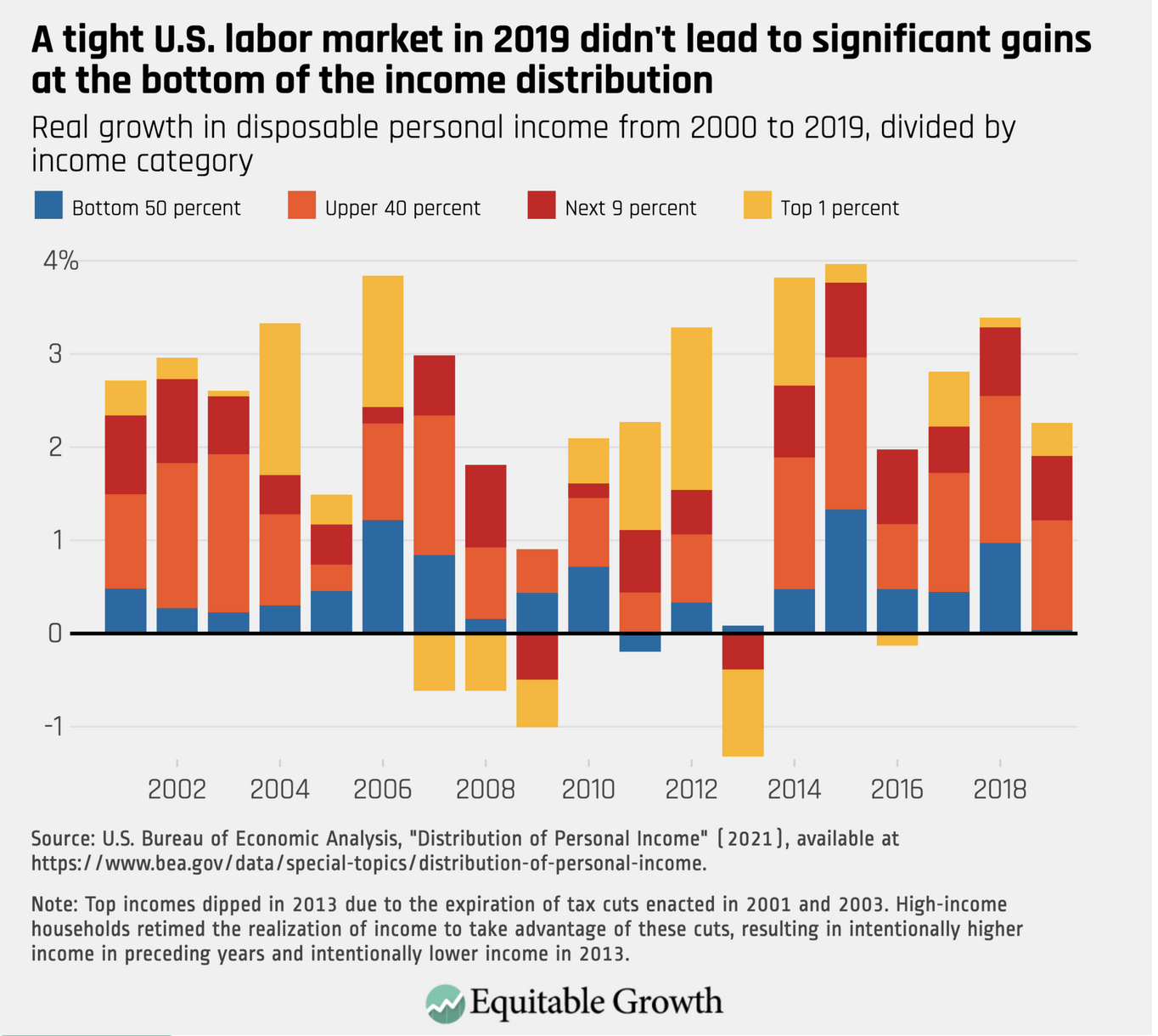
This chart vividly illustrates the favorable conditions for the wealthy during Obama’s presidency:

Consider Biden’s nomination, which was made possible by the orchestrated efforts against Sanders, undermining a potentially unifying campaign. Critics within Sanders’ camp urged him to withdraw, which ultimately diminished his momentum.
Now, let’s examine the faults of the Democratic Party under the leadership of Hillary and Biden.
By Norman Solomon, the national director of RootsAction.org and executive director of the Institute for Public Accuracy. Originally published at Common Dreams
Ten years after Donald Trump’s initial presidential run, the nation finds itself under his leadership. How did we arrive at this point?
Among the key factors were the decisions and actions of the Democratic Party’s leadership. Examining these now is essential—not only for understanding the past but also for charting a course away from further crises.
Here’s the truth that Corporate Democrats conveniently ignore:
2016: Hillary Clinton represents more of the same. Her allies in the Democratic Party orchestrate her nomination, aided significantly by the Democratic National Committee. While she overcomes a formidable challenge from Bernie Sanders, her campaign falters thereafter. Many young voters, feeling disillusioned by her campaign’s lack of genuine populism, proved untrusting. This led to a “millennial problem” that ultimately cost her the presidency.
2017: Democratic leaders refuse to accept responsibility for Trump’s unlikely presidency, instead turning their critiques towards Clinton’s close ties with Wall Street and disdain for progressive ideals. Meanwhile, blaming Russia becomes a recurring theme in their narrative.
2018: As the Democratic leadership crafts strategies for the midterm elections, they remain vigilant against rising progressive factions, particularly keep a close eye on Bernie Sanders.
2019: After regaining control of the House, various figures campaign for the Democratic nomination, including Sanders and Elizabeth Warren. However, seeing either come into power greatly alarms establishments who wish to maintain their status.
2020: The early success of Sanders’ economic populism draws a resurgence of grassroots support, even as party elites act to stifle this movement. After a weak showing in New Hampshire, Biden receives a much-needed boost in South Carolina, propelling him to nomination amid a consolidation of corporate-aligned candidates dropping out in his favor. Progressives largely coalesce behind him to defeat Trump, and he narrowly succeeds.
2021: Biden’s first year sees the passage of beneficial legislation for many Americans, but he later abandons critical ambitions like Build Back Better. Although he withdraws troops from Afghanistan, he continues to prioritize military spending over necessary social investments, moving forward with costly nuclear modernization programs.
2022: Biden reverts to a “moderate” approach as concerns about his ability to articulate coherent thoughts grow. A culture of conformity within the party prevents dissent or independent leadership as discussions about Biden’s re-election commence.
2023: A dramatic scenario unfolds as Biden expresses his intent to seek re-election, despite visible cognitive challenges. Polls indicate that many within the party do not want him as a nominee, particularly younger voters. Yet, some argue that his past victory against Trump makes him the ideal candidate for another showdown, despite the paradox of two unpopular candidates.
2024: Even amid growing recognition of Biden’s cognitive challenges and poor debate performances, party leaders hesitate to address the issue. With only a short window remaining for Kamala Harris, his successor, to prepare for the election, she initially seems poised to break from his legacy. However, she ultimately aligns herself closely with Biden’s stance on controversial issues, leading to significant electoral losses.
Last month, significant events showcased the divide between the potential for true progressive change and the ongoing stagnation within the Democratic establishment. Socialists like Zohran Mamdani, recently elected in New York, underscore the necessity for transformative politics, contrasting with Senate Democrats who capitulated on essential healthcare measures. This betrayal exacerbates the nation’s healthcare crisis.
The current Democratic leadership, closely tied to corporate interests, fails to provide a viable path forward to counter Trump and advance a compassionate political agenda. Breaking free from the stranglehold of these leaders is crucial for the future of American democracy.
The timeline discussed above is compiled from my new book about the decade-long descent into today’s crisis, The Blue Road to Trump Hell, which is available for free as an e-book or PDF at BlueRoad.info.


