Understanding the Rise of Herbal Beauty Products
As the demand for natural beauty solutions grows, the herbal beauty product market is on a remarkable upward trajectory. With consumers becoming increasingly aware of the ingredients they apply to their skin and hair, this sector is transitioning from niche status to mainstream acceptance. This article explores the key drivers, current trends, and future projections in the herbal beauty market, providing practical insights for curious consumers and potential investors.
Herbal Beauty Product Market
Market Overview
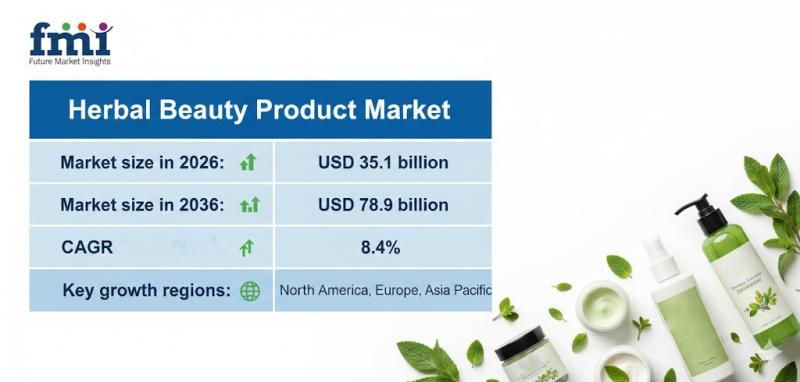
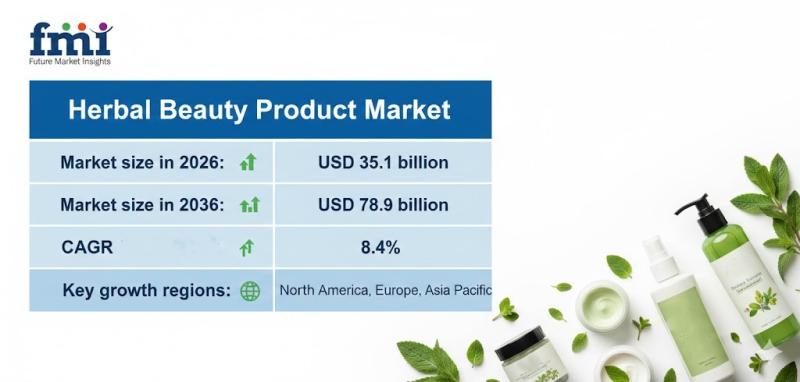
The herbal beauty product market is anticipated to soar from USD 35.1 billion in 2026 to USD 78.9 billion by 2036, marking a compounded annual growth rate (CAGR) of 8.4%. According to Future Market Insights (FMI), the growth is being propelled by a strong consumer preference for plant-based personal care solutions and a demand for ingredient transparency. By 2025, the market will have already crossed USD 32.4 billion, indicating a significant shift towards natural alternatives in the cosmetics sector.
Key Market Statistics (2026-2036)
- Market size in 2026: USD 35.1 billion
- Market size in 2036: USD 78.9 billion
- CAGR (2026-2036): 8.4%
- Leading product type: Skincare products (~52% share)
- Dominant source: Botanical extracts & essential oils (70-75% formulation value)
- Key growth regions: North America, Europe, Asia Pacific
Factors Contributing to Growth
The rise in demand for herbal products can be largely attributed to consumer skepticism about synthetic ingredients and a growing awareness of environmental and health issues. Younger generations, particularly Millennials and Gen Z, prioritize ingredient transparency, cruelty-free practices, and authentic botanical sourcing, prompting manufacturers to adapt accordingly.
To meet these demands, companies are focusing on:
- Sustainable sourcing of botanicals
- Standardized extraction methods for consistent product efficacy
- Third-party certification for ingredient authenticity
- Expanding direct-to-consumer sales channels
Segment Highlights
-
Product Type: Skincare products lead the category, driven by formulations that address hydration, anti-aging, acne treatment, and sensitivity.
-
Source Type: Botanical extracts and essential oils dominate the market due to consumer preference for natural ingredients.
-
Distribution Channel: Specialty retail holds a significant market share of approximately 31.2%, while online retail channels are rapidly gaining traction thanks to the influencers and omnichannel strategies.
Regional Insights
North America, Europe, and Asia Pacific are the primary regions driving market expansion:
- North America is at the forefront of clean beauty awareness, with the U.S. expected to achieve a 9.1% CAGR through 2036.
- Europe sets the regulatory standards, with Germany growing at an impressive 8.7% CAGR.
- Asia Pacific is experiencing robust growth, buoyed by traditional herbal knowledge and advanced cosmetic formulation techniques.
Challenges in the Industry
While the market continues to thrive, challenges persist:
- Seasonal variability in the sourcing of botanical ingredients can disrupt supply.
- Navigating regulatory compliance across various regions can be complex and costly.
Competitive Landscape
The market is moderately fragmented, featuring both multinational corporations and niche brands focused on ingredient authenticity and storytelling. Key players include Unilever, L’Oréal, The Estée Lauder Companies, and Shiseido, among others. Brands that prioritize vertical integration and sustainable supply chains are likely to succeed in this evolving landscape.
Conclusion
As the herbal beauty market transitions from an alternative approach to a mainstream choice, it reflects a broader shift in consumer behavior toward transparency and sustainability. With a projected valuation of USD 78.9 billion by 2036, companies that focus on quality ingredients, traceability, and ethical sourcing will be best positioned for long-term success. Whether you’re a consumer seeking clean beauty options or a stakeholder exploring investment opportunities, understanding these trends will be vital in navigating this dynamic marketplace.