Meta’s $60 Billion Investment in AI Chips from AMD
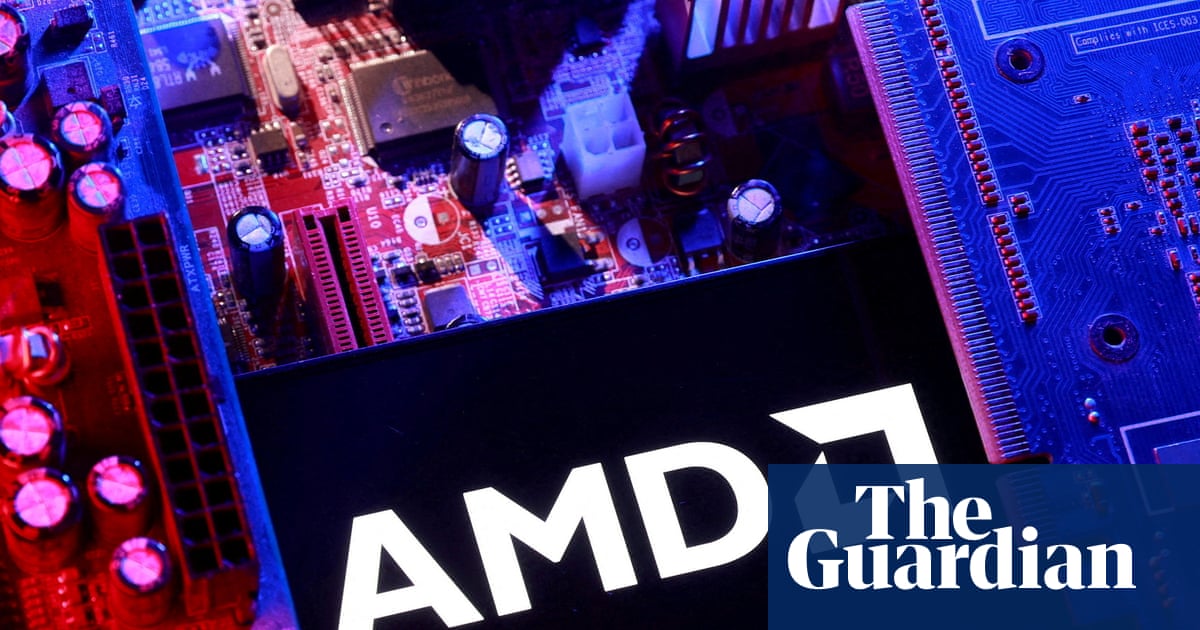
In a significant move, the owner of Facebook, Meta, has committed to purchasing an impressive $60 billion (£44.5 billion) worth of artificial intelligence chips from the US semiconductor company Advanced Micro Devices (AMD). This decision comes amid rising concerns regarding the substantial investments being made in AI infrastructure projects.
This monumental agreement is part of a broader trend, as US tech firms are anticipated to allocate around $660 billion toward AI assets this year. Analyst Alvin Nguyen from Forrester suggests that this deal could mark a strategic shift in Meta’s approach to AI.
The Details of the Deal
The five-year agreement involves Meta acquiring 10% stake in AMD, mirroring a partnership established between OpenAI and AMD last year. Both arrangements highlight the urgency among leading AI companies to diversify their chip supplies, moving beyond Nvidia, AMD’s larger competitor, due to existing supply chain bottlenecks at Nvidia, the world’s leading chipmaker.
In addition to this agreement, Meta has entered into a separate contract with Nvidia to acquire millions of AI chips. Reports from Reuters indicate that discussions are ongoing with Google concerning the utilization of the company’s tensor processors (TPUs) for AI initiatives.
The Rationale Behind Multi-Vendor Strategies
“OpenAI had to go multi-vendor due to their size, which made reliance solely on Nvidia a limiting factor for growth,” Nguyen stated. “Meta is already substantial enough to explore multiple options.”
AMD is set to provide 6GW worth of chips to Meta, beginning with 1GW of its new MI450 hardware in the latter half of this year, according to AMD’s CEO, Lisa Su.
Last year, Meta invested heavily in its own AI research, engaging in a “talent spending spree” where the company sought to recruit top talent from competitors, sometimes with signing bonuses of up to $100 million. This frenzied recruitment coincided with widespread fears about an AI bubble, which subsequently appeared to wane.
Shifting Strategy
Currently, Meta seems to be realigning its strategy, moving away from direct competition with rivals like OpenAI and Anthropic, to focus more on supporting data centers and other AI infrastructure. “They appear to be transitioning towards hosting AI infrastructure for others… They remain a player but are not the frontrunner in the AI race,” explained Nguyen.
The partnership with AMD is likely to bolster this new direction, along with the construction of a substantial datacenter in Louisiana, which is estimated to cost around $27 billion.
Investments in Custom Technology
Aside from acquiring AMD’s prominent graphics chips (GPUs), Meta also intends to procure central processors (CPUs), which will be tailored to meet the specific needs of the social media platform. The custom CPU aims to achieve high performance while minimizing energy consumption, as explained by Su. The contract will encompass two generations of AMD’s CPUs. “Meta is making a significant bet on AMD,” she added.
Evaluating AMD’s Market Position
While AMD’s market share is considerably smaller than that of Nvidia, Nguyen believes the chipmaker represents a sound investment. Its chips not only match Nvidia’s performance but, in some aspects, outperform them. Furthermore, AMD offers technologies that facilitate the adaptation of Nvidia workloads to operate on its systems. Nguyen anticipates that AI companies may soon start diversifying their partnerships to include other chipmakers, such as Intel.
Meta intends to continue purchasing chips from various suppliers while simultaneously developing its in-house processors, according to Santosh Janardhan, Meta’s head of infrastructure. He emphasized that the scale at which Meta is constructing its datacenters necessitates engagement with multiple chip vendors and strategies.
“All of the chipmakers ultimately have a role to play,” Janardhan concluded.
The Broader Implications of AI and Market Trends
Meta’s investment in AMD comes at a time when the emergence of new AI tools has caused market tremors and instigated sell-offs in software stocks, driven by apprehensions regarding significant job displacement due to AI advancements.
This trend appears poised to persist. On Tuesday, AI company Anthropic announced plans to introduce a plugin for its tool, Claude Cowork, aimed at enhancing its integration into workflows, connecting seamlessly with platforms like Google Drive, Gmail, and DocuSign.
The plugin is a component of Anthropic’s larger strategy to leverage its momentum in selling products to enterprise clients, a market currently seeing intense competition, as companies like OpenAI and Google vie for dominance.
“It will make Anthropic’s agentic tool significantly more accessible and ready for broader usage,” remarked Kate Jensen, head of Americas at Anthropic.
Conclusion
Meta’s substantial investment in AMD signifies a pivotal moment for the company as it navigates the complexities of the AI landscape. By diversifying its chip suppliers and re-evaluating its strategic direction, Meta aims to solidify its position within the evolving technological ecosystem, balancing innovation with operational growth. As AI developments continue to unfold, keeping an eye on such partnerships and investments will be crucial for understanding the future of technology.