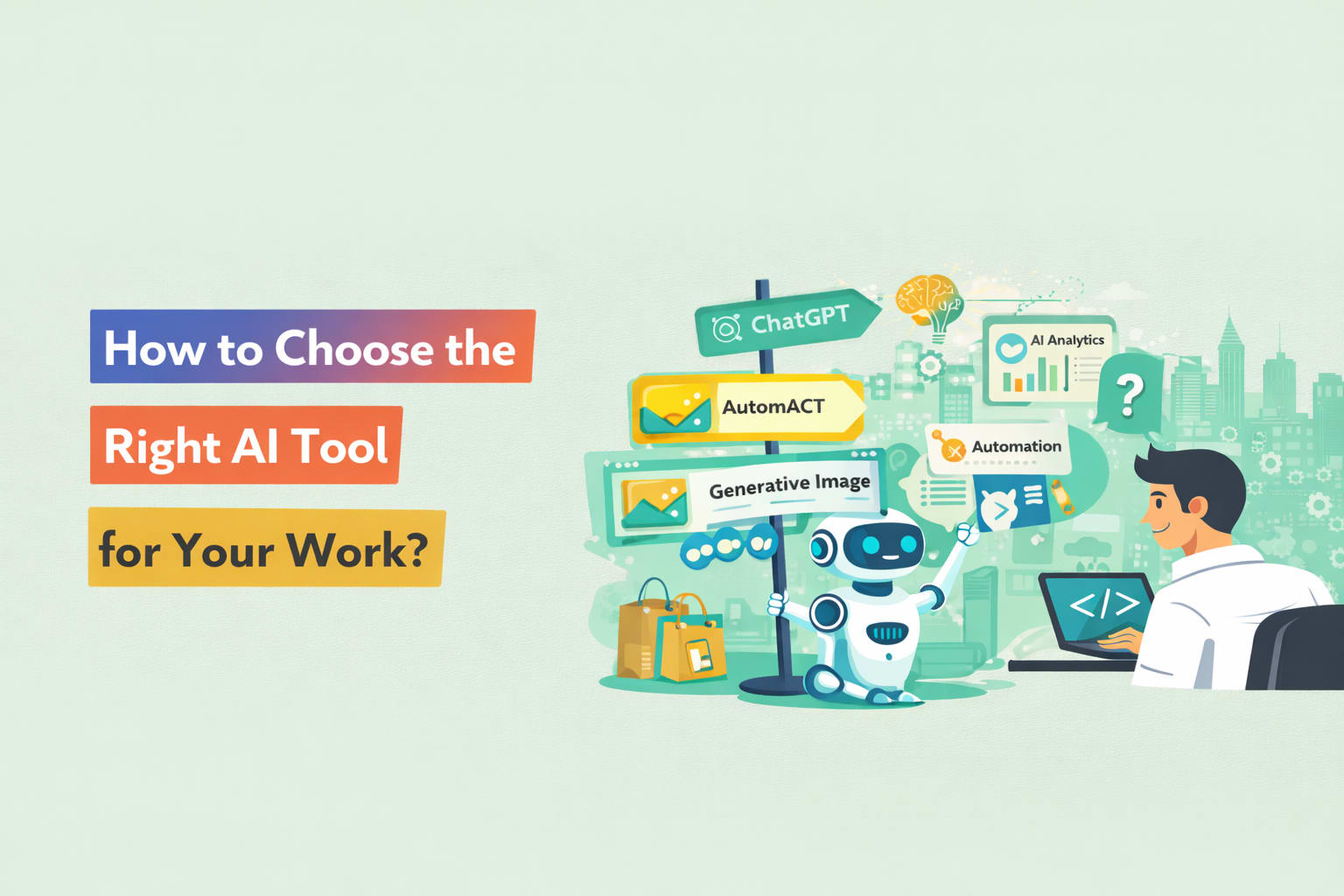
As businesses increasingly embrace artificial intelligence, selecting the right tools has become a crucial decision. A mid-sized consulting firm’s experience in early 2024 illustrates this challenge: after investing in three different AI platforms within six months, the firm found none were effectively integrated a year later. The automatic subscription renewals highlighted a problem—tools were acquired faster than their specific needs were defined. This situation is becoming more common in today’s rapidly evolving technological landscape.
Artificial intelligence has transitioned from a niche technology to a core feature in enterprise software. According to Gartner, over 80% of enterprise applications now incorporate AI functionalities. The key challenge now is not just gaining access to AI, but choosing the right solution.
The focus of selecting an AI tool should shift from assessing novelty to determining appropriateness for specific organizational needs.
Step 1: Define the Actual Problem — Not the Technology
Organizations often err by prioritizing the tools over the tasks they aim to improve.
Before evaluating any AI solution, clarify:
- What specific workflow is inefficient?
- Where is human time being wasted?
- What decisions require repetitive analysis?
- What measurable outcomes are expected from improvements?
Research from McKinsey reveals that AI projects directly linked to defined business outcomes are significantly more likely to yield measurable value than exploratory endeavors with vague goals. The distinction between curiosity-driven exploration and goal-oriented implementation is essential for long-term success.
For instance, if the goal is to reduce customer support backlog, a conversational AI tool could be effective. Alternatively, if enhancing demand forecasting is the objective, then predictive analytics might be the way to go.
Thus, clarity in objectives is critical before selecting a tool.
Step 2: Evaluate Integration, Not Just Features
A tool that appears powerful in isolation may still fail if it doesn’t integrate well with existing systems.
According to IDC, integration issues are among the major barriers to AI adoption. Tools that necessitate significant workflow disruptions or require customized infrastructure often encounter resistance.
Before committing, consider:
- Does it integrate with current software?
- Does it require extensive retraining for staff?
- Can existing data sources connect easily?
- Will it slow down operations during the transition phase?
A feature-rich platform that disrupts daily operations may create more complications than advantages. Practical integration often takes precedence over an abundance of features.
Step 3: Prioritize Measurable Outcomes
One common reason for stalled AI adoption is the lack of measurable performance indicators.
Research by PwC indicates that organizations that establish performance metrics early in their AI projects experience higher satisfaction and a better return on investment.
Before deployment, define measurable indicators:
- Time saved on tasks
- Cost reductions
- Increased customer satisfaction scores
- Higher conversion rates
- Reduced error rates
Without predefined benchmarks, it’s challenging to assess whether a tool truly enhances operations. Measurement transforms experimentation into a strategic approach.
Step 4: Assess Data Requirements
AI tools heavily depend on the quality of data. A sophisticated algorithm is of little use if the underlying datasets are incomplete or inaccurate.
Before adopting a platform, evaluate:
- Is there enough structured data available?
- Is the data reliable?
- Are privacy considerations adequately addressed?
- Who will oversee data governance?
Deloitte emphasizes that poor data management is a leading cause of underwhelming AI initiatives. If your organization lacks a consistent data framework, jumping into AI adoption might be premature.
In some cases, it may be more prudent to enhance data processes before investing in new tools.
Step 5: Understand Human Oversight Needs
AI does not eliminate human responsibility; rather, it redistributes it.
According to Edelman’s Trust Barometer, transparency significantly influences workers and clients’ acceptance of automation. Tools that require blind trust often encounter skepticism.
Consider:
- Who reviews the AI outputs?
- How are errors addressed and rectified?
- Is there accountability for the decisions made?
- Can the tool articulate its reasoning?
Human oversight instills confidence. The most effective AI systems collaborate with human users rather than replace them.
Step 6: Consider Scalability and Cost Structure
While cloud-based AI subscriptions simplify experimentation, it’s crucial to evaluate long-term cost implications.
Questions to explore:
- How does pricing change with increased usage?
- Are there hidden fees, such as for API access or processing?
- What happens if usage surges significantly?
- Could vendor lock-in become a concern?
Research from Gartner indicates that organizations often overlook long-term costs associated with adopting AI platforms. Financial sustainability is just as crucial as initial affordability.
Step 7: Evaluate Vendor Credibility and Roadmap
The AI landscape is ever-changing, characterized by the rapid emergence and disappearance of startups.
Research:
- Vendor stability
- Frequency of updates
- Compliance with security standards
- Transparency regarding limitations
Trust is especially vital when dealing with sensitive data. Companies involved in mobile app development in Austin and other tech hubs often scrutinize vendor reliability before integrating AI tools into customer-facing applications. A platform used in a live product must uphold high reliability standards.
A stable vendor helps mitigate risks.
Step 8: Avoid Tool Saturation
Tool overload is a hidden challenge that many organizations will face by 2026.
Gartner reveals that many companies utilize only a portion of their software capabilities. Overzealous adoption can lead to fragmentation and inefficiency.
Before acquiring a new AI solution, assess whether existing systems already have similar functionalities. The focus should be on consolidation rather than accumulation.
Restraint in tool selection can be a strategic advantage.
Step 9: Pilot Before Scaling
AI tools might show different performance results in controlled demonstrations compared to real-world applications.
Conducting pilot programs allows teams to assess performance in practical contexts.
Define:
- The duration of the pilot
- Metrics for evaluation
- Feedback loops
- Criteria for scaling decisions
Pilots help reduce risks and provide evidence before making significant financial commitments.
Step 10: Align With Organizational Culture
Successful technology adoption hinges on the people involved.
Research from Harvard Business Review shows that digital initiatives are more successful when leadership clearly communicates their purpose and fosters a collaborative approach.
If teams perceive AI as being imposed without adequate context, resistance will likely increase. Selecting tools that resonate with the existing organizational culture—whether analytical, creative, or operational—boosts acceptance.
Culture plays a vital role in determining success, just as much as the quality of the software.
Common Selection Mistakes
Several patterns often hinder the adoption of AI tools:
- Choosing based on trends rather than genuine needs
- Focusing on marketing promises instead of measurable evidence
- Disregarding data quality considerations
- Inadequate training for staff
- Underestimating the importance of change management
Recognizing these pitfalls can enhance decision-making processes.
The Long-Term Perspective
Artificial intelligence isn’t merely a one-off investment; it represents a dynamic layer within organizational operations.
As capabilities evolve, tools may need updates, retraining, and reassessment. What seems beneficial now may not be the best option in the future.
Ongoing evaluation is integral to strategy.
Closing Reflection
Finding the right AI tool is not about identifying the most sophisticated technology, but rather about selecting the solution that is most relevant to your needs.
This process involves:
- Establishing clear objectives
- Setting realistic expectations
- Being aware of integration challenges
- Implementing a measurement framework
- Ensuring human oversight
In a landscape filled with promises, clarity emerges as the most valuable skill. While artificial intelligence has the potential to streamline processes, enhance decision-making, and extend capabilities, its selection must be done thoughtfully rather than impulsively. The most intelligent choice is often the one that makes the least noise.