In a world increasingly shaped by geopolitical shifts, recent statements by leaders draw profound attention to the changing international landscape. Mark Carney, the Canadian Prime Minister, recently articulated this transformation at a forum in Davos, touching on the notion that the era of U.S.-led global order is fading.
Carney asserted that the post-World War II framework, which fostered interdependence as a means of ensuring global peace and prosperity, has unraveled due to U.S. actions that have undermined this delicate balance.
The former U.S. president, Donald Trump, fostered a belief that the United States was being exploited, prompting a reevaluation of the nation’s global standing. This perspective disregards the fact that the U.S. played a pivotal role in shaping the rules that allowed for unprecedented American prosperity, often bending those rules to suit its interests.
In a bold appeal, Carney urged nations to embrace the reality of diminished American leadership and to strive for a new global order that doesn’t adhere to the prevailing power structures. He emphasized the need for nations to avoid becoming mere pawns in a game of geopolitical power plays.
“Great powers have begun using economic integration as weapons, tariffs as leverage, financial infrastructure as coercion, supply chains as vulnerabilities to be exploited,” Carney noted. “You cannot live within the lie of mutual benefit through integration when integration becomes the source of your subordination.”
His analysis found resonance beyond Davos, notably at the Munich Security Conference, where German Chancellor Friedrich Merz lamented the erosion of the international order and the waning U.S. leadership. He cautioned that the established principles governing global relations are at risk of being dismantled.
A report released for the Munich Conference captured this sentiment, emphasizing the disillusionment of U.S. allies who once depended on Washington’s leadership and the trust that underpinned international cooperation.
European leaders have recognized the need for self-reliance. French President Emmanuel Macron urged Europe to realize its status as a geopolitical entity, while British Prime Minister Keir Starmer emphasized the need for Europe to enhance its military capabilities to deter threats and be prepared for conflict if necessary.
But as the old order fades, the question remains: What comes next? Is it feasible to establish a new global framework that is equitable, multilateral, and robust enough to withstand the pressures emanating from both the U.S. and China?
Carney posed a critical question: “Compete with each other for favor, or combine to create a third path with impact?” However, creating a viable alternative appears daunting and, arguably, unrealistic.
The likelihood is that foreign policy will become increasingly intricate, characterized by fragmented alliances focused on specific objectives. In this environment, relations will lean toward pragmatism, with partnerships being less cohesive and more transactional.
Additionally, the specter of U.S. aggression continues to loom large over the international landscape.
A rupture, not a transition
Jorge Castañeda, former foreign minister of Mexico, shared his views on Carney’s proposed third path, asserting its impracticality. He believes few nations are equipped to diverge explicitly from Washington’s preferred trajectory.
Nevertheless, some countries are attempting to forge independent paths through disparate initiatives aimed at mitigating the risks arising from an increasingly aggressive U.S. New trade agreements and strategic pacts are emerging, while discussions about disengaging from reliance on the dollar continue, with Brussels and Beijing exploring alternatives.
Nations from Canada to Southeast Asia, Brazil, and South Africa are looking toward China as a counterbalance to U.S. dominance. Diplomatic visits between China and Korea have intensified, signaling a reconfiguration of alliances. Notably, Carney met with Chinese officials before his remarks at Davos, and Starmer followed suit shortly thereafter.
The distrust of Trump’s policies has spurred new alliances, highlighted by the European Union and India finally signing a long-stalled free trade agreement in January.
Despite these efforts, even nations that share similar interests may struggle to form solid alliances. Recent challenges faced by the European Union after ratifying a trade agreement with Mercosur underscore this difficulty.
Moreover, the notion of a global order independent of the U.S. presents significant challenges. While many countries express eagerness to explore alternatives, the reality remains that losing American influence entails considerable risks.
The American-led order, despite its faults, offered tangible benefits. It created frameworks for international commerce that fostered development and stability. The dollar’s dominance and the security guarantees provided by the U.S. underpinned economic prosperity globally.
Countries like Japan, which rely heavily on U.S. security, find themselves unwilling to provoke discontent with Washington. Even the economically formidable European Union may discover that its interests are still intertwined with U.S. objectives, notably in terms of countering Russian expansionism.
NATO chief Mark Rutte underscored this dependency, indicating that the notion of European self-defense without U.S. support is unrealistic.
The challenges are further compounded by Europe’s current inability to produce the military hardware necessary for strategic autonomy, exemplified by complications surrounding a joint fighter jet project between France and Germany.
Even Canada faces limitations, as a significant portion of its exports continue to flow to the U.S., emphasizing the deep economic ties fostered over decades.
Considering the complexities and stakes involved, it is understandable that many leaders still hold onto the hope of reviving aspects of the old order. Wolfgang Ischinger, the conference chair in Munich, expressed aspirations for a constructive transatlantic reset.
Merz challenged Trump to reconsider the importance of traditional alliances, emphasizing that even the U.S. will need cooperation to navigate great power rivalries effectively.
Democratic leaders in the U.S. remain optimistic about restoring connections lost during Trump’s term; they view his presidency as a temporary aberration.
However, Carney’s assertion that Trump signifies a “rupture, not a transition,” illustrates the depth of the divide. The changes cannot be easily reversed, leading to an uncertain future characterized by fractured relations and competing interests.
A world ripe for the taking
The emergence of an alternative global superpower does not appear imminent. China, while a formidable contender, seems disinterested in championing a liberal multilateral order.
China’s aggressive export strategies contributed to resentment among American voters, which played a role in shifting political tides in the U.S. Its mercantilist policies, coupled with a reluctance to make sacrifices for global leadership, further complicate its role on the global stage.
Beijing, prioritizing its national interests, may not wish to challenge the U.S. directly at this juncture. Instead, it could be more invested in extracting maximum benefit from the existing global order while remaining wary of its implications.
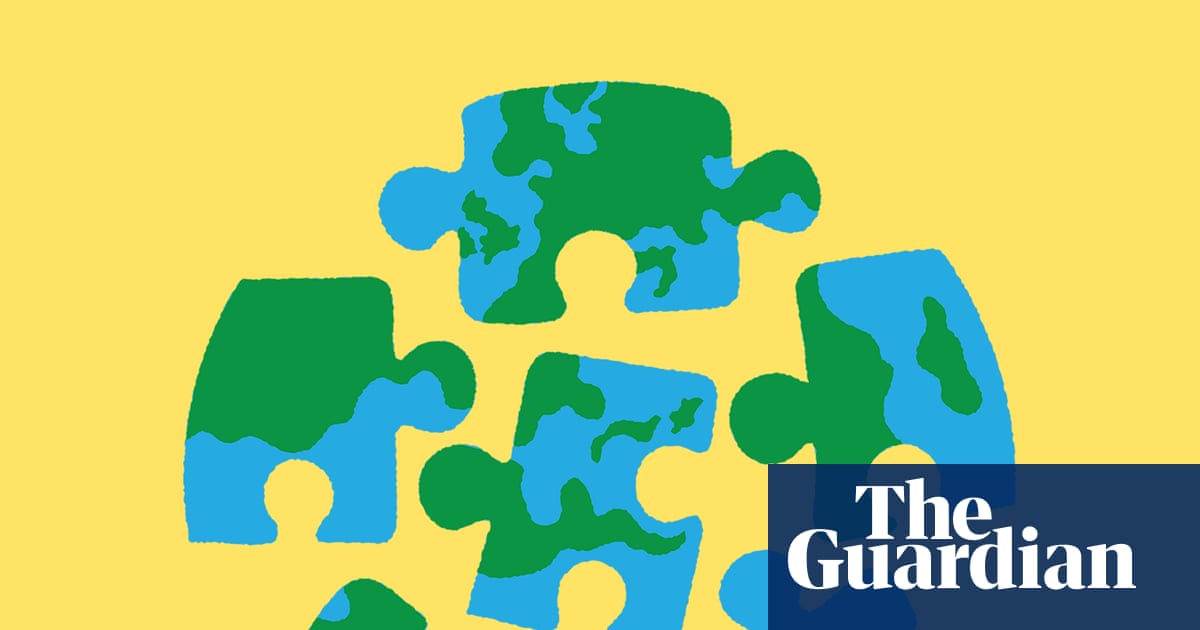
Without a unifying force for a new international order, the world risks fragmentation, characterized by multiple countries pursuing isolated initiatives. This environment fosters a transactional and unstable approach to international relations, void of shared values and cohesion.
Alexander Stubb, the President of Finland, has noted the disarray of the current global situation, advocating for a principled yet pragmatic path forward. He envisions a renewed world order focused on cooperation and dialogue.
However, to construct such an order, it will be vital to revitalize institutions established post-World War II, granting greater representation to nations in the global south. Without U.S. involvement, there are significant hurdles to overcome.
Even if an alternative leadership emerges, trust will be hard to rebuild among nations that have sought to navigate an increasingly perilous landscape without U.S. support.
Thus, the future likely trends toward a chaotic international environment devoid of a cohesive framework, elevating the risk of confrontation and instability among nations.
It remains uncertain where nations like the European Union or Japan will fit in this evolving landscape. They are likely to advocate for a reestablished multilateral framework, while navigating complex ties with both the U.S. and China.
Larger developing nations such as Brazil and India may manage to maintain their independence by leveraging relationships with both superpowers. In contrast, many smaller nations may find themselves limited in their policy choices, becoming vassal states to larger powers.
Recent trade dynamics illustrate this disparity. While Brazil maintains strong ties with China, countries like Mexico have resorted to raising tariffs to adapt to the shifting landscape.
The new world order will starkly contrast with the collaborative vision fostered post-World War II, where countries worked together towards mutual prosperity.
Moving forward, the balance will shift from seeking new opportunities to navigating new vulnerabilities, hampering trade, raising costs, and inhibiting innovation.
The potential for representing risks such as economic downturns, environmental crises, or security threats will fall primarily on individual nations, rather than a collective global community.
In retrospect, many may reflect on this path with regret. While the postwar order had its flaws, the principles of multilateral collaboration and rules-based governance provided a framework for fostering order and prosperity worldwide.
The shift toward isolationism portends a future marked by unregulated power dynamics where might dominates over cooperation. As noted by Carney, we are entering an era where “the strong can do what they can, and the weak must suffer what they must.”
-
Eduardo Porter is a journalist focused on economics and politics. He is a Guardian US columnist and writes the newsletter Being There on Substack
-
Spot illustrations by Ryan Chapman
Key Takeaways
- The traditional U.S.-led global order is facing significant challenges and may be collapsing.
- Countries are encouraged to establish new alliances to counterbalance U.S. and Chinese dominance.
- Fractured international relations are likely to stem from transactional rather than ideological alliances.
- Efforts to create a third path in global governance appear daunting and potentially unfeasible.
- The future global landscape may lack cohesive frameworks, leading to increased instability.
FAQ
What is meant by the U.S.-led global order?
The U.S.-led global order refers to the framework of rules and alliances established after World War II, promoting open markets and cooperative security among nations.
Why is the current international order being challenged?
The international order is being challenged due to changing geopolitical dynamics, perceived loss of U.S. leadership, and rising nationalism across various nations.
What are the risks of a fragmented international order?
A fragmented international order could lead to increased competition among states, reduced cooperation, and heightened risks of conflict.