Transformative Change in Limbuguda: Embracing AI for Tribal Empowerment
Nestled in the north-eastern part of Telangana, approximately 320 kilometers from Hyderabad, Limbuguda is a small hamlet predominantly inhabited by a Particularly Vulnerable Tribal Group (PVTG). Located in the Kumram Bheem Asifabad district, this village is pioneering a transformative journey through the potential of Artificial Intelligence (AI).
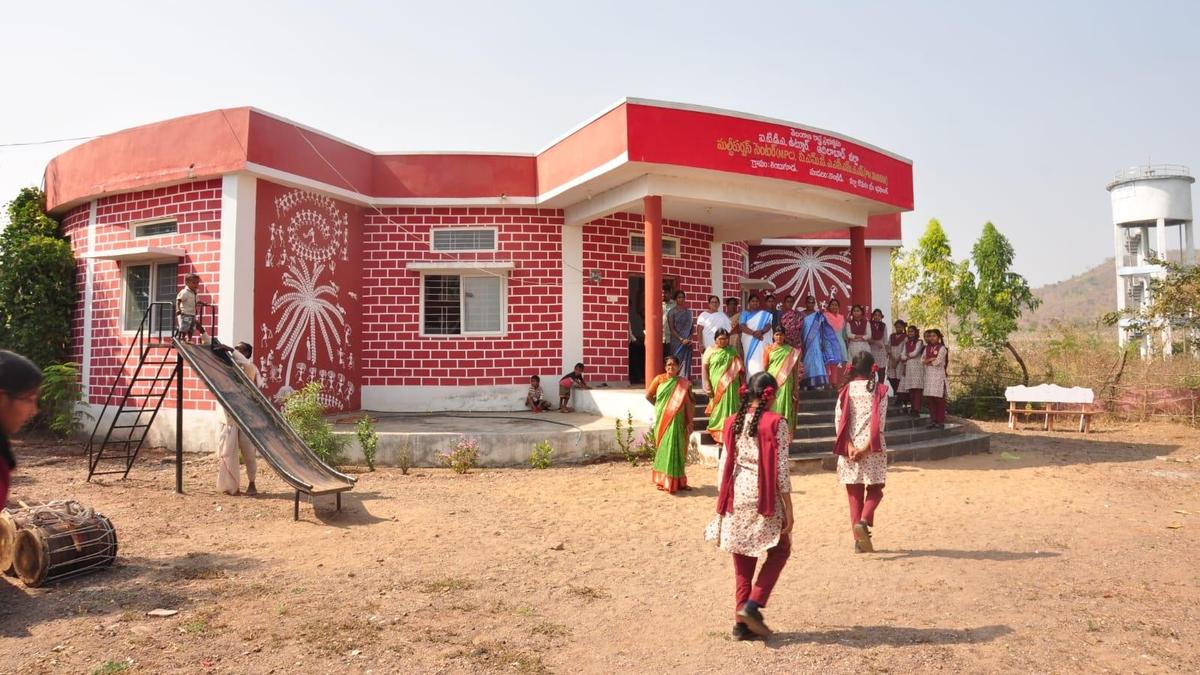
How did Limbuguda, surrounded by the hilly terrain of the Wankidi mandal near Maharashtra, gain such recognition? The village is celebrated for its prized asset — the Multipurpose Centre (MPC), which is equipped with AI-assisted learning tools.
Established in July last year under the Pradhan Mantri Janjati Adivasi Nyaya Maha Abhiyan (PM-JANMAN) scheme at an estimated cost of ₹60 lakh, the MPC employs AI-driven tools designed to improve learning outcomes among PVTG children.
Notably, the dropout rate among PVTG students is significantly high, with their population in Kumram Bheem Asifabad district estimated at around 16,092.
Dubbed as the first of its kind in PVTG settlements, the MPC features an ANM centre focusing on maternal and neonatal care, an Anganwadi, a conference hall equipped with a projector, and a computer lab, among other facilities.
The centre’s mission is to provide a comprehensive array of services, including education, healthcare, nutrition, and livelihood support, all under one roof, with a strong emphasis on the holistic development of PVTGs and the revival of their cultural heritage.
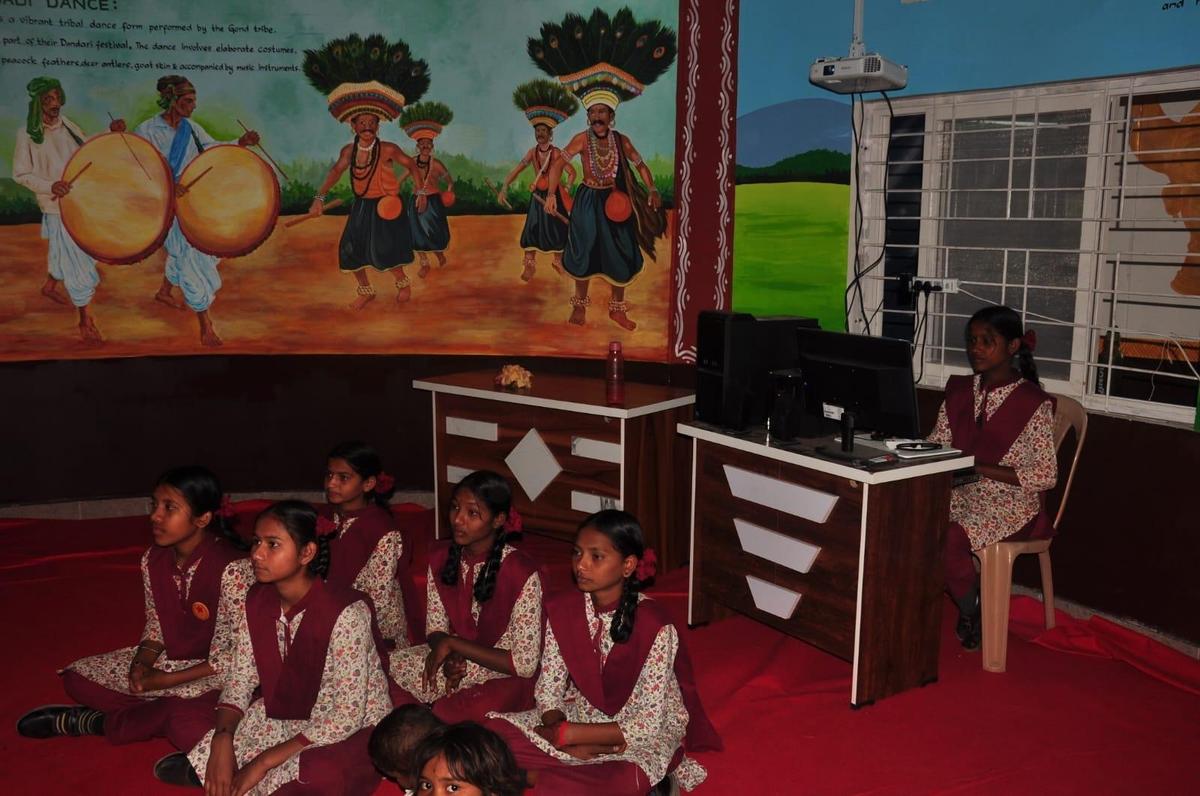
Tribal students attending the Assisted Mathematics Learning (AML) session at the Multipurpose Centre in Limbuguda, a tribal hamlet, in Telangana’s Kumram Bheem Asifabad district. | Photo Credit: P. Sridhar
Limbuguda stands as one of the 149 PVTG settlements in this predominantly tribal district. The Kolam community makes up a significant portion of the PVTGs in the combined Adilabad district and is among the most marginalized and socio-economically disadvantaged tribal groups. Limbuguda was chosen for the PM-JANMAN initiative due to its remote geography and other critical factors.
The village is now accessible via a Cement Concrete (CC) road that runs alongside an irrigation canal. This road connects Limbuguda, home to fewer than 40 families from the Kolam tribe, to the outside world. Amidst the scenic hills, the centre has become a symbol of hope for the local tribal population, with plans underway to replicate this technology-driven initiative in other PVTG villages in the district, under the guidance of the Integrated Tribal Development Agency (ITDA), Utnoor.
Kolam farmers in Limbuguda and nearby settlements largely depend on rain-fed agriculture, primarily cultivating cotton in black soil. During the off-season, they engage in daily wage labor or work in agricultural fields.

“Around 29 MPCs have been approved for the district under the PM-JANMAN scheme. Numerous infrastructure and welfare measures—such as roads, mobile medical units, housing, electricity connections, and mobile networks—have also been sanctioned based on needs identified during a survey conducted last year.”Rama DeviDeputy Director (Tribal Welfare), Kumram Bheem Asifabad
Standing in front of a row of traditional mud-and-tile houses beside the MPC, Athram Jaithu expressed his pride in donating a portion of his small ancestral land for the centre, driven by his belief that education is the key to empowering PVTGs.
“I donated land for the Multipurpose Centre in hopes that it would illuminate the path of education and improve our people’s living conditions,” Jaithu remarked contentedly. He represents numerous small Adivasi farmers who depend on agriculture for their livelihoods.
Affectionately known as ‘Devara’ by his neighbors, Jaithu lamented his inability to provide higher education for his two children, who opted for farming after completing their SSC.
Another Kolam farmer echoed his sentiments, attributing low literacy rates among the Kolam community to poverty, poor connectivity, and limited opportunities.
The establishment of the MPC also facilitated the construction of a CC road to Limbuguda. “Not a single individual from Limbuguda and Bheemguda Kolam habitations has secured a government job as of now,” he noted, sharing that Athram Anand Rao resumed farming after earning a B.Sc. degree.
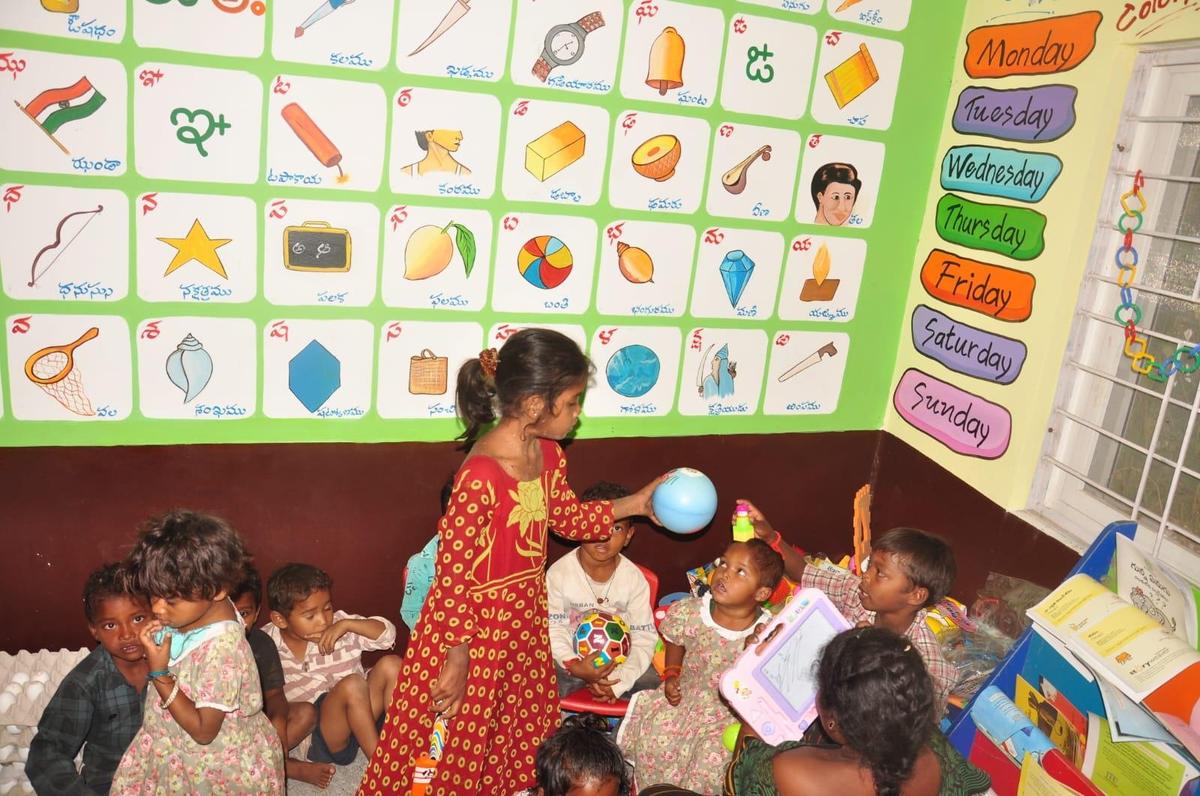
Children of Kolam tribe, a Particularly Vulnerable Tribal Group (PVTG), at the Anganwadi centre in the Multipurpose Centre in Limbuguda, a small tribal hamlet, in Telangana’s Kumram Bheem Asifabad district. | Photo Credit: P. Sridhar
Two young residents from Limbuguda — Athram Bheem Rao and Sidam Bheem Rao — are pursuing advanced studies in M.Pharm and B.Sc respectively. “I aim to secure a government job, ideally in a uniformed service, after graduation,” expressed Sidam Bheem Rao with determination.
Integrated Approach
According to an ITDA official, the MPC employs a comprehensive strategy aimed at combating malnutrition and anemia among children and women of PVTGs, while also narrowing the digital divide between urban and rural areas through AI-assisted educational tools.
Local villager Aniga praised the centre’s aesthetics, noting that the striking murals adorning the walls celebrate the tribal heritage and honor Adivasi warriors like Kumram Bheem and his companion Kumram Suru.
Reflecting on the changes fostered by the centre, Sidam Maru noted that while he had never used a computer before, his daughter, a student at the Tribal Welfare Primary School in Limbuguda, now confidently operates one at the MPC.
“The MPC initiative under the PM-JANMAN scheme is commendable. Its success ultimately hinges on effective and transparent execution. True empowerment of PVTGs requires not just infrastructure creation but also sustained investment in education and skill development, enabling tribal communities to access welfare schemes and attain financial independence.”Athram BheemraoPresident of Telangana PVTGs Association
Shivaraj, an instructor at the MPC, elaborated on the education methods employed, mentioning the use of Assisted Language Learning (ALL) and Assisted Mathematics Learning (AML) tools to enhance language and mathematical skills for students in classes III, IV, and V. For higher classes VI through IX, the centre utilizes tech-enabled resources from Khan Academy to explain concepts in mathematics and physics.
Reiterating the importance of the MPC initiative, Athram Bheemrao stressed the need for its transparent and effective implementation. He argued that true PVTG empowerment must go beyond just physical infrastructure; it should ensure ongoing investment in education and skills that can help tribal communities thrive and become self-reliant.
He also advocated for complementary initiatives such as vocational training for Adivasi artisans to help revive traditional livelihoods and suggested implementing off-grid solar power projects in remote PVTG communities located near forested areas.
Community voices resonate with these aspirations, pointing out lasting challenges. Jalapathi from Khirdi gram panchayat observed that many Kolams are multilingual, speaking Telugu, Marathi, Gondi, and their native Kolami. He believes the MPC offers a constructive environment that opens new educational avenues for students from PVTG communities.
The centre has also attracted attention from policymakers. Union Minister of State for Road Transport & Highways and Corporate Affairs, Harsh Malhotra, visited Limbuguda last year and appreciated the ITDA’s efforts, describing the MPC as a “Lighthouse MPC” — a potential model for tribal areas nationwide.
Despite the recognition, residents face ongoing challenges related to accessibility. Those living in Limbuguda, Bheemguda, and Khirdi highlight the lack of a regular bus service connecting their villages to Wankidi mandal headquarters. Improved transport options will enable tribal children to make better use of the MPC’s educational and digital resources.
Digital infrastructure must also be prioritized. Villagers emphasized the need for reliable high-speed internet at the MPC to support effective use of AI-assisted learning tools and access online educational materials. They also expressed hope that the centre could offer seminars and workshops to familiarize tribal students with new technologies while promoting their unique arts and culture.
A local young person pointed out the social issues that still pertain in these remote areas. Superstitious beliefs, inadequate housing, and limited livelihood options continue to affect segments of the PVTG population, highlighting the necessity for broader socio-economic interventions alongside technological advancements.
Cultural Preservation
Cultural preservation remains a vital topic among local residents. Adivasi artist Gangu from Tiryani stressed the importance of protecting traditional knowledge systems, especially indigenous insights about medicinal plants and nutritional practices. He fondly recalled the courageous stories of tribal resistance against the Nizam regime, including the contributions of Kolam warrior Kumram Suru, a close associate of the legendary Kumram Bheem.
From an administrative standpoint, Rama Devi, Deputy Director (Tribal Welfare) of Kumram Bheem Asifabad, noted that “29 MPCs have been sanctioned for the district under the PM-JANMAN scheme. Numerous infrastructure and welfare measures, including roads, mobile medical units, housing, electricity connections, and mobile networks, have been approved based on needs identified during a survey conducted last year.”
Officials indicated that the Limbuguda MPC is part of a comprehensive strategy aimed at delivering healthcare, nutrition, and digital education under one roof. Nonetheless, community leaders and youth representatives stress that such initiatives must be accompanied by targeted skills training programs, fostering sustainable livelihoods and financial independence among PVTG youth and women.
Conclusion
Limbuguda exemplifies how integrated and technology-driven initiatives, like the MPC, can pave the way for transformative change among marginalized communities. While challenges persist, the collaborative efforts toward education, empowerment, and cultural preservation indicate a hopeful future for the Kolam tribe and other PVTGs. With continued support and commitment, these endeavors can foster a brighter, self-reliant tomorrow for these communities.