The Army is now integrating artificial intelligence (AI) tools to enhance its doctrine creation process, as announced on Wednesday. This move reflects an effort to innovate and improve efficiency within military operations.
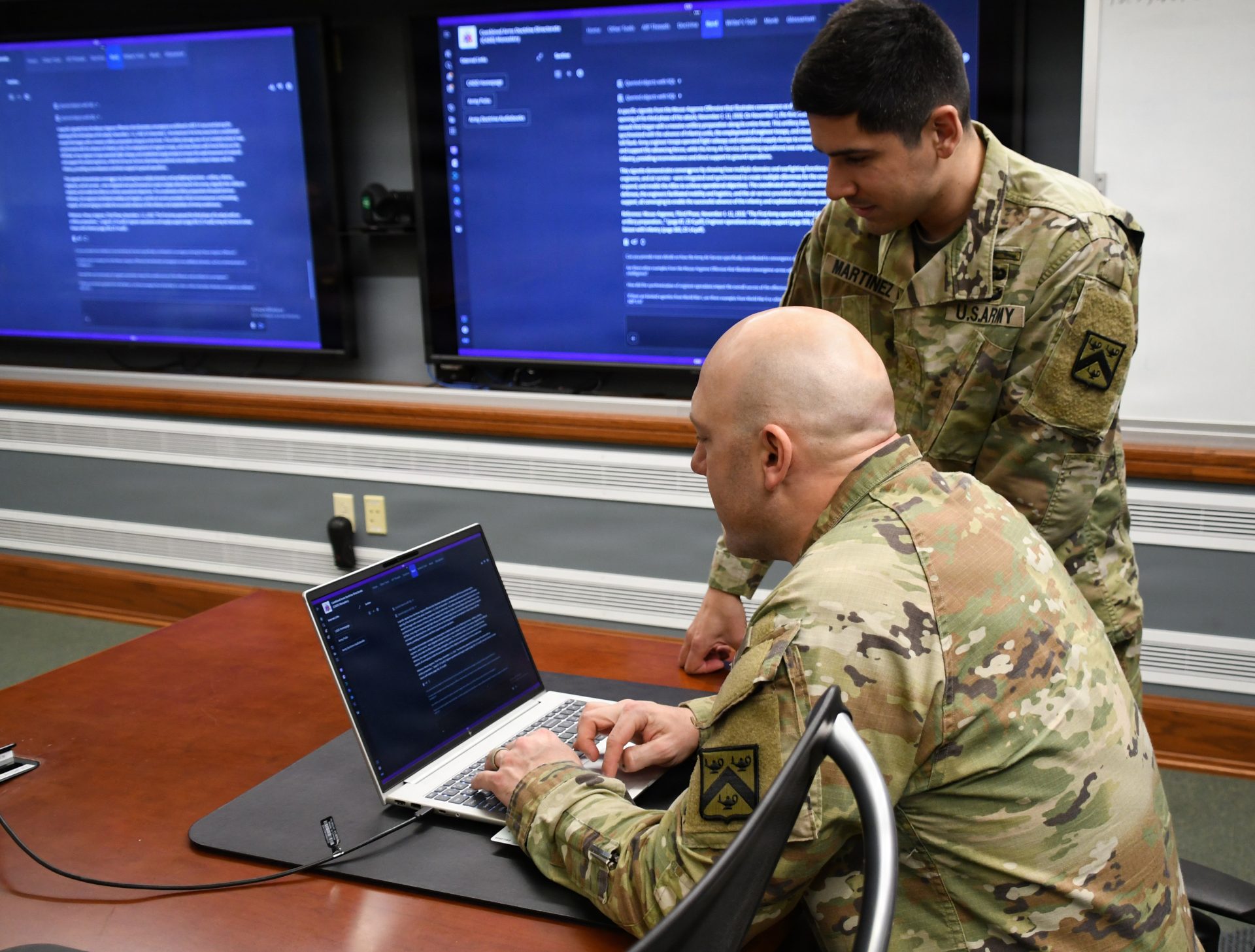
The Combined Arms Doctrine Directorate (CADD), which is responsible for developing key publications that guide soldiers’ actions, is actively training its doctrine writers to utilize approved AI tools effectively. This includes employing AI for idea generation, as detailed in a recent press release.
The military has been swiftly adopting large language models throughout various branches, with Pentagon officials praising the technology for its potential to enhance operations. However, experts have raised concerns about the risks associated with AI, particularly its tendency to create false information or “hallucinate” facts, which could undermine public trust in institutions.
In its announcement, the Army acknowledged the significant shortcomings of AI, particularly in terms of accuracy—a crucial factor in doctrine writing. It recognized AI’s ability to fabricate details or misinterpret source materials, yet noted that the technology continues to evolve and that it should not be relied upon solely by writers.
One example highlighted by the Army involved an outdated manual being referenced by an AI tool during the development of a doctrine test. This error was only identified because the writer had expertise in the subject matter.
“You should think of it like a resourceful and motivated young officer who may need guidance, but can still help streamline the process,” remarked Lt. Col. Scott McMahan, a military doctrine writer, in the release.
So far, the incorporation of AI tools has resulted in only minor changes, but writers have successfully utilized the technology to sift through “hundreds of texts for historical examples that support complex doctrine points,” effectively saving time.
“The current large language model tools now have access to the databases that were previously difficult to access,” stated CADD Director Richard Creed, Jr. “Having reliable data is essential for determining the usefulness of these tools.”
It remains uncertain what specific data sources these unnamed AI tools draw from, as information security continues to be a prominent concern among experts in the field. Recently, DefenseScoop reported that the military’s Explosive Ordnance Disposal (EOD) technology authority cautioned its bomb technicians against uploading sensitive technical material into AI platforms.
Additionally, these AI tools are being developed to aid in grammar checks, readability enhancements, and the generation of ideas for doctrine.
“We were seeking deeper insights for an idea,” McMahan shared. “After providing the tool some initial thoughts, it generated three paragraphs, from which we used one particularly impactful sentence.”
To facilitate the training of Army doctrine writers on AI capabilities, officials have created a “four-pronged strategy.” This strategy includes integrating a “master gunner,” who is already proficient with large language models, to assist the writers in utilizing the technology effectively.
“We have made it abundantly clear that AI tools are not meant to replace the hard work expected from our personnel,” Creed emphasized. “Every line generated by a large language model will be reviewed by a human for accuracy. To ensure this happens, it’s crucial that our team is well-informed and skilled.”