The rise of generative artificial intelligence (AI) is transforming various fields, including art, cinema, accounting, national defense, and education. Some experts suggest that AI could potentially eliminate the need for human labor entirely, raising questions about the future of work. This narrative can be viewed positively or negatively, depending on one’s perspective.
While some worry that AI may create a divide in society, exacerbating class struggle between the wealthy and the impoverished, others argue that the end of work might also signal an end to scarcity, eliminating the need for money. Yet, some believe that AI may pose existential threats long before reaching such scenarios. Others, like economist Henry Thompson from Ole Miss, theorize that we may never arrive at this juncture. Instead of focusing on whether AI could lead to a workless future, it’s valuable to examine how it is likely to influence jobs and employment now.
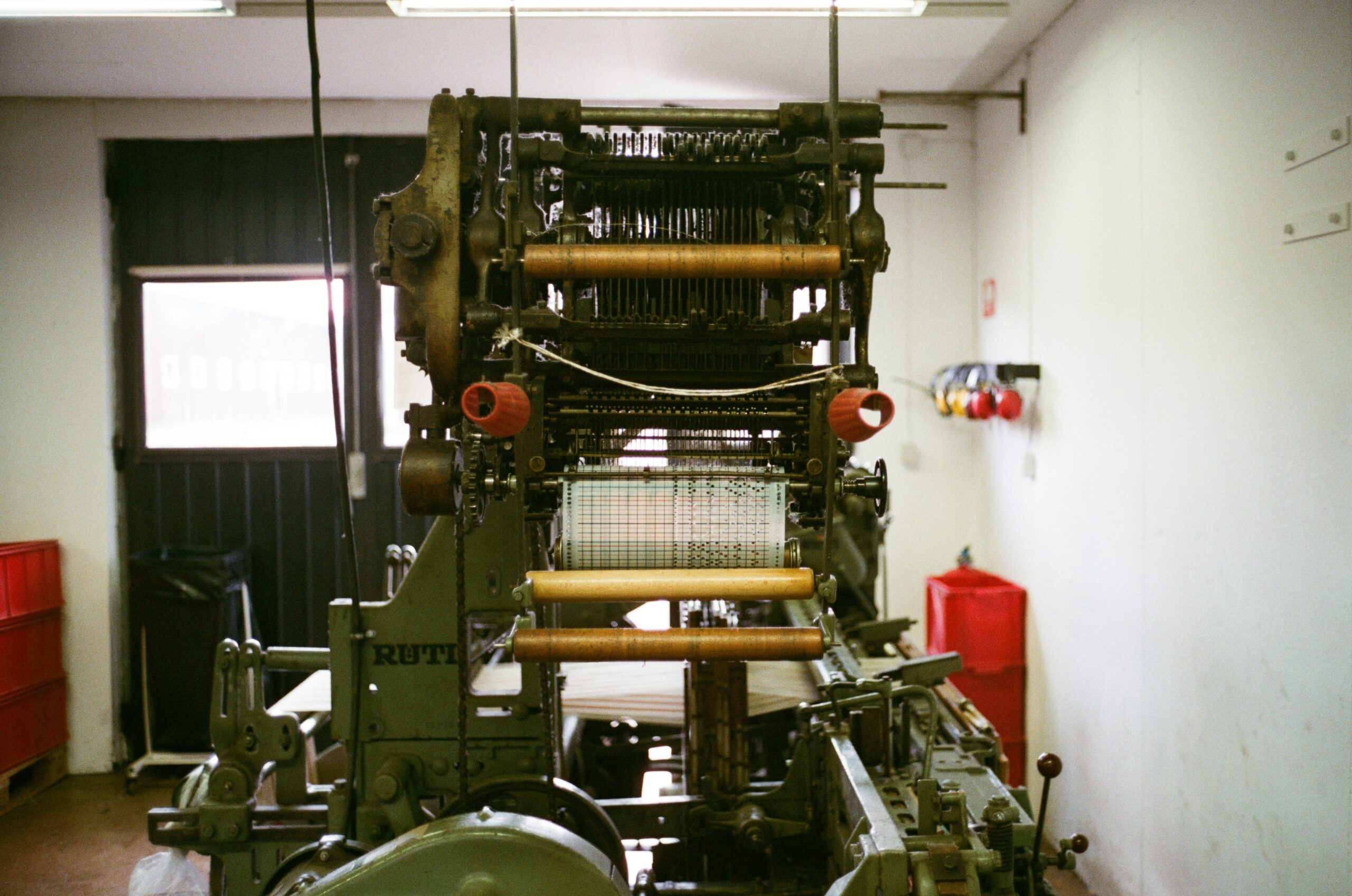
Concerns about machinery’s impact on labor are not new. Many contemporary worries about AI mirror those of the Luddites, a 19th-century British movement opposing mechanized weaving. The Luddites feared these advancements would result in cheap products and displace skilled workers. Their efforts to sabotage machinery ultimately failed, yet automation in the textile industry flourished over the following two centuries.
In the 20th century, economist John Maynard Keynes also addressed the impact of automation on employment. In his 1930 essay “The Economic Possibilities for Our Grandchildren,” he predicted that automation would allow people to work only three hours a day.
However, both predictions missed the mark.
While some weavers lost their jobs, the overall quality of the industry did not decline. In fact, wages for skilled textile workers increased. In 1800, the weekly wage for a textile worker averaged about 25 shillings (equivalent to £91.68 today) or around £4,767 annually. Today, the average annual wage for a skilled textile worker stands at £29,000.
Why such wage growth? Automation transformed the nature of labor itself. Workers unable to adapt to machines lost their jobs, while those who integrated automation into their workflow saw their productivity—and consequently their earnings—rise. A recent paper published in the Journal of Labor Economics supports these findings in the context of contemporary automation.
As for Keynes’s prediction, recent statistics from the Bureau of Labor Statistics indicate that, on average, full-time workers in 2024 worked around 42 hours a week, while all workers averaged 34.2 hours. Although this represents a reduction from the approximately 47 hours a week during Keynes’s era, it still starkly contrasts with his vision of a 15-hour workweek.
In a brief paper published last year in Industrial and Organization Psychology, my colleague Dr. Anne-Marie Castille and I examined the reasons behind these inaccurate forecasts. We concluded that both Keynes and the Luddites overlooked a crucial point: automation does not alleviate the fundamental reasons people work, primarily scarcity, including time.
Initially, individuals devote their efforts to high marginal value tasks. As automation reduces the time needed for these tasks, it enables individuals to engage in activities previously deemed too costly. The nature of these newly pursued activities varies from person to person, and often new desires emerge as a result. We write:
“Domestic chores used to demand considerable labor, requiring extensive hours. Washing clothes meant hand-washing each item, drying them on a line, and retrieving them afterward. With the advent of washing machines, the time needed for laundry dramatically decreased, likely taking less than 20 minutes per load. Domestic workers, primarily women, suddenly found themselves with much more free time. Many opted to enter the workforce, utilizing the time saved for paid employment.”
“As wealth increased, basic needs such as food security and shelter became more easily attainable with fewer resources. This led to a pivotal question: Should one use this newfound time for leisure or work in order to fulfill additional desires?”
I believe we will observe a similar trend with generative AI. While AI will indeed result in some job losses, new job opportunities will inevitably emerge. The specific nature of these jobs remains unknown, but human creativity and ambition are limitless. We will forge new paths to meet our evolving desires and continue to work. Ultimately, AI will not resolve the fundamental motivations behind our need to work: scarcity remains a persistent challenge.