The Impact of COVID-19 on Capitalism and Global Dynamics
The effects of the COVID-19 pandemic continue to resonate across various sectors, exacerbating existing issues within global capitalism. As mortality rates rise in some areas, antibiotic resistance increases, and claims for disabilities contribute to more significant workforce absences, the pandemic’s role appears pivotal in a world already plagued by economic and geopolitical instability.
Evidences of Pandemic Consequences on Capitalism
Before the onset of the COVID-19 pandemic, the capitalist framework prevalent in the US and its allies was already showing signs of distress. A November report from **npj Primary Care Respiratory Medicine** emphasizes that microeconomic impacts have led to an average annual global burden of around $1 trillion and approximately $9,000 per patient in the USA. Furthermore, annual lost earnings in the United States alone are estimated at roughly $170 billion, with Long COVID linked to elevated unemployment rates and financial hardship extending for up to three years post-infection.
Numerous studies have surfaced over the past year, showcasing how the pandemic has negatively impacted productivity. Additionally, it has heightened concerns about declining birth rates in advanced economies, which, while offering ecological advantages, stir apprehension among capitalists due to potential adverse effects on economic growth.
While these trends existed prior to the pandemic, COVID-19 has accelerated them—amplifying fears and intensifying the psychological strain on many billionaires whose decision-making reflects an urgent need to maintain their power.
The Link Between Increased Belligerence and Economic Crisis
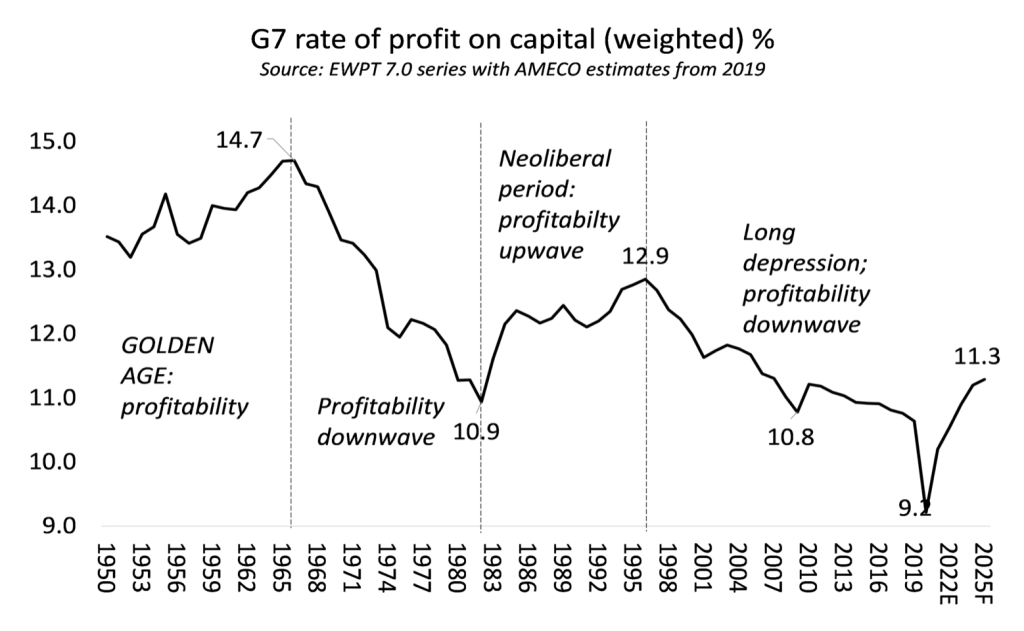
Those who argue that capitalist expansion requires broadening empires to sustain growth suggest that the “West” is searching for ways to revitalize economic productivity. As economist Michael Roberts outlines, the “golden era” for capitalism ended in the 1970s due to a sharp decline in profitability, leading to economic slumps and a retreat to neoclassical principles that favored deregulation and globalization. Although these measures briefly restored profitability, they have ultimately not resolved deeper systemic issues.
The impacts of the pandemic in 2020 only intensified the long-standing crises, leaving European economies particularly vulnerable while giving rise to new economic competitors like China, which has thrived unaffected by Western downturns.
This struggle for growth manifests in various global conflicts today, particularly as the US seeks to secure new markets. For instance, Venezuela remains a point of interest, with notable figures asserting that control over its oil reserves is a strategic necessity for US economic interests.
Broader Economic and Military Goals
Similarly, the motivations behind dismantling the Russian Federation can be traced back to past economic exploitation during the 1990s, which left the country devastated. As ongoing geopolitical tensions unfold, the EU grapples with its prolonged economic challenges, prompting some leaders to turn towards militaristic solutions as a means of facilitating growth.
The ability of the EU to finance its needs through shared debt could theoretically enhance its military ambitions and economic stability, revealing how crises in capitalism may encourage increasingly aggressive strategies in international relations.
The Silicon Valley Response to Crisis
In the US, COVID-19 initiated a search for new imperial strategies among the wealthy elite. Billionaire Marc Andreessen and others communicated through exclusive forums to address their grievances and outline pathways to regain influence. The resulting narrative emphasized the urgency of assertive power dynamics shaped by elite interests, notably at the expense of broader societal well-being.
Underlining this shift is a vision promoted by right-wing accelerationists like Curtis Yarvin, advocating for a world fragmented into private entities governed by technocratic monarchies. This troubling prospect seeks to prioritize profit over the collective welfare of the citizenry, with increasing privatization seen as a solution to societal disorders.
Conclusion: Future Perspectives
The COVID-19 pandemic was not merely a health crisis; it functioned as an accelerant within existing systems of economic exploitation and instability. A failure to recognize these patterns of behavior among the elite, particularly in Silicon Valley, may lead to further setbacks both domestically and internationally. As we examine the interplay of crises and responses, it is crucial to note that without meaningful changes to governance and decision-making power, the trajectory of increasing hardship and division may continue. The pandemic provided a unique moment for reflection and resilience—one that, tragically, has instead become a catalyst for exacerbated inequities and unrest.

