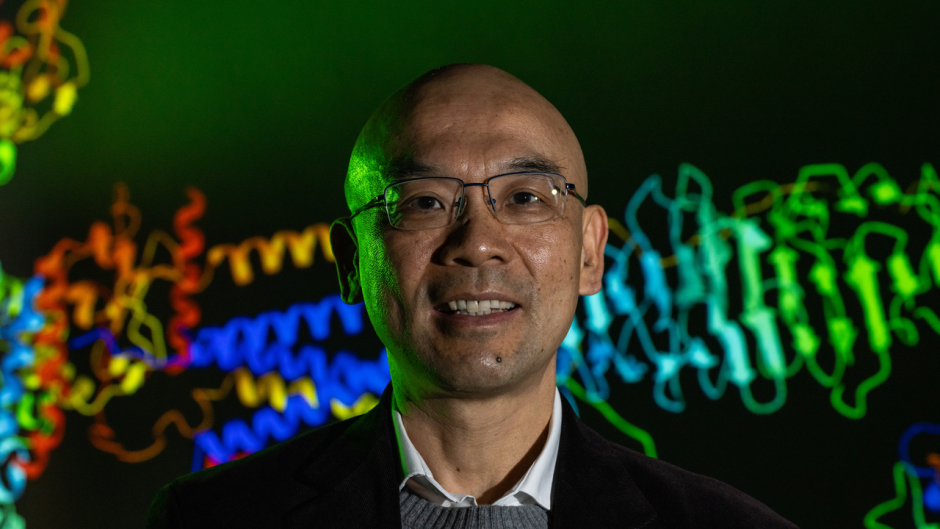
Revolutionizing Protein Modeling: The Launch of PSBench
The University of Missouri has made a significant breakthrough in the field of bioinformatics by unveiling PSBench, the largest collection of protein models with quality assessments in the world. This invaluable resource is expected to enhance drug development for critical illnesses such as Alzheimer’s and cancer.
Feb. 18, 2026
Contact: Eric Stann, StannE@missouri.edu
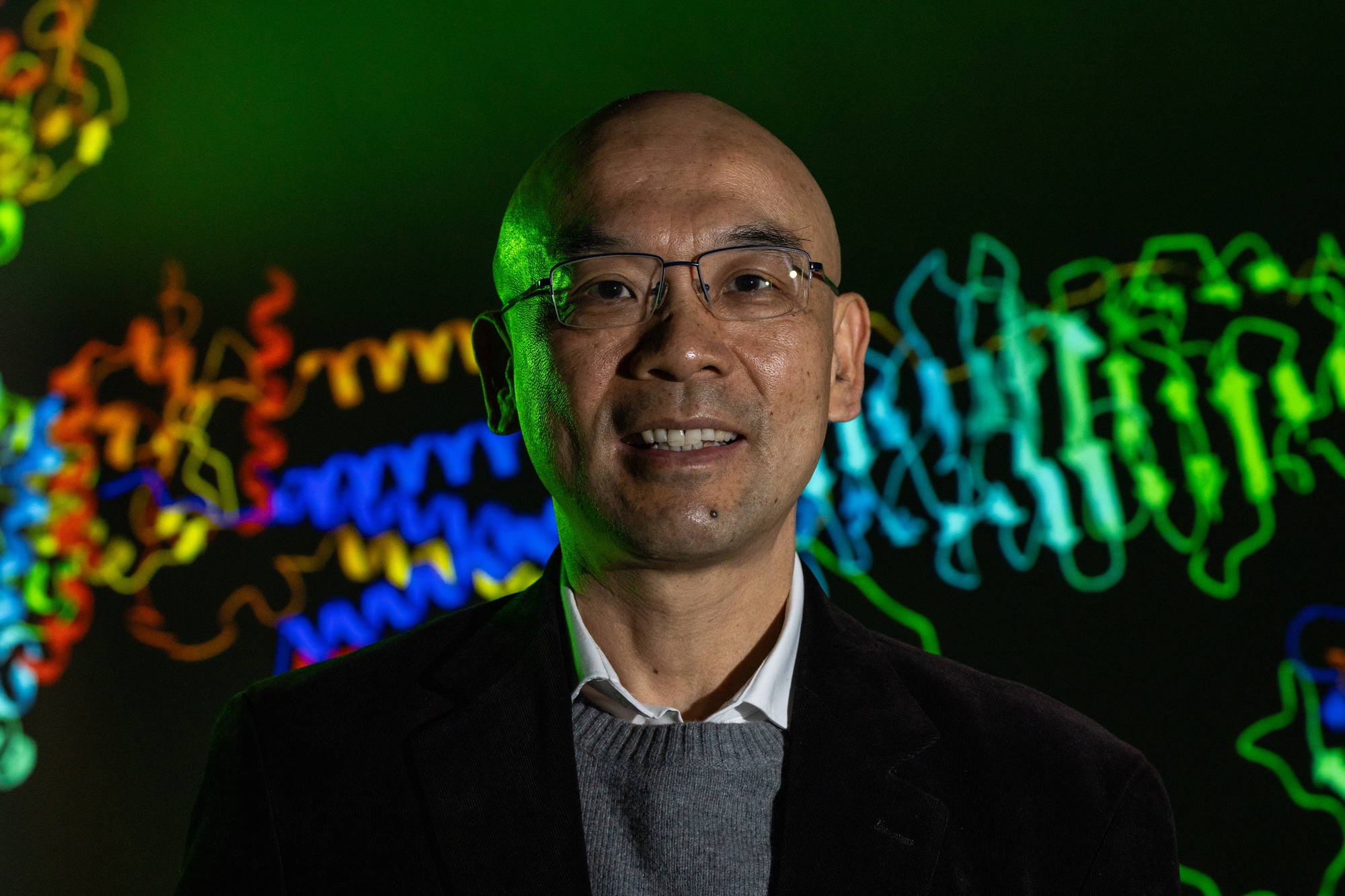
Photo by Abbie Lankitus
The PSBench database features 1.4 million validated protein structure models, all rigorously assessed by experts. This extensive collection empowers scientists with reliable data to develop more precise artificial intelligence (AI) systems that evaluate protein structure models, which is vital for innovating future medical treatments.
Proteins are often referred to as the fundamental components of life, as they facilitate every biological function within the human body. Their three-dimensional (3D) shapes are crucial for their activity, and even minuscule alterations in structure can trigger disease.
Recent technological advancements in AI, particularly tools like Google’s AlphaFold, have greatly improved the accuracy of protein structure predictions.
However, AlphaFold and similar tools still face challenges. No single AI solution maintains consistent accuracy across all protein types, making it tough for researchers to determine the reliability of their predictions.
This is where PSBench steps in to set a definitive standard.
“With PSBench, scientists can develop AI techniques to evaluate the quality of predicted protein models and determine their reliability,” stated Jianlin “Jack” Cheng, a Curators’ Distinguished Professor and Paul K. and Diane Shumaker Professor in Bioinformatics. “Our initiative marks a significant leap toward utilizing protein models for understanding diseases and creating effective treatments.”
Cheng, along with his team at Mizzou’s College of Engineering, has assembled PSBench, using both institutional and community resources generated during the Critical Assessment of protein Structure Prediction (CASP). This competition is internationally recognized as the gold standard for evaluating computational protein prediction methods. It was established to independently assess computer models that forecast how protein chains fold into functional 3D shapes.
For over half a century, researchers have endeavored to decipher how proteins organize into their intricate 3D forms. The Cheng group was the first to showcase the effectiveness of deep learning in this domain at the 2012 CASP competition, which sparked a decade-long deep learning revolution in the field, including the emergence of AlphaFold, now hailed as one of the most accurate tools for predicting protein structures worldwide.
Cheng and his co-authors, Jian Liu, a postdoctoral fellow at Mizzou, and graduate student Pawan Neupane, recently discussed their findings related to PSBench at the 2025 NeurIPS conference in San Diego, a prestigious venue for AI discussions, where transformative technologies like ChatGPT were initially unveiled.
“With PSBench, Mizzou is not only introducing a powerful new tool for the global scientific community,” Cheng emphasized. “We are at the forefront of the next era in AI-driven biomedical research.”