Currently, we are witnessing significant fluctuations in prices across various sectors, making the situation somewhat chaotic. Take the price of gasoline as an example; here in California, we recently paid $3.87 per gallon for the basic grade.
One would expect such a price point to signify a booming economy. However, that’s not the case. According to Business Week, “demand in the U.S. is at its lowest point since 1997.”
This means that even though gas demand has fallen to a 15-year low, prices have risen by 8 percent since the end of 2011. How is this possible?
This could be tied to the escalating tensions between the U.S. and Iran, particularly with Iran’s recent threats to halt oil exports to Europe. If a conflict with Iran does arise, oil prices could easily soar to $150 per barrel.
Nevertheless, while such international issues may partially influence the rise in oil prices above $102 per barrel, there appears to be a deeper concern that warrants further exploration… Continue reading
 Consumers are increasingly borrowing money, and the scale of this borrowing is substantial. Last week, the Federal Reserve announced that consumer credit rose by $19.3 billion in December—a figure significantly higher than the $7 billion median forecast from a Bloomberg News survey of economists.
This $19.3 billion surge followed a $20.4 billion increase in November, marking the most significant two-month rise in consumer spending in over a decade. According to the Federal Reserve, non-revolving debt—such as auto and student loans—constituted $16.6 billion of this debt increase, while revolving debt, primarily from credit cards, accounted for an additional $2.76 billion.
We find it perplexing that consumers are eager to incur debt at levels reminiscent of pre-recession patterns. Have they completely lost their bearings?
“Not yet,” asserts Alan Levenson, chief economist at T. Rowe Price in Baltimore.
He pointed out that December’s total revolving credit of $801 billion remains considerably lower than the pre-recession peak of $972 billion in August 2008. Continue reading
 As we continue to move forward, certain trends seem predictable, like Greece’s financial struggles. Others, such as the rising likelihood of an attack on Iran, are just beginning to become more apparent. Yet, what we observe and understand is only part of the bigger picture…
There are also factors that Donald Rumsfeld famously termed “unknown unknowns.” These are aspects we are unaware we need to consider. We could offer an example, but that would contradict the very definition of an unknown unknown.
Once information shifts from being unknown to known, we have the responsibility to assess, process, and respond to it. The overwhelming amount of noise can further complicate matters, often distracting even the clearest thinkers. What should the average worker saving for retirement do in the stock market landscape?
One option is to do nothing. Yet, choosing inaction is itself a decision.
Putting money into a savings account indicates a commitment to the banking system. On the other hand, hiding cash in a mattress is a strategy against inflation. Continue reading
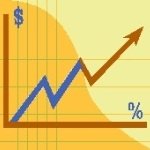 Yields on the 10-Year Treasury Note continue to hover below 2 percent, a remarkably low figure. Such low interest rates are quite unusual and suggest that the credit markets are struggling. Furthermore, despite the Federal Reserve’s attempts to keep interest rates down, these exceedingly low yields might be hindering the economy instead of fostering growth.
How did we arrive at this point? Let’s take a closer look.
“Where does credit go when it dies?” asks analyst Bill Gross in his recent Investment Outlook.
“It delevers, slows, and impedes economic growth,” Gross explains, “turning economic theory upside down and leading to challenges for policymakers.”
The critical insight Gross presents is that when economic policy drives interest rates to effectively zero, low rates no longer stimulate growth; they actually discourage it. In essence, if credit markets do not offer adequate rewards for the risks involved, lenders will invest their funds elsewhere.
This scenario can lead to adverse effects on the economy… Continue reading