In today’s rapidly evolving enterprise landscape, artificial intelligence (AI) is often celebrated as a revolutionary force. Yet, for many organizations, AI remains limited to basic applications, primarily automating tasks such as data entry or simple invoice processing. As industries face increasing complexities—from supply chain disruptions to a looming retirement crisis—experts assert that AI must evolve beyond its conventional role as a mere tool and transition into a true collaborator. This shift towards autonomous AI is becoming essential for organizational survival.
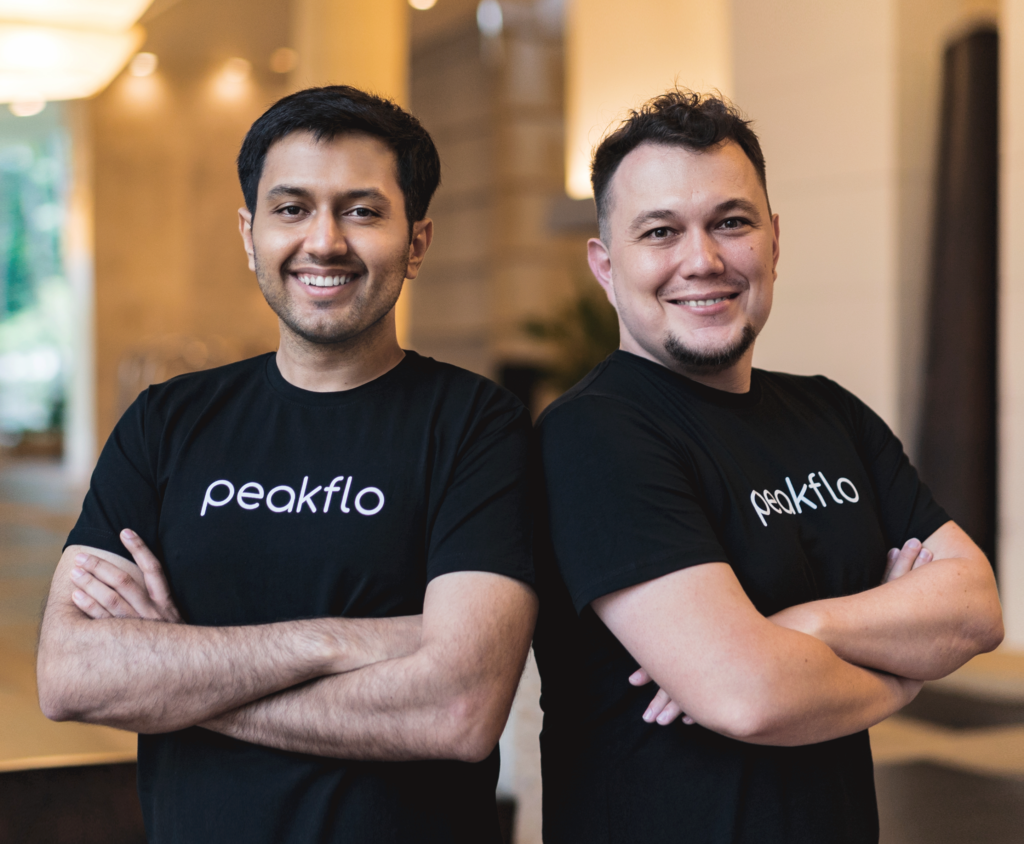
Saurabh Chauhan, Co-founder and CEO of Peakflo, a Y Combinator-backed AI startup that automates back-office operations for over 100 enterprises across APAC and the US, highlights this critical evolution. “AI agents must progress beyond fragmented automation,” states Chauhan. “They are no longer just instruments for digitizing forms or processing numbers. They should function as intelligent teammates that can independently orchestrate entire workflows.”
Peakflo recently introduced voice AI agents that gained recognition, ranking in the top three on Product Hunt in Q4 2025. Their approach focuses not on replacing human workers but on enhancing their capabilities, managing tasks from invoice validation to claims processing with reasoning that mimics human thought.
The Hidden Costs of Manual Processes
Take the insurance industry as an example, where Chief Claims Officers at Third Party Administrators constantly battle with inefficient use of man-hours. Processing a single invoice from a 1099 adjuster can take between 5 to 10 minutes and cost roughly $15 to $40. This could accumulate to an annual expense of $500,000 to $1 million for high-volume operations. While traditional AI tools can identify errors in documents, they require continual oversight. In contrast, Peakflo’s agentic AI can validate services, cross-reference policies, and ensure timely payments autonomously.
“This is not mere automation; it’s autonomy,” asserts Dmitry Vedenyapin, Co-founder and CTO of Peakflo, referencing his experience in building reliable AI systems for medical diagnostics and scaling platforms at AirAsia. “Our agents don’t just follow set scripts. They learn from your specific procedures, adapt on the fly, and handle intricate decisions as a dependable team member would, alleviating costly delays in vital processes.”
Why Most Enterprise AI Pilots Fail
This transformative mindset addresses significant market trends. A report from MIT in 2025 revealed that 95% of generative AI pilots within companies fail, mainly due to internal builds that do not match core competencies. Organizations invest millions into custom AI systems, only to find themselves stuck in pilot purgatory for up to nine months. In contrast, Peakflo enables return on investment within just 90 days through out-of-the-box workflows tailored specifically for finance and insurance sectors.
Unlike competitors like Bill.com or Tipalti—who focus primarily on finance without integrating voice functionalities—Peakflo’s enterprise-grade agents combine security, customization, and rapid deployment.
Bridging the Silver Tsunami with Agentic AI
The urgency for this transformation is heightened by the Silver Tsunami, a significant demographic shift that anticipates the retirement of 400,000 to 500,000 insurance and finance professionals by 2036, resulting in the loss of valuable institutional knowledge. Chauhan provides crucial recommendations for industry leaders.
First, transition from fragmented solutions to comprehensive agentic orchestration, allowing AI to manage synchronous tasks, such as verifying policies during a First Notice of Loss intake. Peakflo’s demo illustrates their AI agent Alex conducting empathetic interviews with claimants, checking ETAs for tow trucks, and autonomously assigning adjusters.
Second, enhance productivity by automating initial contacts; voice AI agents can concurrently handle thousands of calls around the clock, enabling specialists to focus on more complex claims.
Third, institutionalize knowledge by training AI on standard operating procedures (SOPs), transforming valuable expertise into a lasting resource. “AI preserves and scales what humans cannot,” Dmitry emphasizes. “It captures decades of expertise in regulated environments and makes it instantly accessible, mitigating the risk of knowledge disappearing.”
Peakflo’s Momentum and the Road Ahead
Recent achievements at Peakflo underscore its growing influence: inclusion in Google’s AI Accelerator in 2024, a partnership with the Singapore government announced on January 22, 2026, to provide up to 50% grants for SMEs, and roles for both founders as judges in Y Combinator’s Winter 2026 cohort. Future product releases promise even greater autonomy.
As Chauhan observes, “Companies don’t fail at AI due to technology; they fail in execution. By viewing AI as a collaborator, we can bridge that gap.” For CFOs, CCOs, and operations leaders, the message is unequivocal: adapt your AI strategy today, or risk falling behind in an era where autonomy is key to efficiency.
Spencer Hulse is the Editorial Director at Grit Daily, responsible for overseeing the editorial team, day-to-day operations, and reporting on breaking news.