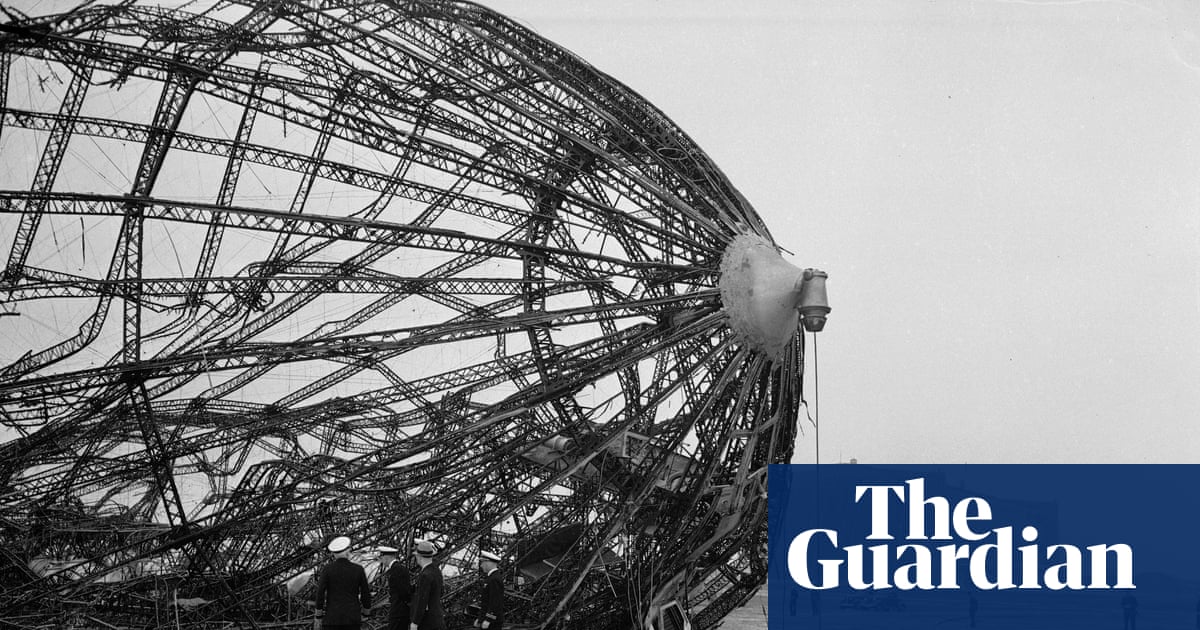
As artificial intelligence continues to advance, the urgency to bring new technologies to market has raised concerns about potential catastrophic failures, reminiscent of the Hindenburg disaster. Leading AI researcher Michael Wooldridge of Oxford University cautions that the intense commercial pressure on tech companies could lead to a significant mishap, undermining global trust in AI.
Wooldridge argues that businesses are so eager to capture market share that they often overlook the need for thorough testing of their AI tools, resulting in products that might not fully understand their own limitations. This pressure is evident in the proliferation of AI chatbots, many of which have safety mechanisms that can be easily circumvented, prioritizing speed to market over responsible development.
“It’s a classic case in technology,” he explains. “There’s a promising innovation that hasn’t been adequately tested, and the pressure to release it is immense.”
Speaking ahead of the Michael Faraday prize lecture at the Royal Society, titled “This is not the AI we were promised,” Wooldridge warns that a disastrous event akin to the Hindenburg tragedy—where a blazing fire resulted in 36 casualties—could destroy public interest in AI as a viable technology.
“The Hindenburg disaster effectively ended the airship era. We could face a similar backlash against AI,” he said, noting that since AI is interconnected with many systems, a serious incident could impact numerous industries.
Wooldridge envisions scenarios such as hazardous software updates for autonomous vehicles, an AI-induced cyberattack that disrupts global air travel, or a financial collapse of a major institution due to misguided AI decisions. “These are very realistic risks,” he points out. “AI has many potential failure points.”
Despite his concerns, Wooldridge emphasizes that he is not criticizing AI technology itself. Instead, he focuses on the disparity between expectations and reality. Many experts anticipated AI systems that would consistently provide accurate and robust solutions. However, he notes, “Contemporary AI is neither sound nor comprehensive; it tends to deliver very approximate results.”
This limitation stems from how large language models operate. These models generate responses by predicting the next word based on probability, resulting in an AI with inconsistent abilities: highly competent in some areas but lacking in others, leading to jagged capabilities.
Wooldridge raises alarms about how AI chatbots can fail in unexpected ways and lack awareness of their own inaccuracies, yet they are designed to deliver confident answers. When these responses mimic human interaction, they can easily mislead users. Alarmingly, a 2025 survey revealed that nearly one-third of students reported forming romantic attachments to AI.
“Companies aim to present AIs as overly human-like, but I believe this is a perilous approach,” Wooldridge warns. “It is crucial to remember that these are merely sophisticated tools, not human beings.”
Wooldridge sees a silver lining in the portrayal of AI from early Star Trek episodes. In one such episode, the Enterprise computer informs Mr. Spock, in a distinctly mechanical voice, that it has insufficient data to provide an answer. “What we often see today is AI that confidently asserts answers where it shouldn’t,” he stated. “Perhaps we need AI systems to communicate as the Star Trek computer does; unambiguously non-human.”