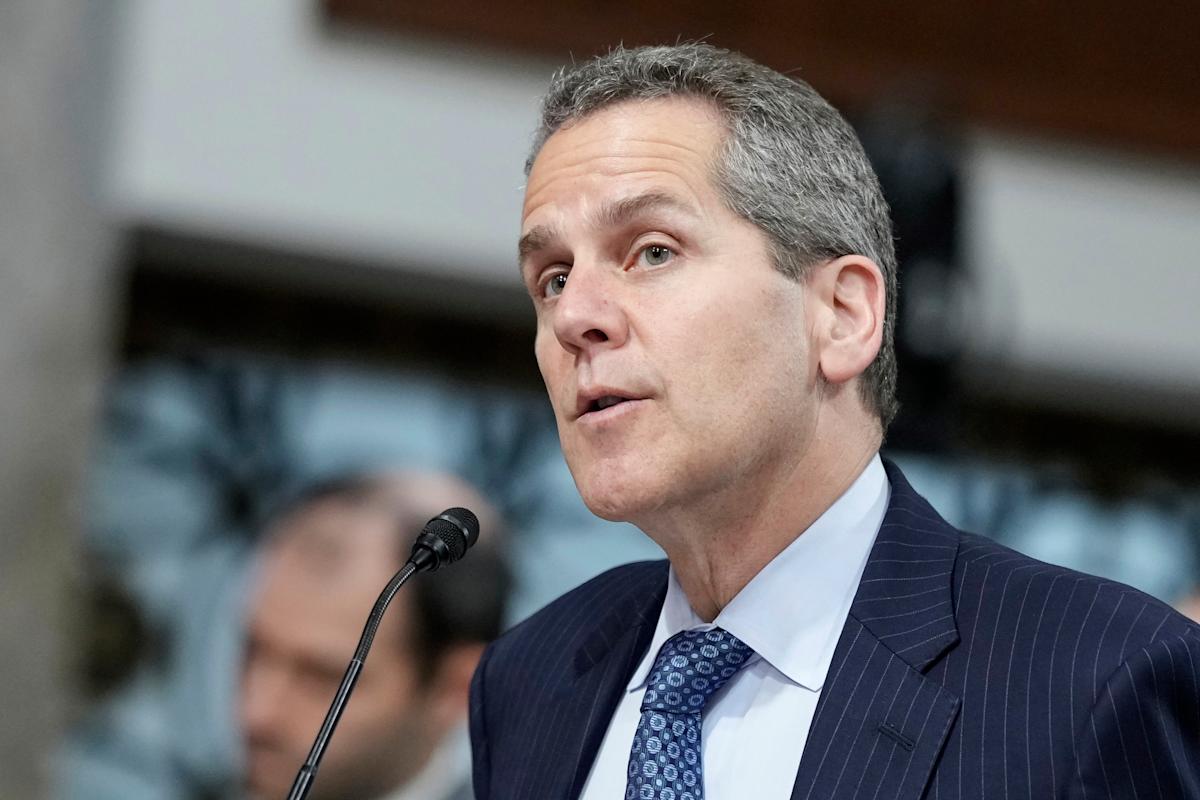
In a recent address, Federal Reserve Governor Michael Barr emphasized that the current surge in artificial intelligence (AI) is not expected to prompt the Federal Reserve to lower interest rates. His remarks challenge the notion that AI serves as a productivity booster that could enable a shift towards rate cuts.
While Barr anticipates that AI will have a “profoundly positive” effect in the long run, he also acknowledges the potential for significant disruption in the job market in the immediate future, which could adversely affect many workers.
He cautioned that AI could lead to inflationary pressures, citing the example of energy supply limitations on the power grid clashing with the increasing demand from data centers.
“For all of these reasons, I expect that the AI boom is unlikely to be a reason for lowering policy rates,” Barr stated at a gathering hosted by the New York Association for Business Economics.
This perspective stands in stark contrast to that of Fed Chair nominee Kevin Warsh, who posited that AI is set to unlock “the most productivity-enhancing wave of our lifetimes,” which would be “structurally disinflationary” and thus conducive to lower interest rates.
Read more: How jobs, inflation, and the Fed are all related
Barr also reiterated a cautious stance regarding established inflation and the health of the job market.
“I would like to see convincing evidence that goods price inflation is decreasing sustainably before considering any further reductions in the policy rate, assuming labor market conditions remain stable,” he said.
“Given the current conditions and available data,” he continued, “it will likely be appropriate to maintain steady rates for some time as we evaluate incoming information.”
·
SAUL LOEB via Getty Images
Barr’s comments align with those of several other Federal Reserve officials who have expressed a desire to see inflation slow before considering rate cuts. Chicago Fed President Austan Goolsbee told Yahoo Finance on Friday that he too would like to see more progress on inflation before supporting another rate decrease, specifically aiming for the Fed’s 2% target.
A recent Consumer Price Index report for January revealed that prices increased by 2.4% year-over-year. When excluding food and energy, the “core” inflation rate saw a rise of 2.5% compared to the previous year.
This Friday, the Commerce Department will unveil the Fed’s favored inflation indicator, the Personal Consumption Expenditures Index. Economists predict it will increase by 2.9% in December on a core basis, compared to 2.8% in November.
Barr stated his belief that inflation is currently around 3% based on PCE data, attributing this to the impact of tariffs on goods prices. He cautioned that while it’s “reasonable” to expect tariff effects to diminish later this year, there are many factors that suggest inflation may remain high.