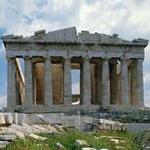
 “It is not good to have a rule of many.” – Homer
A New Greek Tragedy
Experiencing a country with a thriving economy can evoke a sense of euphoria. It stirs the souls and inspires the aspirations of its people, making previously unthinkable possibilities seem attainable. Suddenly, the nation’s brightest individuals shine even more brilliantly, its military stands as a symbol of strength, and its system of governance is perceived as optimal.
This illusion of prosperity can last for a time, supported by evidence that suggests everything is on the right course. Yet, when least expected, calamity strikes—economic stability, military might, and individual dignity begin to crumble in quick succession.
A prime example is Athens, which faced its decline over 2,400 years ago. Following the conclusion of the Peloponnesian War in 404 BC after a grueling 27 years, Athens fell from the pinnacle of Greek city-states to a state of utter disarray. The war effectively brought an end to Greece’s golden age, erasing the city’s pre-war affluence and dominance.
The psychological scars endured by the Athenians remain evident even today. Despite their attempts to explore various governance models—including early forms of democracy, oligarchy, and imperialism—they have struggled to reclaim their former status and may never achieve it again.
To fully grasp the ongoing Greek tragedy, one must reflect on the philosophical insights of Aristotle.
Witnessing the Occurrence of the Impossible
Aristotle presented two types of causation: proper (or prior) causation and accidental (or chance) causation. It’s conceivable that Aristotle did not anticipate these two forms of causation occurring simultaneously, as it seems improbable.
Yet the beauty of existence often allows us to witness the seemingly impossible. Just last Sunday, the improbable unfolded before our eyes…
Both proper and accidental causation appeared to converge. Specifically, rational Greek voters turned out to the polls, casting their votes between the conservative New Democracy party and the radical left Syriza party, which opposes bailouts. This result felt like the curious interplay of past events and chance combining to yield a uniquely troubling outcome.
While New Democracy technically received the highest number of votes, the margin was so narrow that neither party can secure enough seats in the 300-member Parliament to form a government. Additionally, these parties embody starkly contrasting ideologies.
New Democracy aims to maintain Greece’s euro membership and renegotiate the terms of austerity attached to the bailout, while Syriza seeks to dismantle the bailout agreement, default on euro obligations, and reintroduce the drachma. Ultimately, Greece’s path remains uncertain, but we at Economic Prism suspect it will largely echo the challenges of the past.
Give Democratic Socialism a Chance
This week will witness discussions regarding a coalition government, which may involve a partnership between New Democracy and the Socialist PASOK party. Together, these parties hold a slim majority with 162 seats in Parliament. While this arrangement may prevent an immediate exit from the euro, it risks becoming an unfavorable union.
From our understanding, both factions within the new coalition advocate for euro retention. However, what further actions they will pursue remains uncertain.
Admittedly, our knowledge of either party is limited. We know that PASOK identifies as socialist, while New Democracy includes the term “democracy” in its name. Nonetheless, the thought of a new democratic socialism seems paradoxical, especially given that such ideologies contributed significantly to Greece’s current financial troubles.
Alexander Tytler, a 16th-century Scottish historian at the University of Edinburgh, is often cited for his observations regarding the decline of the Athenian Republic. Although there is no definitive record confirming his statement, it resonates with historical accuracy:
“A democracy is always temporary in nature; it simply cannot exist as a permanent form of government. A democracy will continue to exist until voters discover they can vote themselves generous gifts from the public treasury. From that point onward, the majority will always elect candidates promising the most benefits from the treasury, ultimately leading to a collapse due to reckless fiscal policies, followed by dictatorship.”
Thus, the new Greek government faces the daunting task of figuring out how to secure additional credit for a country already drowning in debt—essentially, they must disregard the arithmetic involved.
“All we are saying,” chant the Greeks, “is give democratic socialism a chance.”
Sincerely,
MN Gordon
for Economic Prism
Return from Give Democratic Socialism a Chance to Economic Prism
