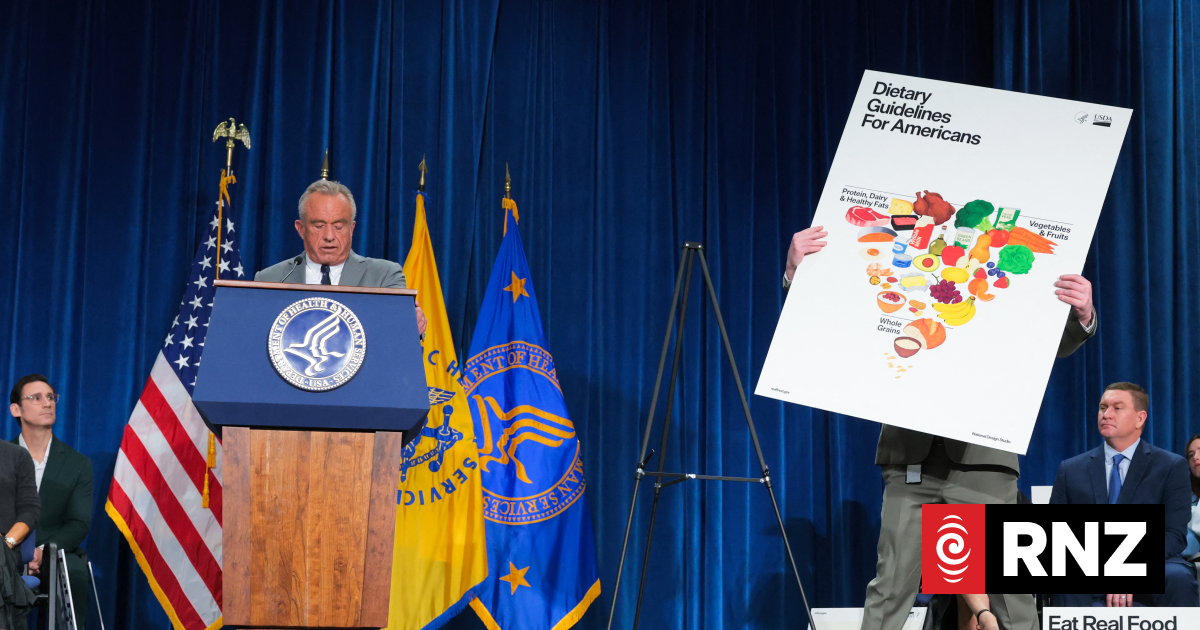
In January, the U.S. unveiled its new Dietary Guidelines, sparking significant discussion and debate. The guidelines not only shift the focus toward proteins but also challenge the long-standing food pyramid structure. As experts analyze the implications of these changes, critical questions arise about how these guidelines were formulated and what they mean for our health.

U.S. Secretary of Health and Human Services Robert F. Kennedy Jr. unveils the department’s new dietary guidelines food chart during a policy announcement event.
Photo: ANNA MONEYMAKER/ Getty Images via AFP
New Dietary Guidelines from the U.S. Shift Focus to Protein, but Raises Questions
The newly released Dietary Guidelines for Americans have attracted attention, particularly due to the graphic depiction of an upside-down food pyramid. However, health experts are digging deeper into the implications and motivations behind these shifts.
Niki Bezzant, an experienced food and health journalist, notes, “The process for the dietary guidelines in America is quite rigorous, often taking years to complete.” The Dietary Guidelines Advisory Committee typically follows a detailed process, but this time, many recommendations were dismissed, leading to the formation of a new committee that appeared to favor the interests of the beef, dairy, and protein supplement industries.
This has raised concerns among nutrition experts. Critics highlight that the committee claims to rely on top-tier scientific evidence, yet many believe their justifications fall short. Articles from sources like the Center for Science in the Public Interest and the Journal of the American Medical Association reinforce these criticisms.
In a recent episode of The Detail, Bezzant and dietitian Caryn Zinn explored these changes and their potential impact, including some skepticism about the trustworthiness of scientific guidance originating from the White House.
“The main issue is that people’s perception of these guidelines may lead them to dismiss them entirely due to their associations, which is problematic,” Zinn observes. The new guidelines prioritize protein, dairy, healthy fats, vegetables, and fruits, but shift whole grains to the bottom. Surprisingly, sugars have been eliminated from the visual altogether, complicating interpretation.
While Zinn appreciates many of the changes—particularly the focus on whole foods over ultra-processed options and the reduced emphasis on grains—she also acknowledges the controversies, especially around saturated fats and their link to heart disease. The guidelines recommend limiting saturated fats to under 10 percent of total calorie intake, which Zinn finds impractical if individuals consume the suggested fatty foods.
The significance of these guidelines in America is clear; they influence food policies in institutions such as schools and nursing homes. However, the relevance might vary in other parts of the world. As Bezzant notes, despite the spread of these guidelines through social media, many people do not adhere to official dietary recommendations—less than 10 percent in both the U.S. and New Zealand meet daily vegetable intake guidelines.
“The danger lies in the oversimplified takeaways,” Bezzant warns. If people conclude that they should increase their intake of steak and butter without considering the broader dietary picture, healthier eating is unlikely to result.
Check out how to listen to and follow The Detail here.
You can also stay up-to-date by liking us on Facebook or following us on Twitter.


