Stay Fit Anywhere: Al Roker’s Impromptu Workout
No matter where he is, Al Roker takes every opportunity to incorporate fitness into his day. Recently, during the third hour of TODAY, Roker showcased his dedication by performing a spontaneous wall squat while expert Dr. John Torres spoke about staying motivated to exercise consistently.
Craig Melvin playfully commented on Al’s enthusiasm, noting, “You’ve inspired my friend Al to start training early,” referencing Roker’s aspirations as he prepares for the upcoming 2028 Summer Olympics in Los Angeles. When asked by Melvin what event he was training for, Roker humorously quipped, “Sitting,” prompting laughter from viewers.
Al isn’t just joking around; wall sits are a staple in his at-home strength routine, which also includes bodyweight exercises such as calf raises, triceps dips, skaters, and step-ups.
The Advantages of Isometric Exercises
Wall squats, a form of isometric exercise, are beneficial for overall fitness. Isometric exercises involve contracting the muscles without joint movement, offering a variety of advantages. They can enhance stability, posture, and muscle strength while being low-impact, making them easier on the joints.
One of the best aspects of isometric exercises is their accessibility; they require no special equipment and can be performed in small spaces. Additionally, you can easily integrate them into your day with just a few seconds of effort, allowing several repetitions to accumulate quickly. They also allow for personalization—such as adjusting the squat depth according to your comfort level.
Here are some practical tips shared by Start TODAY trainer Danielle Gray for easing into isometric exercises:
- Start with holds of 10 to 20 seconds, gradually increasing the duration as you progress.
- Combine isometric holds with traditional reps, like pausing in a squat after completing a few regular squats.
- Create a mini-circuit with four or five isometric holds, each lasting about 20 seconds, and cycle through them.
- Remember to focus on your breathing, inhaling and exhaling regularly.
- Always listen to your body; it’s normal to feel some shaking or mild discomfort, but sharp pain is a sign to stop.
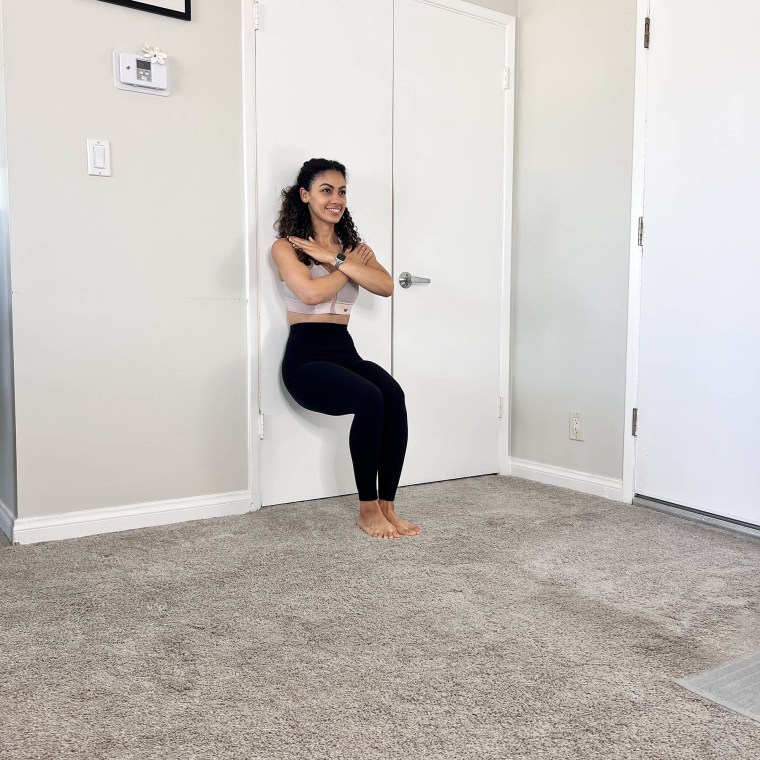
How to Do a Wall Squat
To perform a wall squat correctly, follow these simple steps:
- Stand with your back against a wall, feet positioned a few feet out in front.
- Slide down the wall until your knees are at about a 90-degree angle (or a comfortable degree).
- Hold this position as if you’re sitting on an imaginary chair.
Final Thoughts
Incorporating short workouts into your daily routine, like wall squats, can lead to significant fitness gains over time. Whether you’re at home, in the office, or on the go, remember that every bit of movement counts. For more bodyweight exercise routines featuring isometric holds, consider downloading the Start TODAY app for additional guidance!