 The actions taken regarding the financial system and the economy over the past four years—spanning from late 2008 to today—have far-reaching consequences that remain poorly understood. A widespread belief persists that the stability witnessed before the Lehman Brothers’ collapse is irrevocably lost, yet this topic is often deemed too contentious for polite conversation.
Consequently, the burden of dissecting these issues falls on a handful of outsiders, skeptics, and naysayers. We count ourselves among this group, not out of obsession, but with a determined mindset: armed with a sharpened pencil, a questioning attitude, and the relentless tenacity of a pack mule.
By the time of the presidential election on November 4, 2008, the financial crisis had already catalyzed a steep economic decline. Lehman Brothers—the fourth largest investment bank in the U.S., operational since before the Civil War—had vanished a mere two months earlier. Meanwhile, the financial world watched in horror as unexpected crises descended upon the LIBOR like scavengers on roadkill in Southern California.
As the fall of 2008 approached, it became evident that the economy had gone off course. Those who reflected on current events recognized that a series of economic and social missteps had left the nation in turmoil. They understood that real economic recovery would only come after rectifying the deep-seated issues plaguing the heavily indebted financial system—a process that would require considerable patience.
Inevitably, in difficult times, the allure of a fantasy where everything can be salvaged through borrowing and spending overshadows the harsh truth. Many who felt dispossessed heard the call for “change” and envisioned an influx of government funds enhancing their lives.
Reliance on Government
The new administration arrived in Washington amid significant fanfare, promising a swift economic recovery and a bright future for all. To facilitate this transformation, the established principles of fiscal responsibility were effectively cast aside by presidential decree, and Congress was quick to acquiesce.
On February 17, 2009, President Obama signed the American Recovery and Reinvestment Act into law, distributing approximately $831 billion in stimulus funds across various celebrated programs. This Act funded initiatives in infrastructure, education, health, energy, tax incentives, and expanded unemployment benefits. The intention was to create a planned economy where prosperity would be universally shared.
However, significant questions arise: where did the $831 billion originate, and where did it go? Was this money wisely allocated? Did it truly generate new jobs? Is the economy genuinely in a better state? While answers remain elusive, one undeniable outcome has emerged: a substantial portion of the population now heavily depends on government assistance.
Currently, nearly 46.6 million Americans are enrolled in SNAP, commonly known as food stamps—equating to about one in seven citizens. By 2013, spending on SNAP had quadrupled in just over a decade. Moreover, the number of individuals receiving federal disability benefits has increased by over 17.3 percent since President Obama took office. Additional rises in Social Security, Medicare, and various other assistance programs further underscore the growing dependency on government support.
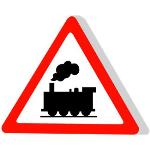
When the Gravy Train Runs Off the Rails
The challenge of creating dependency through government aid is that it leaves people vulnerable. When funding ceases, those reliant on it find themselves in perilous circumstances. Many have structured their lives around the expectation of continued government support.
It’s essential to understand that a day of reckoning is inevitable. The massive deficits incurred in recent years—$1.4 trillion in 2009, $1.3 trillion in 2010 and 2011, and $1.2 trillion in 2012—alongside a national debt of $16 trillion, which could skyrocket to $222 trillion (this is not an error) when accounting for unfunded liabilities, signal danger for those dependent on government aid. The impending default promised by these figures will mean a severing of financial lifelines, leaving no safety net for those falling into hardship.
Beyond the fiscal stimulus lies the monumental monetary stimulus that has skewed the economy further. This includes policies like Zero Interest Rate Policy (ZIRP), various Quantitative Easing (QE) programs, and Operation Twist.
A significant portion of the economy has become reliant on these artificial financial supports. The automotive and housing sectors are particularly vulnerable, having relied on historically low borrowing rates facilitated by the Federal Reserve. As the government nears default, and the Fed loses its capacity to maintain low-interest rates, any sector dependent on cheap credit is likely to implode.
While recessions are a natural component of the business cycle, they are usually punctuated by periods of substantial growth. New jobs are generated, dependence on government diminishes, and GDP flourishes. However, since the Great Recession officially ended in June 2009, we have not achieved that necessary forward momentum.
Even though fiscal stimulus and monetary relief pushed GDP into positive territory, a genuine recovery remains elusive. For instance, just last week, the Commerce Department revised its annual growth estimate for real GDP in the second quarter of 2012 to 1.3 percent, down from the previously reported 1.7 percent. Instead of cultivating a thriving economy, our government has instead added millions of dependents to its roles—individuals whom it cannot sustainably support—and fostered a system that perpetually creates money.
Though the gravy train may have provided comfort to many for an extended period, reckoning is on the horizon; the train will inevitably derail.
Sincerely,
MN Gordon
for Economic Prism
Return from When the Gravy Train Jumps the Tracks to Economic Prism
