Fodder cutters are powerful machines equipped with large, rapidly spinning circular blades, typically powered by compact generators. Used by rural workers in various developing nations like India, Pakistan, and Kenya, these devices carry a significant risk of injury, with numerous individuals suffering from amputations as a result of accidents.
The impact of such injuries is profound. Everyday activities—harvesting crops, kneading dough, and stitching embroidery—can suddenly become impossible. This leaves thousands of women facing decreased independence, lost sources of income, and often, social isolation.
Until recently, obtaining advanced prosthetic limbs was out of reach for many. However, emerging domestic AI technologies are now making sophisticated devices accessible to those in need, mirroring advancements found in wealthier countries.
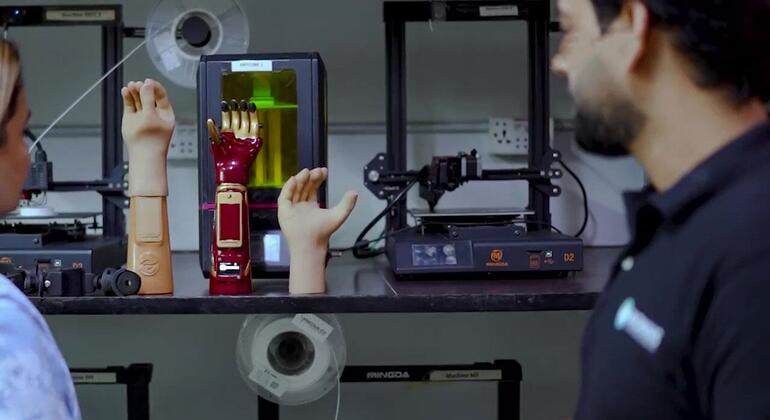
In Karachi, Bioniks Technologies has partnered with UN Women to create and distribute prosthetic limbs tailored for female workers in Pakistan’s Sindh province. This initiative utilizes cutting-edge technologies such as 3D modeling, digital scanning, and AI to develop lightweight, durable, and user-friendly bionic arms, fundamentally transforming the lives of those affected.
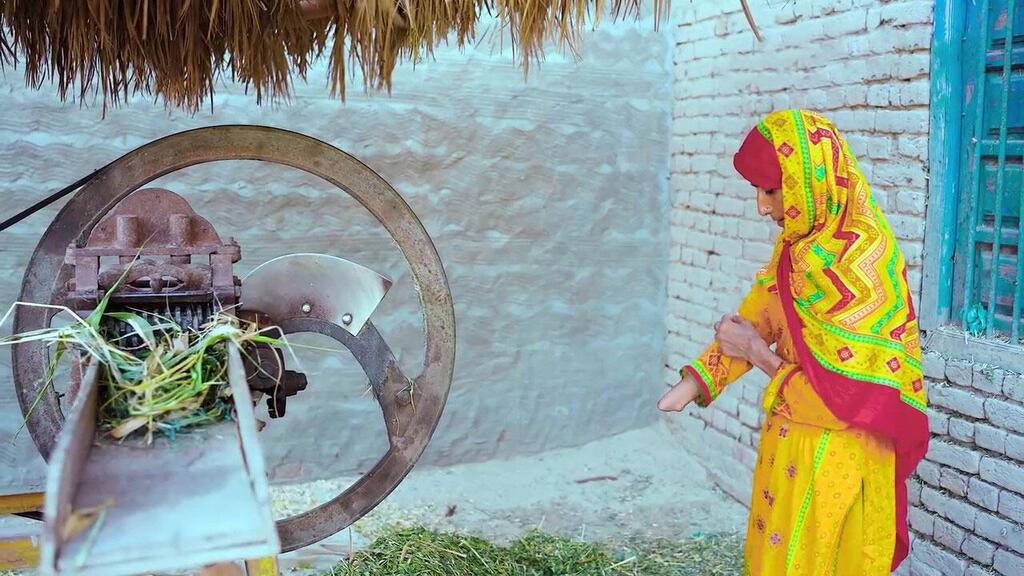
A rural Pakistani woman injured by a fodder cutter.
“Through this collaboration, we provided advanced prosthetic arms, hands-on training, psychological support, and awareness sessions to help communities understand safety practices and prevent injuries in the future,” shares Ayesha Zulfiqar, co-founder of Bioniks. “Witnessing these remarkable women reclaim their mobility, dignity, and independence—returning to hand embroidery, which is vital for their income—has been incredibly inspiring. This initiative goes beyond technology; it restores hope, confidence, and opportunity.”
The India AI Impact Summit: A First for the Global South
This initiative exemplifies the potential when AI becomes accessible to innovators in the Global South.
Democratizing AI is a key goal for the United Nations, which aims to ensure that this rapidly evolving technology is developed ethically and benefits people across the globe.
The India AI Impact Summit, occurring from February 16 to 20 in New Delhi, will feature several UN agencies showcasing initiatives they support in India and other developing nations.
This summit is a landmark event for the Global South, building on the momentum from the 2023 AI Safety Summit in the UK and the upcoming 2025 AI Action Summit in France. It will include key figures such as UN Secretary-General António Guterres and Amandeep Gill, his Special Envoy for Digital and Emerging Technologies.
In discussions leading up to the conference, Mr. Gill emphasized the UN’s efforts to bridge the growing “AI divide” between affluent and developing nations, as well as within countries themselves, making AI more accessible to all.
“The concentration of economic and technological power is our primary concern at the United Nations,” Mr. Gill stated. “History has shown us the consequences of being left behind during previous industrial revolutions. We cannot allow this to happen again.”
Despite the challenges, Mr. Gill acknowledged regions taking proactive steps to leverage AI and avoid falling behind. “This is evident in Southeast Asia, various parts of Africa, and India, where the government is leading efforts to subsidize access to AI for researchers, developers, and smaller enterprises.”
While the AI Impact Summit is not a UN event, Mr. Gill has played a role in shaping its agenda, viewing it as a significant step toward international governance. “It’s encouraging to see a focus on addressing the AI divide, building capabilities, and involving citizens in a democratic approach to technology.”
In conclusion, initiatives like Bioniks and platforms such as the India AI Impact Summit are paving the way for a more equitable technological landscape, demonstrating the transformative potential of AI when harnessed responsibly. The future holds promise for those previously marginalized, allowing them not only to reclaim their independence but also to participate actively in their communities.