 Have you seen the recent government announcements from the U.S. Bureau of Labor Statistics?
This is not simply the latest questionable assertion that consumer prices rose at an annual rate of 3.4 percent in December, but rather the declaration that 216,000 jobs were created during the month.
Immediately after this announcement, Treasury Secretary Janet Yellen stated that the U.S. economy had successfully executed a soft landing, expressing her “hope that this trend will continue.”
However, what Yellen failed to highlight was the downward revision of October’s employment numbers by 45,000 jobs and November’s figures by 26,000 jobs, totaling a correction of 71,000 jobs that were inaccurately reported.
One wonders how many of the 216,000 jobs claimed for December will also turn out to be illusions.
Moreover, Yellen neglected to point out that among the reported jobs, 52,000 are in government, 59,000 in healthcare and social assistance, and 22,000 in food services. These categories do not contribute substantial new wealth and abundance to the economy.
Additionally, there are 4.2 million individuals working part-time for economic reasons, meaning they prefer full-time positions but are either underemployed or unable to find full-time work. Continue reading
 The New Year is often a time filled with hope and optimism. It represents a chance to reset, pursue new goals, and work diligently towards making dreams a reality.
This optimistic sentiment is commendable, and it is essential to tackle challenges with renewed energy. Yet, the results, even for the most committed individuals, can often be disappointing.
January, named after the Roman god Janus who symbolizes gates and doorways, is uniquely depicted with two faces—one reflecting on the past and the other gazing into the future.
Although the calendar has turned a new page, Janus reminds us that past actions—both positive and negative—remain impactful. Consequently, there is still a significant amount of residual damage from the past that needs addressing.
In the spheres of finance and politics, a vast amount of this leftover damage originates from the actions of central planners in Congress, the U.S. Treasury, and the Federal Reserve. Years of deficit spending and currency devaluation have left enduring ramifications that affect daily lives and livelihoods profoundly. Continue reading
 “Sometimes nothin’ can be a real cool hand.”
– Lucas “Luke” Jackson, Cool Hand Luke
Positive Developments?
After the Federal Open Market Committee (FOMC) meeting on December 12 and 13, 2023, the Federal Reserve revealed it would maintain the federal funds rate within the range of 5.25 to 5.5 percent. Furthermore, the Fed indicated three anticipated 25-basis point rate cuts in 2024 via its dot plot.
The Federal Reserve believes it has successfully tackled the inflation issues it helped create. Chair Jerome Powell even took a moment during a news conference to assert:
“Inflation has eased from its peaks, and this has occurred without a major increase in unemployment. That’s very encouraging news.”
Wall Street embraced the potential for future rate cuts, resulting in a 3.6 percent surge in the S&P 500 over the following week.
Interest rate reductions are generally viewed as favorable for the stock market and stimulating for the economy. The reasoning behind this is that the influx of cheaper credit encourages a wave of borrowing and spending, which in turn fuels stock market speculation and economic growth (GDP). Continue reading
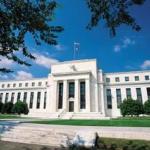 American depositors place great trust in the Federal Deposit Insurance Corporation (FDIC). They often believe wholeheartedly that the FDIC will safeguard their bank balances, leading them to refrain from withdrawing funds during banking crises.
This trust has helped avert widespread bank runs since the FDIC’s inception in 1934. However, it doesn’t eliminate the inherent flaws of fractional reserve banking.
When you open an interest-bearing savings account at a bank, you become a customer, but you also essentially supply the product.
The current banking system is founded on the notion that banks will pay you interest by lending out your deposited funds while also allowing you the opportunity to withdraw your money at any time—an arrangement that is often misleading. The FDIC is there to reinforce this belief.
Typically, the leading cause of bank failures stems from lending money for long-term assets—like real estate—which aren’t repaid for years, while depositors retain the right to withdraw their funds whenever they choose. As such, banks operate by borrowing short-term and lending long-term. Continue reading
In this analysis, we explore recent trends and statements about the U.S. economy, highlighting discrepancies in job data and the implications of financial policies, while also reflecting on the impact of past actions on current economic realities. Understanding the interplay of these factors can shed light on the challenges faced today.
As we navigate through these economic discussions, it is essential to remain critical and discerning. The interplay between data and reality can yield significant implications for individuals and the broader economy. Let us strive to analyze and comprehend these dynamics as we move forward.

