 As the days lengthen and nights shorten, we find ourselves at a pivotal moment. Now is the time to seize opportunities while the sun shines.
The stock market reflects this brightness, with Wall Street basking in golden rays. Record highs are being hit daily, fueling an atmosphere of optimism.
The soaring numbers are nothing short of spectacular. The DOW has reached 16,000, and there’s seemingly no stopping the ascent—not even the IRS.
Thus far this year, the DOW has risen over 17 percent. Many analysts have proposed various reasons for the ongoing increase in stock prices. A noteworthy perspective is offered by Jeff Reeves at MarketWatch, who attributes it to low interest rates that encourage investment and spending.
The Illusion of Recovery
However, anyone who justifies rising stock prices without acknowledging the detrimental effects of manipulated interest rates is misleading their audience. They risk creating the impression that the Federal Reserve’s low rates generate only positive outcomes, while ignoring the severe impacts on middle-class savers and retirees.
Moreover, Reeves overlooks the fact that the increased investment and spending prompted by artificially low rates often leads to misallocation of capital that will eventually need correction. When the stock market does eventually falter, the short-lived advantages of the present upswing will vanish quicker than a fish in a shark tank.
For the time being, these asset booms driven by the Federal Reserve can persist much longer and inflate more significantly than most pessimists can anticipate. The party may even grow wilder later this summer. Yet, while the rising stock market signals prosperity, the underlying economy reveals a stark truth: the recovery has faltered.
For example, one in five U.S. households are reliant on food stamps. If the economy has been recovering for four years, why are so many individuals dependent on government assistance for basic needs? Perhaps the reality is that a true recovery never materialized.
This disconnect is further illustrated by the unemployment rate. While the “official” unemployment figure is reported at 7.5 percent, a more accurate reflection—calculated using methods from before 1980—shows it to be around 23 percent. This level is reminiscent of the peak unemployment rate of 25 percent experienced during the Great Depression’s darkest days in 1933.
Unpacking Bernanke’s Monetary Philosophy
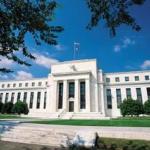
Clearly, there is a significant contradiction at play. Yet as long as the stock market continues to set new records, the narrative persists that the economy is improving. Compounding this confusion is the unsettling reality that Ben Bernanke, who oversees monetary policy, operates under misguided assumptions about his approach.
To distill Bernanke’s philosophy, one can reduce it to two flawed propositions. The first asserts that generating large sums of money from thin air and lending it to the Treasury will decrease unemployment. The second claims that creating vast amounts of money and channeling it to major banks enhances global wealth.
Strip those ideas away, and all that’s left of Bernanke is a shiny bald head adorned with an impeccably groomed beard.
The essence of the situation is clear.
Sincerely,
MN Gordon
for Economic Prism
Return from Bernanke’s Monetary Philosophy, Explained to Economic Prism