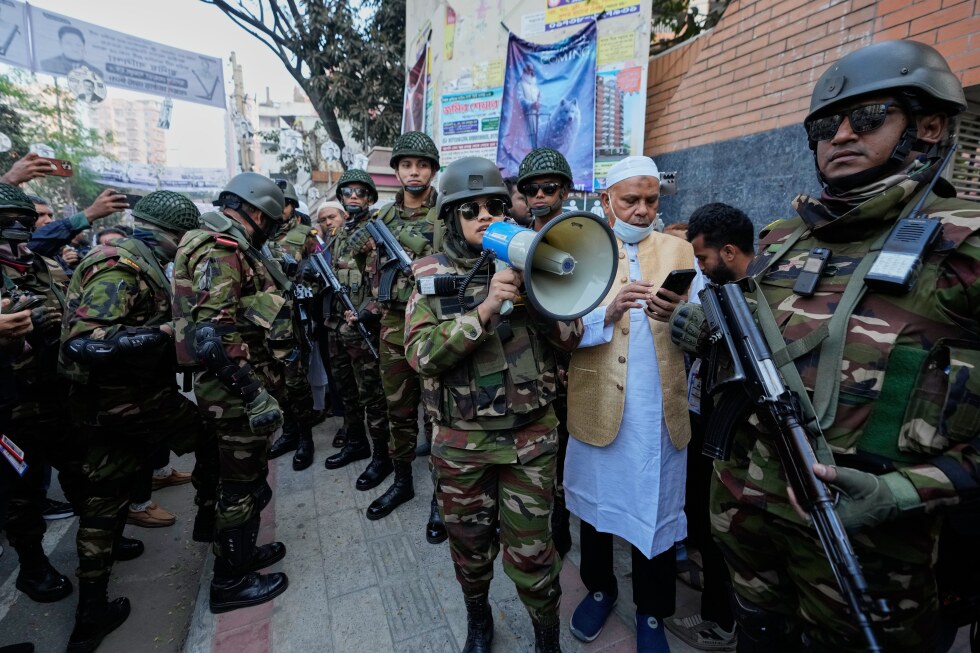
The parliamentary election in Bangladesh is underway, marking a pivotal moment for the nation’s democratic landscape. This election not only serves as a benchmark for the various political factions but also reflects the aspirations of millions of voters after years of upheaval.
DHAKA, Bangladesh (AP) — Polls opened across Bangladesh on Thursday for voters to cast ballots in a parliamentary election seen as a critical test of the country’s democracy after years of political turmoil.
After a slow start, crowds came to polling stations in the capital, Dhaka, and elsewhere by midmorning. Balloting will continue through Thursday with results expected Friday.
More than 127 million people are eligible to vote in Bangladesh’s first election since former Prime Minister Sheikh Hasina’s government collapsed in 2024 after weeks of mass protests. Hasina fled the country and her party is banned from the polls. She is currently in exile in India.
Tarique Rahman of the Bangladesh Nationalist Party is a leading contender to form the next government. He is the son of former Prime Minister Khaleda Zia and returned to Bangladesh in December after 17 years in self-exile in London. Rahman has pledged to rebuild democratic institutions, restore the rule of law, and revive the struggling economy.
Challenging the BNP is an 11-party alliance led by the Jamaat-e-Islami, the country’s largest Islamist party, which was banned under Hasina but has gained prominence since her removal. The conservative religious group’s growing influence has raised concerns, particularly among women and minority communities, about potential pressures on social freedoms should they come to power. Bangladesh is more than 90% Muslim, while around 8% identify as Hindu.
Shafiqur Rahman, chief of Jamaat-e-Islami, expressed optimism after casting his vote in a polling station.
“It (the election) is a turning point,” he told The Associated Press. “People demand change. They desire change. We also desire the change.”
Voters are choosing new lawmakers
The vote is taking place under an interim government headed by Nobel Peace Prize laureate Muhammad Yunus, which has stated its commitment to delivering a credible and transparent election. To support this effort, approximately 500 international observers and foreign journalists are present, including delegations from the European Union and the Commonwealth, to which Bangladesh belongs.
Bangladesh’s Parliament consists of 350 seats, including 300 directly elected from single-member constituencies and 50 reserved for women. Lawmakers are chosen by plurality, and the Parliament serves a five-year term. The Election Commission recently postponed voting in one constituency due to the death of a candidate.
The election could potentially reshape the domestic stability of Bangladesh, a country whose post-1971 history has been marked by entrenched political factions, military coups, and allegations of electoral malpractice. Young voters, many of whom played a key role in the 2024 uprising, are expected to be particularly influential. About 5 million first-time voters are eligible to participate.
“I think it is a very crucial election because this is the first time we can show our opinion with freedom,” said 28-year-old voter Ikram ul Haque, adding that past elections were far from fair.
“We are celebrating the election. It is like a festival here,” he noted. “I hope Bangladesh will experience exponential change.”
A referendum would set up significant future changes
Thursday’s election is not only a test of leadership but also of trust in Bangladesh’s democratic future. Voters can express their support for major reform proposals that emerged from a national charter signed by significant political parties last year.
If a majority of voters support the referendum, the newly elected Parliament could establish a constitutional reform council to implement changes within 180 working days of its first session. Proposed changes include the establishment of new constitutional bodies and a transition from a unicameral to a bicameral legislature endowed with the authority to amend the constitution by majority vote.
The BNP and Jamaat-e-Islami both signed the document with some modifications after initially expressing dissent. However, Hasina’s Awami League party, a major political force, and some of its former allies were excluded from these discussions. The referendum has faced criticism for limiting the choices presented to the electorate.
Key Takeaways
- The parliamentary election is a crucial test of Bangladesh’s democratic integrity.
- Over 127 million citizens are eligible to vote, marking a significant moment in the nation’s history.
- Tarique Rahman of the BNP is a key contender, advocating for the rebuilding of democratic institutions.
- The election is overseen by an interim government committed to a fair electoral process.
- The outcome could impact young voters, with 5 million first-time voters participating.
- A national referendum on reform proposals is a central aspect of this election.
FAQ
What is the significance of this election?
This election represents a crucial test for Bangladesh’s democracy, following years of political unrest.
Who are the main candidates in the election?
Tarique Rahman of the BNP is a leading contender, while the Jamaat-e-Islami leads an opposition alliance.
What reforms are being proposed in the referendum?
Proposals include establishing new constitutional bodies and changing the legislative structure to a bicameral system.
How many voters are participating?
Over 127 million citizens are eligible, with a notable number of first-time voters.
What role do international observers play in this election?
International observers are present to monitor the election’s transparency and credibility.