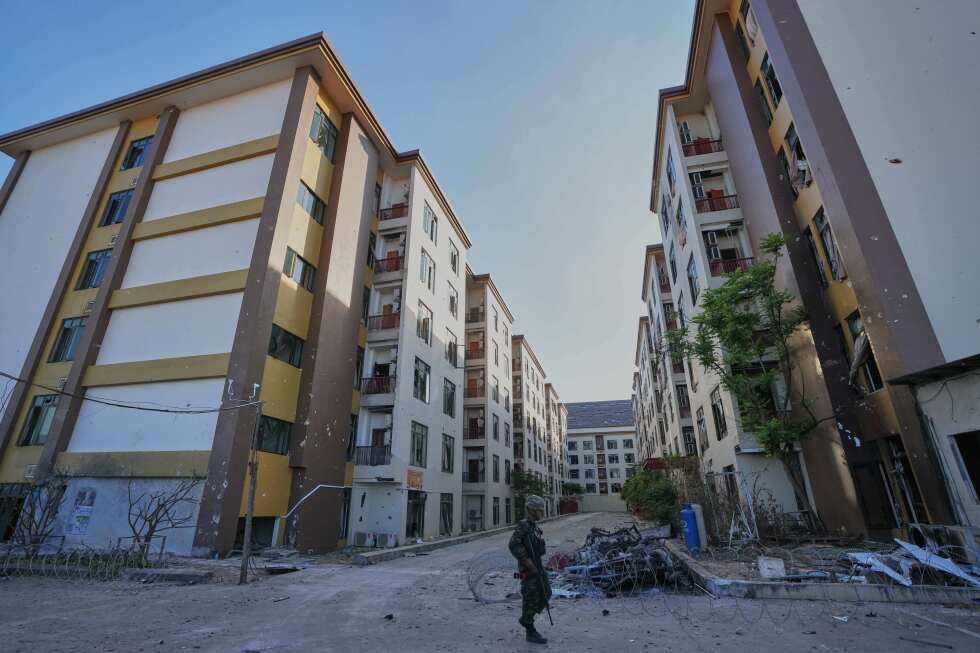
In Cambodia’s capital, Phnom Penh, the unfortunate plight of individuals fleeing scam operations is coming to light. One man’s harrowing experience underscores the urgent need for effective support systems as shelters struggle to cope with the rising influx of victims seeking refuge.
Youga recounted his relief upon finally sleeping in a bed after spending two nights on the streets. After escaping a scam compound in O’Smach, near the Thai border, he arrived in Phnom Penh with only $100 to his name. Unable to save enough for adequate accommodation, Youga sought help from Caritas shelter, the only facility in Cambodia dedicated to assisting victims of such scams.
Despite its mission, the shelter is currently overwhelmed, operating with one-third of its previous staffing and budgeting as it faces an immense surge in the number of individuals arriving for assistance. Over the past weeks, officials say more than 300 individuals have been turned away due to a lack of resources.
A flood of people are leaving scam compounds
The increase in escapees from scam operations comes on the heels of Cambodia’s recent extradition of a key figure in the scam industry to China. This move has prompted many workers to flee these dangerous environments, seeking safety elsewhere.
Online scams have proliferated in Cambodia, Myanmar, and Laos, creating a complex landscape of sophisticated operations. Scammers build elaborate setups, complete with soundproof phone booths and fake police stations. Reports suggest that there could be as many as 100,000 workers trapped in these conditions in Cambodia alone.
In response to growing global concern, Prime Minister Hun Manet recently emphasized that tackling such crimes, including cyber fraud, is a political priority. The Cambodian government reported the deportation of 1,620 individuals from 21 countries linked to scam operations just last month.
Mass releases from these scam compounds have led to chaotic and unsafe conditions for survivors, as noted in social media posts verified by Amnesty International. Activists argue that the Cambodian government’s response has been inadequate.
Officials assert that they are taking steps to care for victims, with government representatives stating that all individuals are assessed to determine their status—ensuring victims are sent to shelters and provided necessary aid. However, some victims report grim realities, with many getting stuck in a bureaucratic loop while seeking assistance.
Li Ling, one of the rescuers, has been helping individuals escape the compounds. She holds a list of 223 people, predominantly from Uganda and Kenya, who are seeking aid to return home. Unfortunately, her resources are dwindling, and she’s uncertain how much longer she can provide assistance.
Hand to mouth
Even as the Caritas shelter remains active, financial resources for food are becoming critically low, leaving staff to operate in survival mode. Previous funding from the U.S. has ceased, impacting their budget significantly, and support from other organizations has also been reduced.
In an increasingly restrictive environment, Caritas stands alone in assisting these victims. Amidst government suppression of independent media and the arrest of journalists covering these troubles, opportunities for victims to receive help are limited.
With many escapees either facing immigration detention or struggling to find temporary housing, conditions are dire. Those lacking embassy support face insurmountable obstacles in securing safe passage.
Youga, originally from the Democratic Republic of the Congo, cannot return home due to rising violence against his ethnic group. He has no embassy present in the region, further complicating his situation.
Trapped in this dire situation, Youga describes how he was lured into a scam compound under false pretenses after being contacted about a supposedly legitimate job opportunity. His desire to continue his university education now feels like a distant dream. For now, he simply seeks a safe space where he can start anew. “I want to rebuild my life with dignity,” he stated with hope.
Key Takeaways
- The Caritas shelter in Phnom Penh is struggling to provide for an increasing number of victims escaping scam compounds.
- Online scams are widespread in Cambodia, with an estimated 100,000 individuals involved.
- Efforts by the Cambodian government to combat cyber fraud have intensified, but challenges remain in addressing victim needs.
- Many victims have faced bureaucratic hurdles and lack support from their embassies.
- Rescue organizations are strained, as funding cuts impact their ability to provide assistance.
- Victims, like Youga, seek safe spaces to rebuild their lives after harrowing experiences.
FAQ
What is the Caritas shelter’s role?
The Caritas shelter specifically assists victims escaping scam operations, providing necessary support and resources.
How many workers are believed to be involved in scams in Cambodia?
It is estimated that up to 100,000 workers could be involved in scam operations within Cambodia.
What challenges do victims face when seeking assistance?
Victims often encounter bureaucratic obstacles, insufficient shelter space, and a lack of support from their embassies.
What actions is the Cambodian government taking regarding cyber fraud?
The government has declared a political priority to combat cyber fraud and has deported numerous individuals linked to scam operations.
What can individuals do to help?
Support organizations like Caritas and other NGOs working with victims of trafficking and scams through donations or volunteering.
As the situation continues to unfold, the need for comprehensive and effective support for victims is more critical than ever. Community awareness and international cooperation will be instrumental in addressing these pressing humanitarian concerns.