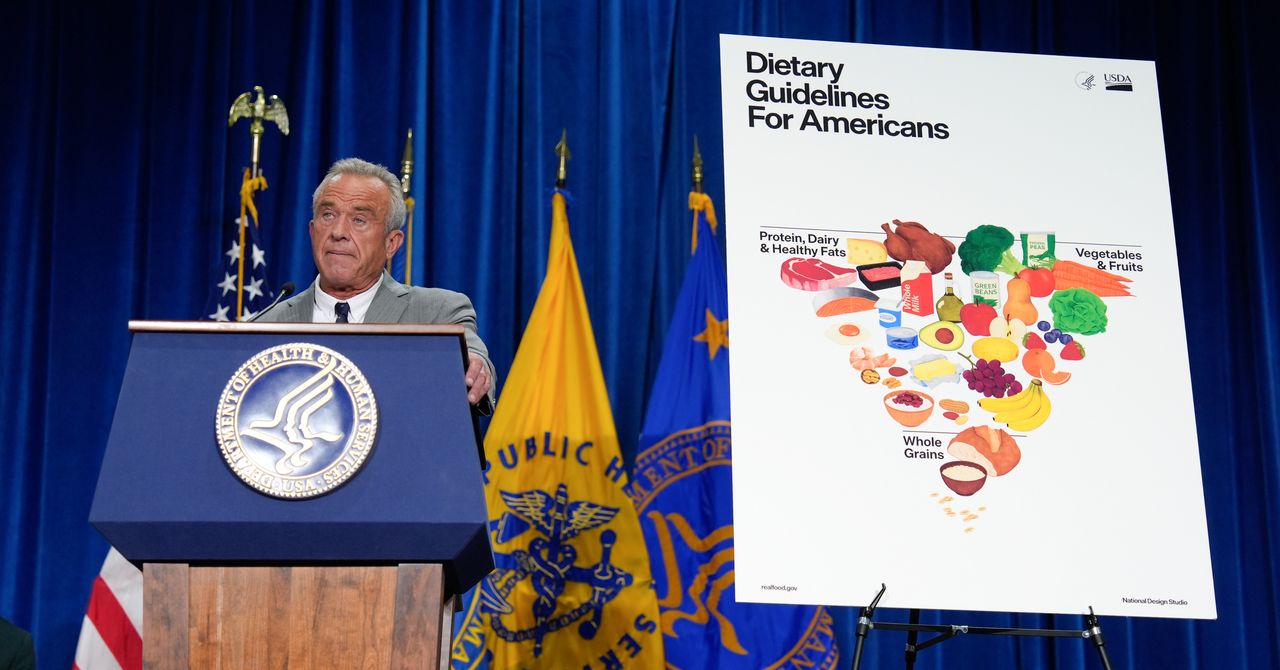
In a bold move to promote healthier eating habits, a recent 30-second Super Bowl advertisement features boxing icon Mike Tyson and is funded by the nonprofit MAHA Center. The ad urges viewers to steer clear of processed foods and visit Realfood.gov. This government website, which Health and Human Services Secretary Robert F. Kennedy Jr. is promoting, offers insights into the newly released dietary guidelines and encourages individuals to use Elon Musk’s AI chatbot Grok for accurate information about wholesome food choices.
Curious to see how Grok’s advice aligns with the government’s recommendations, especially regarding protein intake, I dove deeper. The updated guidelines recommend a daily protein intake of 1.2 to 1.6 grams per kilogram of body weight—higher than previous recommendations—while the new inverted food pyramid prominently showcases steak and other animal-based products.
“We are ending the war on protein,” states Realfood.gov, mirroring similar sentiments expressed by Kennedy.
Interestingly, most Americans are already consuming adequate protein, which Grok concurs with. The administration’s own “Scientific Foundation for the Dietary Guidelines for Americans,” also linked on Realfood.gov, indicates that US adults typically consume around one gram of protein per kilogram of body weight daily—about 15 percent of their overall energy intake—suggesting that protein deficiency is uncommon.
Motivated by the website’s encouragement to seek AI advice, I first queried Grok for my ideal protein intake based on my age, height, and weight. However, Grok often fails to provide answers due to high demand, prompting users to register for an account. Eventually, it suggested 0.8 grams per kilogram per day, the historic recommended daily allowance established by the National Institute of Medicine. After refining my question to specify my 30 minutes of strength training four days a week, Grok’s response aligned more closely with the new guidelines.
The recommendation of 0.8 grams of protein per kilogram per day merely represents the minimal amount for avoiding deficiency in a sedentary lifestyle, which characterizes a significant portion of the American populace. Nutrition experts I consulted affirm that the new guidelines are more suitable for individuals who engage in regular exercise.
“The administration seems to be targeting those who are metabolically unhealthy, as they might benefit from increased protein for satiety and muscle building. Unfortunately, that nuance is often overshadowed by a simplified message,” notes Lindsay Malone, a clinical dietitian at Case Western Reserve University. “Then, users approach this AI tool, and it can feel overwhelming with information.”
While a higher protein intake can help stave off snacking by enhancing fullness, Malone emphasizes that simply increasing protein does not lead to muscle gain, which primarily occurs through resistance or strength training.
Additionally, Michelle King Rimer, a clinical assistant professor of nutritional sciences at the University of Wisconsin-Milwaukee’s Zilber College of Public Health, cautions that consuming excessive amounts of any macronutrient—whether protein, fats, or carbohydrates—can result in weight gain. “Extra protein can be converted to fat, potentially leading to weight gain,” she explains.
The administration also promotes the idea of “prioritizing protein at every meal,” advocating for a blend of protein sources from both animal and plant origins. Last week, Kennedy emphasized the “importance of meat protein” at the nation’s largest cattle trade show, exclaiming that “beef is back on the menu,” as stated in an HHS announcement.
When I asked Grok about the healthiest protein sources, it highlighted plant-based proteins, fish, lean poultry, and eggs. The chatbot recommended limiting red and processed meats, aligning with the guidance from major health organizations like the American Heart Association and mounting evidence that emphasizes the health benefits of plant-based proteins and fish over diets high in red meat.
In summary, the push for healthier dietary guidelines is intertwined with technology and innovative messaging. As the conversation around nutrition evolves, it is essential to discern the nuances of protein intake while considering individual lifestyle choices. Adopting a balanced approach to nutrition can ultimately lead to better overall health outcomes.


