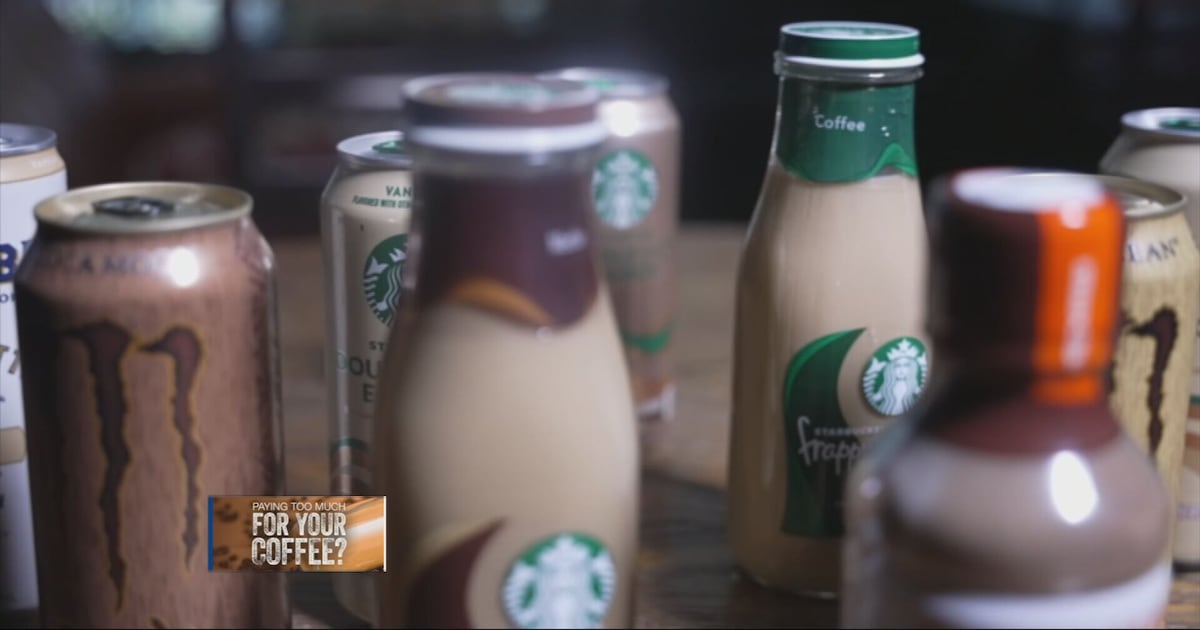
The landscape of cold, caffeinated coffee drinks is vast, with options available in both cans and bottles almost everywhere you turn. As a segment of a multi-billion-dollar industry, these beverages are a common choice for many. However, recent findings indicate that Pennsylvania may be disproportionately benefiting from the sales tax imposed on these drinks, impacting consumers directly.
Understanding Pennsylvania’s Coffee Tax Regulations
When purchasing coffee at your local café, sales tax is straightforward—it’s applied. However, the same clarity isn’t present with ready-to-drink, bottled, or canned coffee beverages.
“For years, I’ve enjoyed a Starbucks Double Shot coffee,” Paul Olkowski shared.
A curious experience led Olkowski to notice a disparity in tax charges between two stores located directly across from each other.
“One store charged sales tax while the other didn’t make any sense to me,” he remarked.
Prompted by this confusion, 11 Investigates conducted an experiment of their own.
They referenced the Pennsylvania Department of Revenue’s Retailer’s Information Guide, which outlines how sales tax applies to various items, including prepared coffee drinks. According to the Department, brewed or hot coffee is subject to sales tax whether sold at a café or convenience store, whereas cold, bottled, and flavored coffee drinks typically aren’t taxed—unless they are, creating confusion for consumers.
At chains like Sheetz and GetGo, prepared coffee drinks did not incur any sales tax. Target reflected the same trend during their purchases. In contrast, locally owned Kuhn’s charged a sales tax of 21 cents on only one of the three coffee drinks purchased—a Monster Java. The store clarified that energy drinks are taxable if exceeding four ounces.
Thus, one coffee drink incurs a tax while another does not, reflecting the complexities embedded within Pennsylvania law.
David McGarry, from the nonprofit Taxpayers Protection Alliance, commented on the confusion surrounding state tax laws.
“Instances like this illustrate a broader issue,” McGarry explained. “With a tax code filled with exemptions and specific conditions, it becomes extremely challenging for both consumers and business owners to discern when to apply taxes.”
He noted that the intricacies of these laws are so formidable that remedying them through legislative change would be quite daunting.
“Taxes should be straightforward, clear, and consistently applied,” McGarry emphasized.
If you find yourself charged tax on an item that should be tax-exempt, inform the store management and request an adjustment. Should that not suffice, you can file a petition online for a refund with the Department of Revenue’s Board of Appeals. Be sure to submit proof with your receipt.
Download the FREE WPXI News app for breaking news alerts.
Follow Channel 11 News on Facebook and Twitter. | Watch WPXI NOW
©2026 Cox Media Group
Key Takeaways
- Cold bottled and canned coffee drinks in Pennsylvania can be subject to confusing sales tax rules.
- Brewed coffee is always taxable, while bottled, flavored coffee drinks generally are not.
- Disparities exist between retailers regarding the taxation of ready-to-drink coffee beverages.
- Consumers should be proactive if incorrectly charged sales tax on exempt items.
- The complexity of tax laws poses challenges for both consumers and retailers.
FAQ
Are all coffee drinks subject to sales tax in Pennsylvania?
No, brewed coffee is taxable, while cold, bottled, and flavored coffee drinks generally are not, unless otherwise specified.
What should I do if I was overcharged tax on a coffee drink?
Notify the store management first. If the issue is not resolved, you can file a refund request with the Department of Revenue’s Board of Appeals.
Why are some coffee drinks taxed while others are not?
The taxation rules vary based on the type of drink. For example, energy drinks like Monster may incur tax if they exceed four ounces.