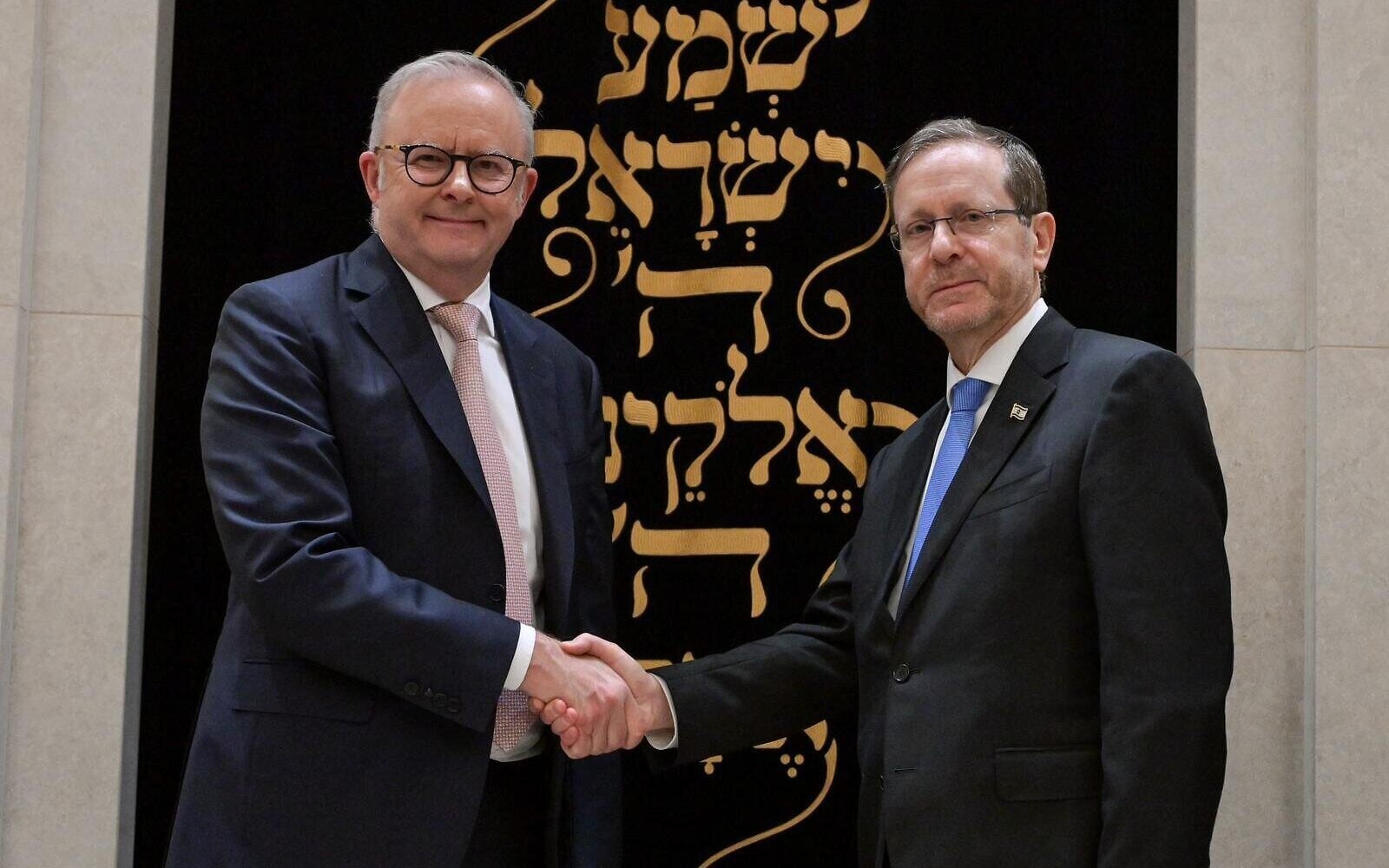
In a poignant display of solidarity, President Isaac Herzog addressed the issue of antisemitism during a memorial service for the victims of the Bondi Beach terror attack. This event, held at the Chabad of Bondi, underscored a shared commitment to combating hatred and standing together against violence.
Herzog was joined by Australian Prime Minister Anthony Albanese, who chose not to deliver a speech but read the names of the victims of the tragic Hanukkah massacre, which resulted in the deaths of 15 individuals due to an attack by Islamic terrorists. Following the ceremony, Albanese privately met with the families affected by the tragedy.
“What we witnessed in Bondi—an appalling act driven by blind hatred—has no place in this nation or anywhere else in the world,” Herzog stated during his remarks, as reported by his office.
During the commemoration, a significant pro-Palestinian protest also unfolded in central Sydney. Prime Minister Albanese faced criticism for extending an invitation to Herzog amidst a backdrop of dissent from anti-Israel activists. He has since called for a peaceful atmosphere during protests.
In the wake of the attack, Albanese faced substantial backlash from the Jewish community in Australia, criticized for not adequately addressing rising antisemitism. Reports suggest that his decision to forgo a formal address may have stemmed from concerns about the reception he would receive from attendees at the Chabad center.
Herzog referred to Albanese as “an important world leader” and emphasized that effectively tackling antisemitism necessitates comprehensive measures. He expressed gratitude for the legislative actions taken in Australia post-attack, aimed at stricter gun control and enhanced authority to address hate speech and extremist factions.
“The true measure of their effectiveness will be in their full execution and the outcomes achieved,” Herzog remarked.
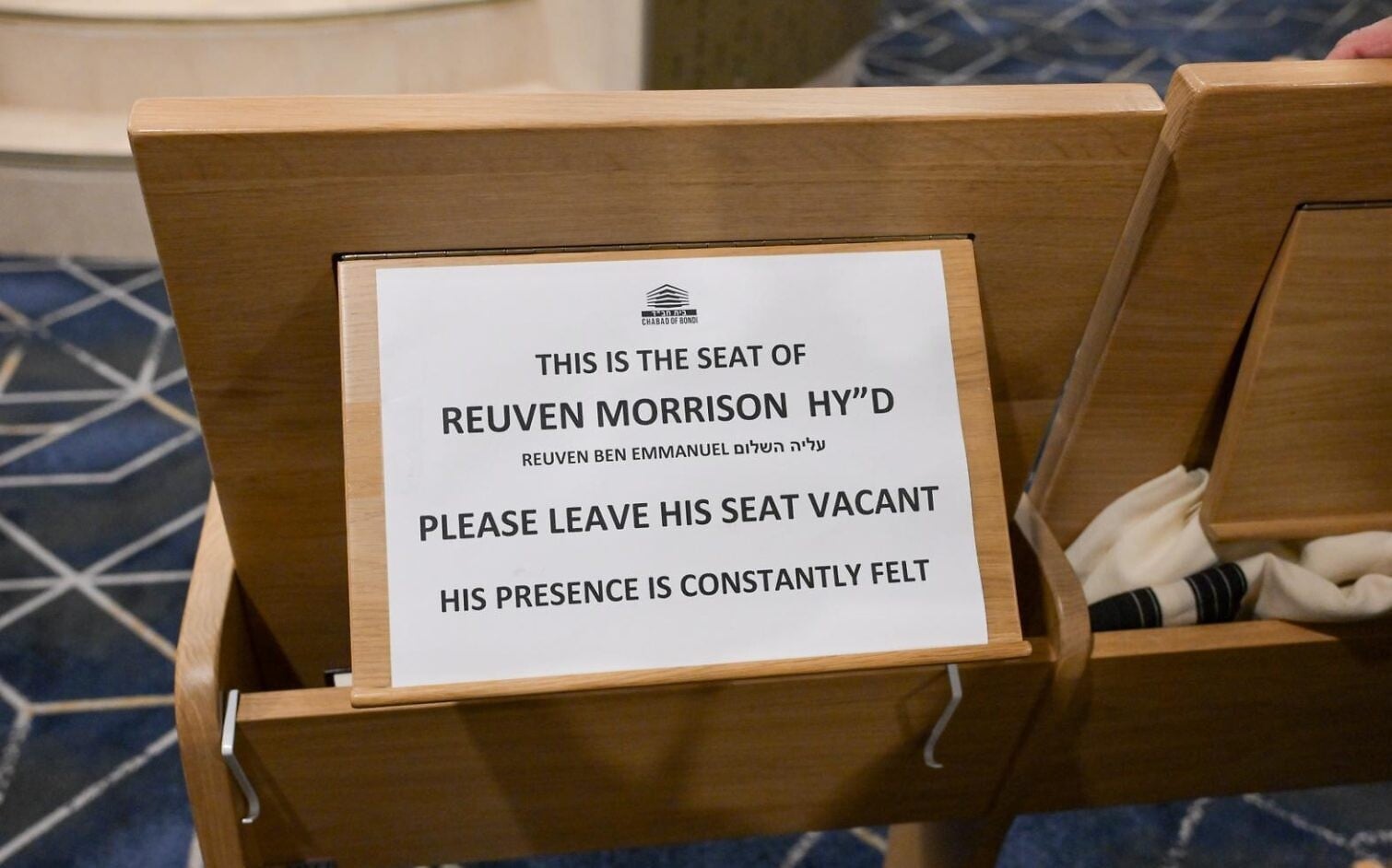
While the memorial hall was full, reserved seats for three victims—Reuven Morrison, Tibor Weitzen, and Alex Kleytmann—remained empty as a poignant reminder of their absence.
Herzog and Albanese later shared a dinner at the Prime Minister’s residence, according to official statements.
Before the memorial, Herzog, along with World Zionist Organization chairman Yaakov Hagoel and Jewish Agency chairman Maj. Gen. (res.) Doron Almog, met with bereaved families of the Bondi attack’s victims.
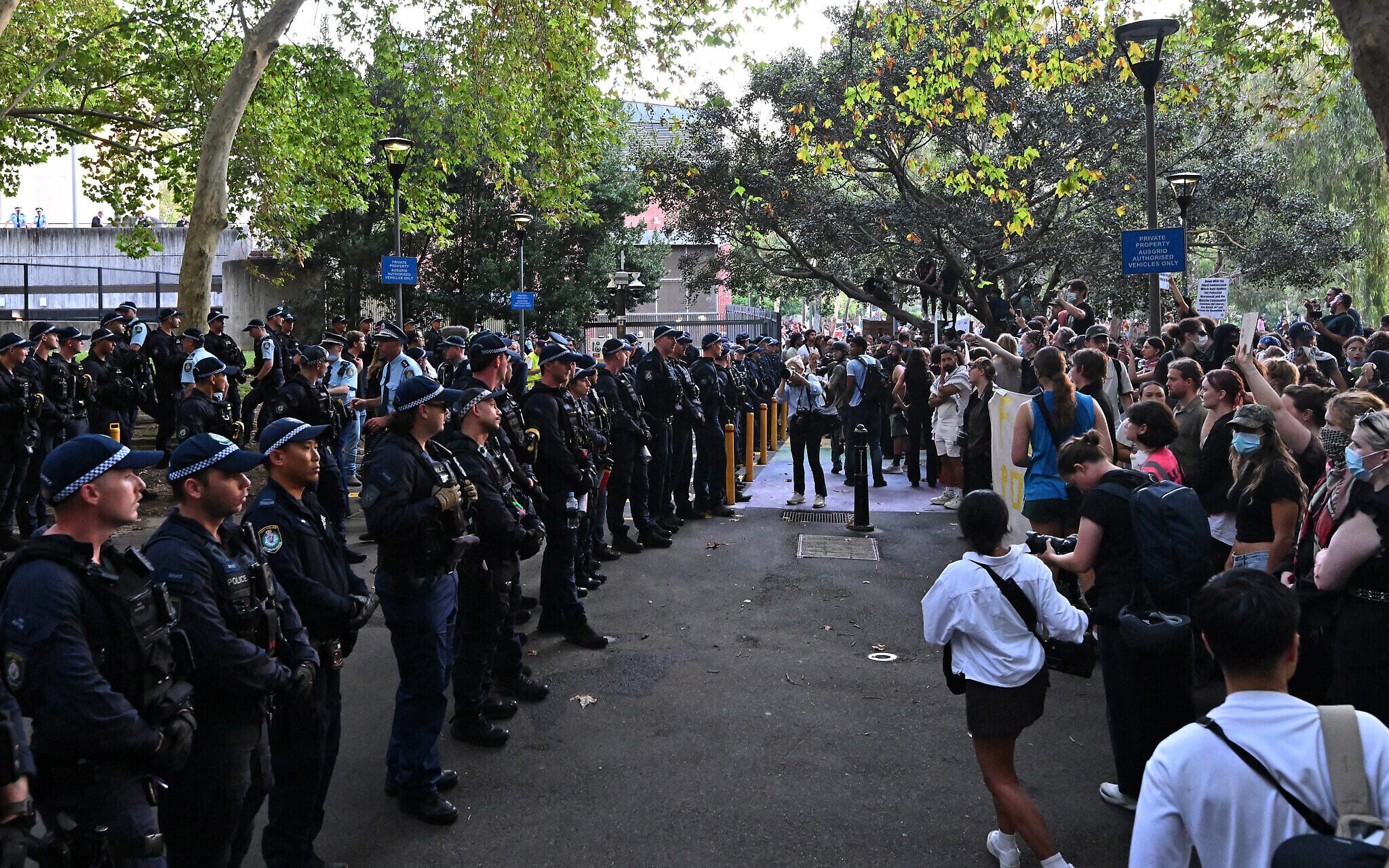
The events have ignited backlash from anti-Israel activists in Australia, with pro-Palestinian groups organizing protests in various locations across the country. Police confronted demonstrators attempting to breach designated no-go areas.
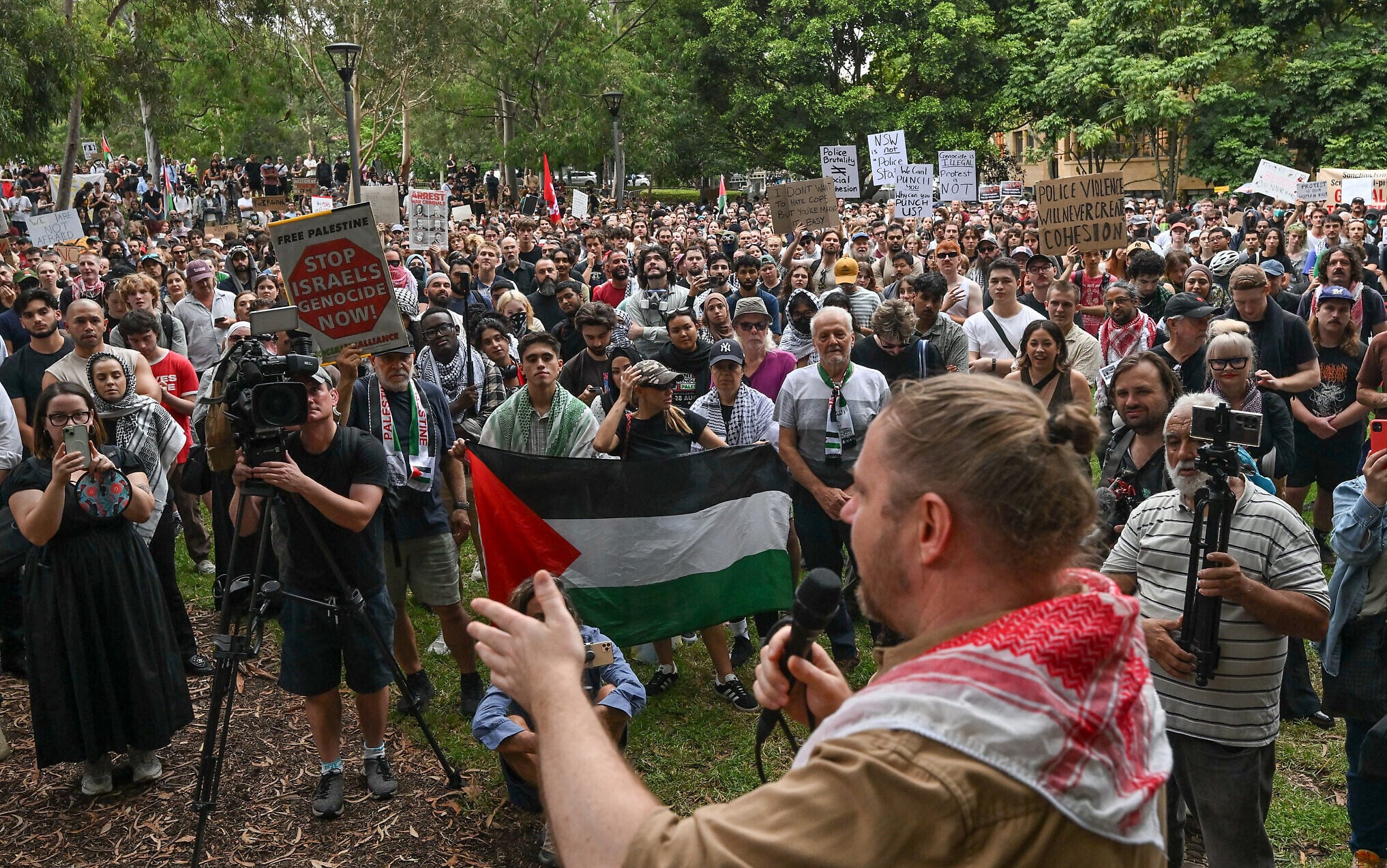
Some protesters staged a spontaneous demonstration outside Surry Hills police station on Tuesday, condemning perceived police misconduct. As the rally advanced, they reportedly chanted “globalize the intifada,” an expression interpreted by many in the Jewish community as incitement to violence.
The leader of the Palestine Action Group, Josh Lees, accused New South Wales Premier Chris Minns of instigating police aggression toward protesters, claiming it represented a broader state violence in support of Israel’s actions in Gaza, as per reports from SBS.
New South Wales police confirmed that they arrested 27 individuals during the demonstrations, including 10 for assaults on law enforcement. Authorities utilized pepper spray during confrontations, leading to widespread outrage, particularly when footage circulated showing police dispersing peaceful prayer gatherings.
A violent clash resulted in police using pepper spray against both protesters and media personnel in a rarely witnessed scene in Sydney’s business center.
Albanese expressed his dismay over the violence, urging a peaceful expression of opinions: “These are scenes that I believe should not occur,” he remarked in a radio interview. “People must be able to express their viewpoints peacefully, although the police had explicitly outlined the approved routes for demonstrations.”
Premier Minns remarked that police faced “incredibly difficult circumstances” while managing the situation. He noted that allowing demonstrations near the memorial event attended by Herzog would have resulted in a “disaster.”
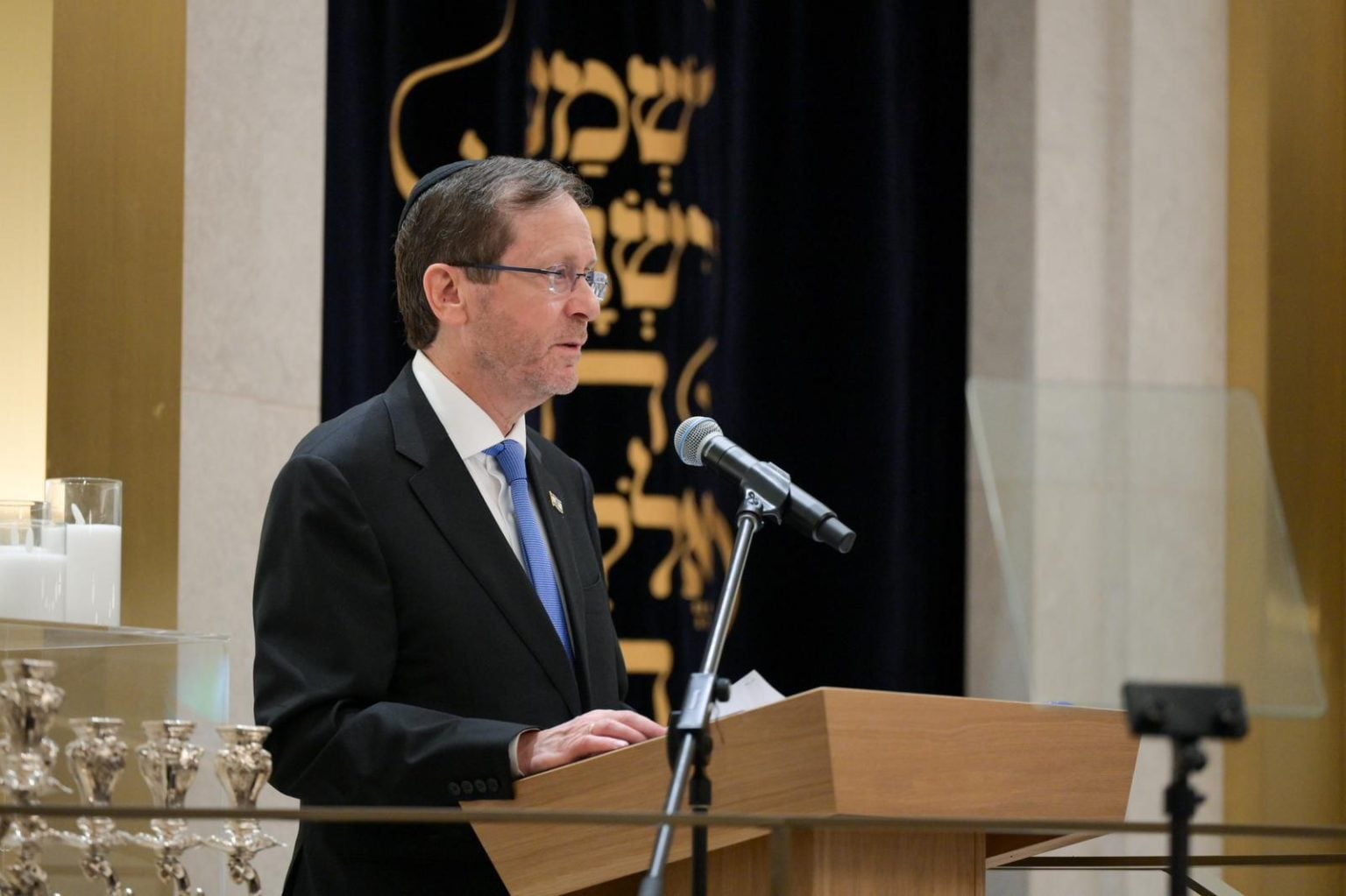
Herzog’s visit to Australia is set to extend until Thursday. On Tuesday morning, he engaged with students at a local Jewish school.
The Jewish community in Australia has positively received Herzog’s visit, expressing that it will bolster the morale of a grieving populace. “His visit will lift the spirits of a pained community,” remarked Alex Ryvchin, co-chief executive of the Executive Council of Australian Jewry.
Key Takeaways
- President Herzog strongly condemned antisemitism in Australia during a memorial service.
- Prime Minister Albanese faced backlash for his handling of antisemitism post-attack.
- Herzog acknowledged Albanese’s initiatives against hate speech and extremist groups.
- Pro-Palestinian protests coincided with the memorial, leading to law enforcement clashes.
- Herzog’s visit aims to uplift the spirits of the Jewish community in Australia.
FAQ
What was the purpose of President Herzog’s visit to Australia?
The visit aimed to honor the victims of the Bondi Beach terror attack and address the issues of antisemitism in Australia.
Why did Prime Minister Albanese not give a speech at the memorial service?
Albanese chose not to address the attendees possibly due to concerns about the audience’s reception.
What were some consequences of the protests held during the memorial?
The protests resulted in police confrontations and 27 arrests during demonstrations in Sydney.
How did the Jewish community react to Herzog’s visit?
The visit was welcomed as a morale booster for a grieving community, showing solidarity and support.
What measures has the Australian government taken against antisemitism?
Since the attack, the government has implemented stricter gun control and enhanced powers to combat hate speech.