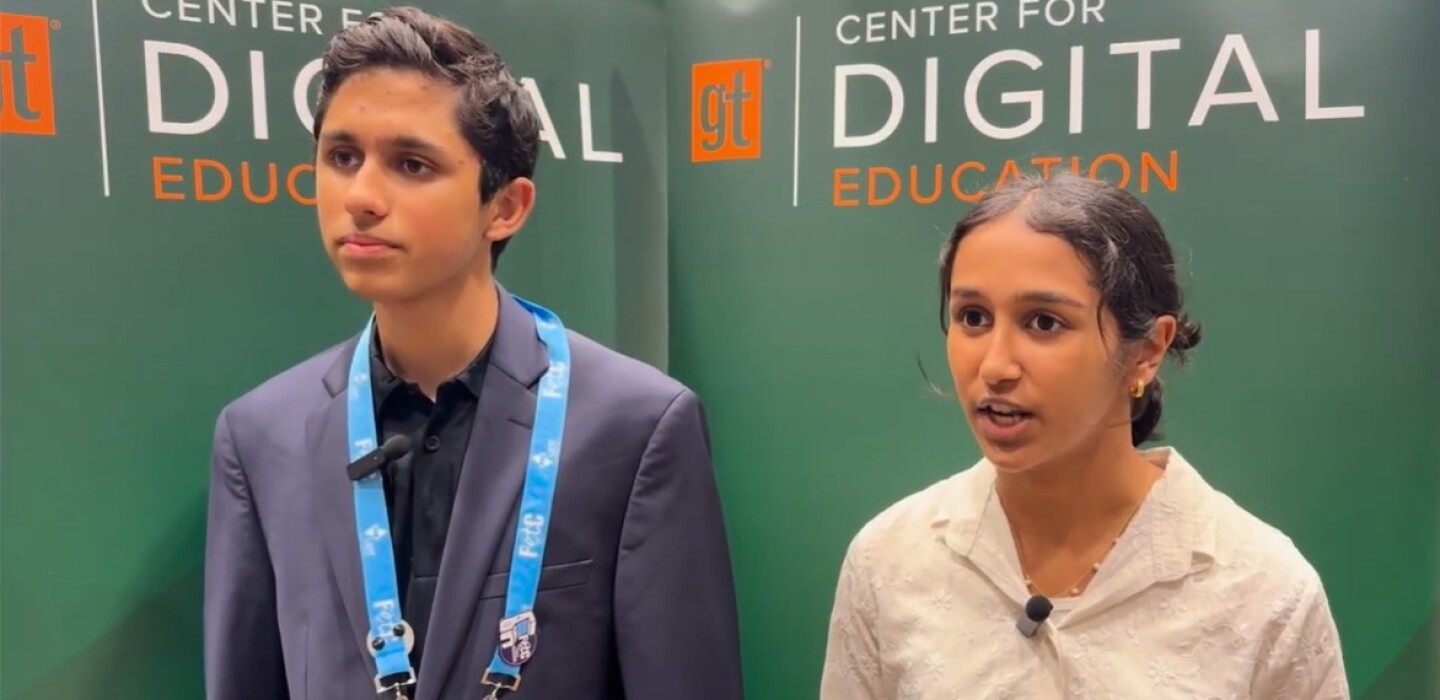
In recent discussions at the Future of Education Technology Conference (FETC) held in Orlando, two high school students, Yash and Myra from Mountain View High School in California, shared their insights on the impact of artificial intelligence in the education sector. Rather than viewing AI as a threat, they argue that it has highlighted significant shortcomings in educational practices.
Questioning Traditional Educational Models
The rapid development of generative AI has prompted Yash, a junior, to reflect critically on educational priorities. He noted, “Education over the last 10 to 15 years has heavily relied on memorization, particularly in subjects like biochemistry and math. There’s been a predominant focus on recalling formulas and facts instead of fostering critical thinking, communication, and collaboration. AI has really shed light on this issue.”
Experiencing Joys and Challenges of AI in Learning
Both students expressed a mix of excitement and concern regarding the rise of AI at FETC. Myra, a sophomore, explained that AI has simplified some aspects of learning. “Tools like Google NotebookLM assist in summarizing content and creating podcasts, which helps me understand and retain information much better than traditional methods,” she noted.
However, she also pointed out the drawbacks, such as reverting to old-fashioned methods to combat cheating.
“We’re going back to writing everything by hand. Essays need to be crafted on paper without the aid of searching online or using digital dictionaries,” she lamented. “So, in that sense, it has both positive and negative effects.”
Advocating for Responsible AI Integration
Instead of imposing strict bans on AI, the students suggested a balanced approach for its inclusion in academic settings. Myra praised one of her English teachers for integrating AI effectively. “We use AI to draft outlines, incorporating our ideas, which allows us to engage with the AI and cultivate an outline that resonates with us,” she explained. “Although we collaborate with AI, we ultimately write the paper ourselves, ensuring we develop our writing skills.”
Both Yash and Myra emphasized that assignments focused on soft skills such as communication, presentation, and collaboration are more resistant to shortcuts provided by AI and hold greater importance for their future professional lives.