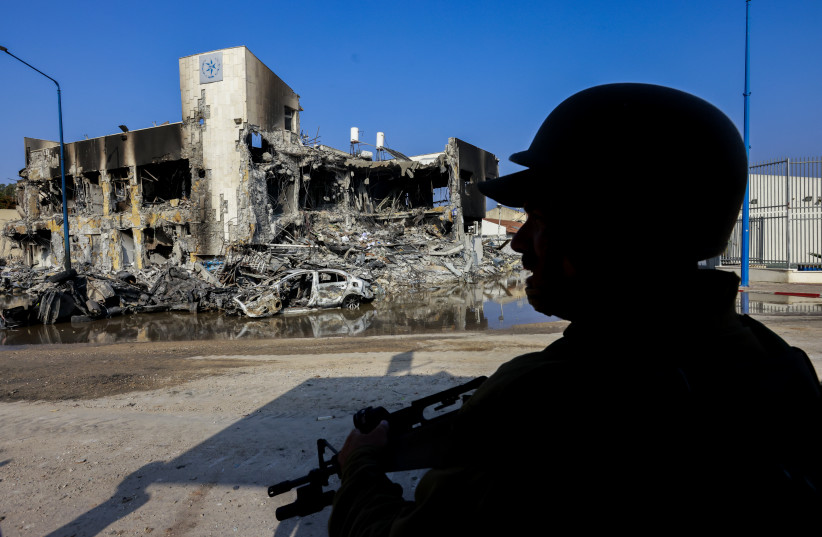
On October 7, as Hamas launched around 3,700 rockets and its incursion force of approximately 5,600 troops infiltrated Israel at 119 separate points to seize multiple villages at 6:29 a.m., Israeli officials were left in a state of shock.
In the following two years, many of these officials made bold decisions regarding Iran, Hezbollah, and the Syrian Assad regime, leading historians to evaluate their successes against their failures. Yet, all were haunted by the events of that fateful day.
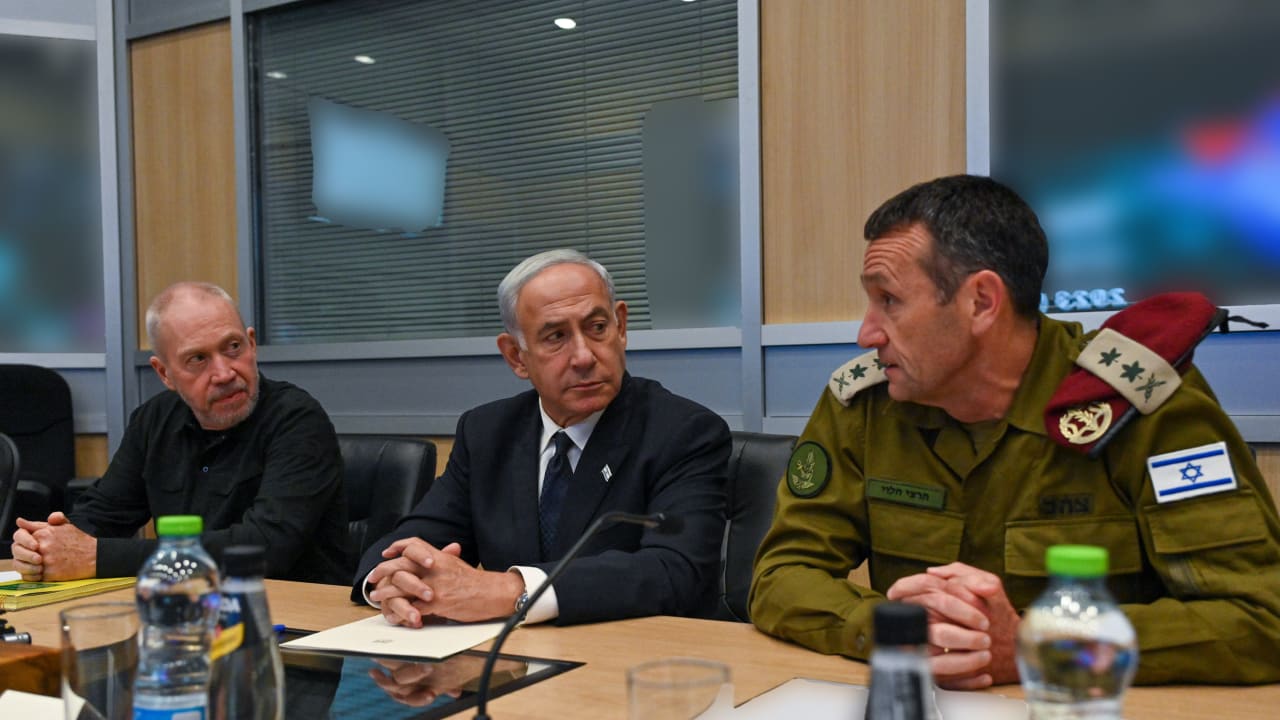
Amid public disclosures by Prime Minister Benjamin Netanyahu and others regarding selective elements of that morning, we will reveal the interactions among three critical figures: Netanyahu, Defense Minister Yoav Gallant, and IDF Chief of Staff Lt.-Gen. Herzi Halevi.
A crucial insight is that the three did not communicate until nearly four hours into the conflict, by which time hundreds of Israelis had been killed and taken hostage. The reasons behind their delayed communication reveal a dysfunction that extended beyond politics, which remains unaddressed.
Additionally, we will present a response from Amit Saar, the former IDF intelligence analysis chief from 2021 to April 2024, who faced criticism from Netanyahu for allegedly “rebelling” against him, despite Netanyahu later praising him after Saar’s passing on January 1, 2026.

No generals in the room as Hamas massacred thousands in early hours of Oct. 7
Classified footage from the IDF high command revealed that no generals were present during the initial hours of the attack. A midlevel officer, along with his deputies, were yelling as they received reports of the invasions, without a comprehensive defense plan in place.
Even an hour into the invasion at 7:30 a.m., the IDF high command only had knowledge of about 40 percent of the breaches into Israel.
By 10:00 a.m., while hundreds of Israelis were reported dead or kidnapped, the command was still only aware of 60 percent of border penetrations.
It wasn’t until about 1:00 p.m. that the IDF’s top commanders began to manage the nation’s defense systematically, coinciding with the release of Netanyahu’s first message to the public.
By then, Hamas and Islamic Jihad had taken the vast majority of hostages, and numerous Israeli individuals in locations near the Gaza border, such as Kfar Aza, Nir Oz, Beeri, and the Nova Music Festival, had already been killed.
In the early days following the attack, none of the primary officials made live public appearances, with IDF Chief Spokesman Brig. Gen. Daniel Hagari being the sole representative to do so.
Gallant is unique among top officials in stating that his staff received no prior warning before the invasion commenced at 6:29 a.m.
While Halevi knew several key officials, even he was operating with incomplete information. Between 2:00 a.m. and 3:00 a.m., Halevi’s bureau chief alerted him to a potential Hamas threat at the border.
He left his bedroom to jot down notes in his home study, reminding himself, “We cannot just convince ourselves that this is nothing.”
Despite his notes, both he and the entire intelligence and defense community believed that Hamas was unlikely to execute more than a minor incursion aimed at taking a few hostages.
Months later, IDF intelligence would inform Halevi that they had intercepted a detailed plan from Hamas regarding a mass invasion, dubbed “Walls of Jericho,” a full year prior. This critical information was dismissed by mid-level officials as unrealistic.
What actions could Halevi have taken had he been made aware of this plan?
Perhaps different actions could have unfolded, yet it’s also conceivable that nothing would have changed, as consensus throughout Israel suggested that Hamas was effectively deterred.
Given what was perceived as a low-level threat, Halevi only ordered additional air force drones and intelligence collection updates.
There were several discussions throughout the hours between the IDF and Shin Bet. Around 5:15 a.m., Shin Bet Chief Ronen Bar finally directed his team to inform Netanyahu.
However, lacking a confirmed crisis, Bar’s team acted upon his orders only an hour later, at 6:13 a.m., just sixteen minutes prior to the initiation of the invasion.
During those crucial sixteen minutes, Netanyahu’s military secretary, Maj. Gen. Avi Gil, chose not to awaken the prime minister, believing along with the rest that no significant threat was on the horizon.
Netanyahu routinely overlooks this detail when recounting the sequence of events, attempting to present the defense establishment as deliberately withholding critical updates from him.
At 6:29 a.m., Netanyahu and Halevi were roused from sleep by their teams due to the outbreak of war. Gallant learned about the conflict through a call from his daughter while engaged in morning exercises.
Following this, Netanyahu, Gallant, and Halevi made their way from their residences to the Israeli military headquarters in Tel Aviv, arriving sometime in the 8 o’clock hour.
During their journey to Tel Aviv, Gallant and Halevi spoke over the phone.
Neither official reached out to Netanyahu, nor did he attempt to contact them.
Netanyahu received updates from Gil, his military secretary, who was in contact with senior IDF officials.
The first directives Netanyahu gave, whether to Gil or his military personnel, were aimed at sealing Israel’s northern and southern borders, intending to prevent a potential assault by Hezbollah from Lebanon and to stop the Hamas forces from retreating back into Gaza.
“This is clearly not just another round of conflict,” Netanyahu conveyed to colleagues during that critical time, acknowledging its seriousness. “This is going to be a prolonged war.”
Netanyahu, Gallant spoke for first time hours after Hamas’s invasion
For the first time, we can disclose that it wasn’t until nearly four hours into the conflict that Netanyahu, Gallant, and Halevi communicated.
Despite being a short distance apart at military headquarters, they spent about two hours without direct communication.
This delay means that Netanyahu’s orders may not have reached the appropriate channels immediately; for instance, the southern border would not be closed until initiated by the air force around 10:00 a.m., coinciding with when Netanyahu finally communicated his commands to Halevi directly.
It is also revealed that their initial communication took place in a meeting that started between 9:55 a.m. and 10:15 a.m. While Netanyahu claims the time was 9:55 a.m., Halevi suggested it was closer to 10:15 a.m.
Netanyahu arrived at the IDF underground situation room for this meeting.
Those present expressed their shock at the accomplishments of Hamas.
Several Israeli security officials at the headquarters appeared visibly shaken.
The three officials were still unaware of the full magnitude of the disaster unfolding. Netanyahu and Halevi deliberated on whether to implement a partial or full call-up of reserves, with Netanyahu ultimately deciding on the maximum mobilization.
One reason behind the delay in their conversation was Netanyahu’s decision to wait for his chief of staff, Tzachi Braverman, to arrive at military headquarters to assist with the meeting with Halevi.
Braverman, unfortunately, was held up at home due to rocket alerts.
The question remains: why did the nation’s three foremost national security leaders refrain from speaking for such an extended period during this critical juncture?
Why didn’t Netanyahu seek immediate updates directly from the army chief and defense minister, which could have facilitated better leadership during this crisis? Similarly, why did Gallant and Halevi not reach out to the prime minister, if he did not initiate a call, to ensure they were aligned?
While it’s not uncommon for these officials to communicate through aides, this was a pivotal moment requiring direct conversation. The absence of answers illustrates that all top officials were stunned and struggling to adapt to the rapidly evolving invasion scenario.
The IDF’s Gaza Division had disintegrated amid Hamas’s siege of its headquarters and commander, Brigadier General Avi Rosenfeld.
Rosenfeld failed to relay the full scope of the attack, and the overwhelming number of assaults led to significant underestimation of the crisis in those early hours.
Ultimately, even when Netanyahu and Halevi finally convened, there was little new information about the ground situation, with clarity not beginning to materialize until after 1:00 p.m.
Thus, even if the three had spoken via phone in the early hours on their way to Tel Aviv, it’s uncertain if any significant changes would have occurred.
We will never know.
Israel’s top three officials had complete breakdown of trust
However, it is evident that a breakdown of trust among the three leaders significantly contributed to their lack of communication during this crisis.
In March and July 2023, Gallant publicly clashed with Netanyahu over judicial reforms, which led to a temporary firing followed by a retraction due to widespread protests.
Though Halevi didn’t criticize Netanyahu publicly regarding the judicial reforms as openly as Gallant, he also failed to strictly enforce Netanyahu’s desired actions against IDF officers resistant to duty if the reforms proceeded.
In July, when Halevi dispatched IDF Intelligence Chief Maj. Gen. Aharon Haliva to brief Netanyahu and senior officials at the Knesset before a crucial vote on the judicial overhaul, they opted to boycott him.
This context is crucial when considering the involvement of Haliva’s deputy, Saar.
Leading up to October 7, Saar sent four letters to Netanyahu, warning that Hamas perceived the internal discord in Israel regarding judicial reforms as diminishing Israel’s safety.
Saar’s most recent letter reached Netanyahu in July 2023, with another letter en route on the eve of the war.
Upon Saar’s death in January, Netanyahu issued commendations praising his intelligence and independent thought.
Approaching election time, Netanyahu has opted to deny his previous praises for Saar, opting instead to assign him blame, a move that Saar cannot contest posthumously.

Why is Netanyahu shifting the blame to deceased IDF official Amit Saar?
Yonah met Saar in several closed briefings, conveying his confidence in Israel’s future and the depth of its intelligence coverage over adversaries.
While he exhibited the common Israeli confidence towards Hamas prior to October 7, he harbored concerns over Iran and Hezbollah, playing a key role in countering those threats later in the conflict.
Saar was an astute analyst equipped with comprehensive data on nearly any conceivable topic.
Despite a general air of arrogance towards Hamas, he maintained a modest demeanor, differing from the typical Israeli general.
He bore no traits that would label him a “rebel.”
Like many senior officers, he sought to uphold governmental military directives, yet also understood the importance of delivering uncomfortable truths regarding military preparedness.
Like his peers, Saar was unaware of an impending invasion from Hamas, and his letters to Netanyahu were not attempts to set the prime minister up for upcoming electoral dilemmas.
Historians and politicians will endlessly debate the accountability for the military’s perceived vulnerability during the judicial overhaul discussions, yet it is clear that a weakening occurred, and it was Saar’s responsibility to inform Netanyahu of such reality.
Those detached from party politics indicate that it is unjust to single out any one faction within Israel’s political or defense establishments for the events of October 7; collective responsibility lies across the board.
This account illustrates that personal antagonism among the three leaders over judicial reforms and other matters significantly hindered critical communications during the urgent moments of October 7. Additionally, it sheds light on why Netanyahu is now casting blame, even at the posthumous Saar, hinting that the political turmoil is far from resolved.
Elliot Kaufman is a member of the Wall Street Journal Editorial Board and serves as an editorial writer.
Key Takeaways
- Inadequate communication among Israel’s top defense officials delayed critical response to the Hamas invasion.
- Fears of internal discord and a breakdown of trust influenced military decisions and actions.
- The IDF’s high command lacked situational awareness during the early hours of the crisis.
- Amit Saar’s warnings went unaddressed, highlighting lapses in intelligence management.
- The political ramifications of the crisis continue to unfold as accountability is debated.
FAQ
What triggered the events on October 7?
A large-scale attack by Hamas involved the launch of rockets and ground incursions across Israel.
Why was there a delay in communication among top officials?
A breakdown of trust and inadequate situational awareness contributed to this delay.
What were Amit Saar’s warnings about?
Saar cautioned that internal political chaos could make Israel more vulnerable to attacks by Hamas.