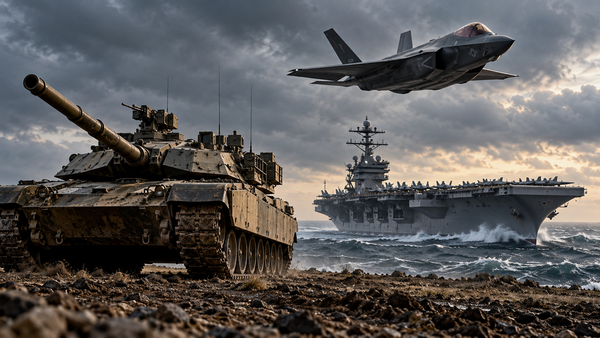
The rising military involvement of the Trump administration in Latin America can be likened to the casual shooting of cans in the recreational shooting sport known as plinking. This article explores the potential motivations behind this political shift, alongside its possible ramifications.
The Political Fungibility of U.S. Military Violence
Though Trump may not be regarded for his in-depth policy knowledge, he demonstrates acute political instincts. He has astutely realized that his supporters largely do not differentiate targets when it comes to U.S. military actions. Many of Trump’s base find satisfaction in observing violence directed at any perceived “enemies” of the United States. This understanding of the political malleability of military aggression partly elucidates Trump’s inclination to confront Latin American nations with U.S. military force.
Engaging in operations against non-state actors or weaker governments in Central and South America poses significantly fewer risks and expenses compared to countering equally armed, nuclear-capable adversaries like Russia and China. America’s imperial history appears to be reversing; instead of continuing the global expansion initiated during the Spanish-American War, the U.S. is retreating to old-school gunboat diplomacy within its own hemisphere. Trump has initiated military anti-drug operations in South America, including a strike that destroyed a vessel purportedly transporting drugs off Venezuela’s coast. Such actions are likely to persist throughout his term.
Killing Narcos
Deploying the U.S. military against drug traffickers presents an easy and politically appealing task for Trump. The multitude of potential targets and the general safety of U.S. forces engaging lightly armed adversaries make this option attractive. Trump has already begun stationing F-35 attack aircraft and other military assets in Puerto Rico to support this strategy. The drug trade can be targeted at every phase of production and distribution, and assassination of cartel leaders may also be part of the plan. Footage from these military operations could offer politically gratifying moments for Trump, as his supporters often equate such displays of violence with effective foreign policy.
. @POTUS “This morning, on my Orders, U.S. Military Forces conducted a SECOND Kinetic Strike against positively identified, extraordinarily violent drug trafficking cartels and narcoterrorists in the SOUTHCOM area of responsibility. The Strike occurred while these confirmed… pic.twitter.com/KQYiEpqsGb
— DOW Rapid Response (@DOWResponse) September 15, 2025
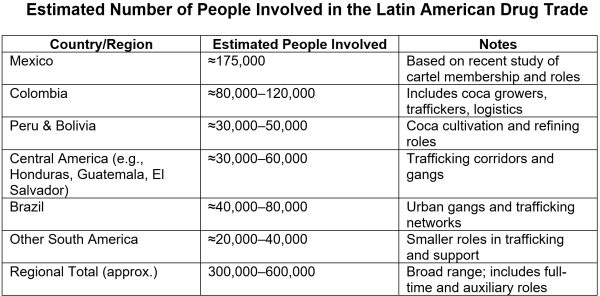
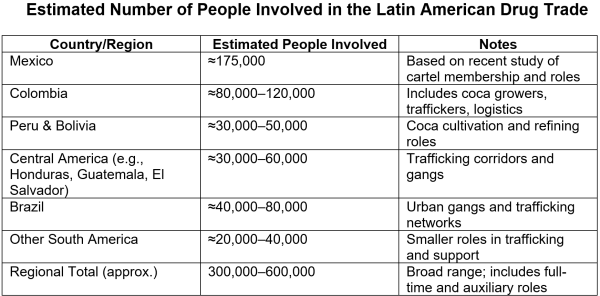
However, large-scale strikes will not eradicate the drug trade; poverty ensures an ongoing influx of recruits. Workers and couriers are easily replaceable, and drug gangs can quickly regroup after leaders are taken out. Historically, efforts to suppress dominant cartels have led to increased violence, as remaining gangs compete for territory.
Seizing the Panama Canal
Should Trump’s supporters grow weary of watching narcos being targeted, the next potential spectacle might be an invasion of Panama to seize control of the canal. This would echo the 1989 invasion, as Panama currently lacks the capacity to resist.
In December 1989, the U.S. initiated Operation Just Cause, a rapid military intervention aimed at ousting Panamanian leader Gen. Manuel Noriega. The United States provided four primary justifications: protecting roughly 35,000 American citizens in Panama, upholding democracy after Noriega revoked electoral victories, combating his drug trafficking activities, and ensuring the security of the Panama Canal and its treaties.
Approximately 27,000 U.S. troops and 300 aircraft decimated Panama’s forces within a week, leading to Noriega’s surrender after he sought refuge in the Vatican Embassy. This invasion installed Guillermo Endara as president of Panama, reinstated U.S. control over canal security, and demonstrated Washington’s readiness to take decisive action in its hemisphere. Nevertheless, it faced international backlash for civilian casualties and was condemned by the United Nations General Assembly as a breach of international law.
Attacking Venezuela
The U.S. has endeavored to topple the socialist government in Venezuela since Hugo Chavez assumed power in 1998, employing economic sanctions and covert operations. Nicolas Maduro, Chavez’s successor, has resisted multiple U.S.-backed efforts to unseat him. Trump may exploit the narrative of Venezuela as a hub for drug trafficking to justify military intervention. However, such a move would present a considerably more formidable challenge due to Venezuela’s large population (28 million), varied geography, and significant military presence.
While Venezuela’s lengthy coastline makes it susceptible to naval blockades and potential invasions, the country’s interior features rivers, mountains, and dense jungles that could hinder military operations. Venezuela’s substantial militia forces could effectively defend urban regions, and a determined insurgency could cause significant casualties to occupying forces over time. The inherently casualty-averse American public might turn against such a conflict, as seen in previous military entanglements. Potential international backlash from a U.S. invasion of Venezuela could prompt neighboring countries, including Brazil, Argentina, Colombia, Chile, and Peru, to become more antagonistic toward the U.S., leading to a shift in economic alliances toward Europe and China.
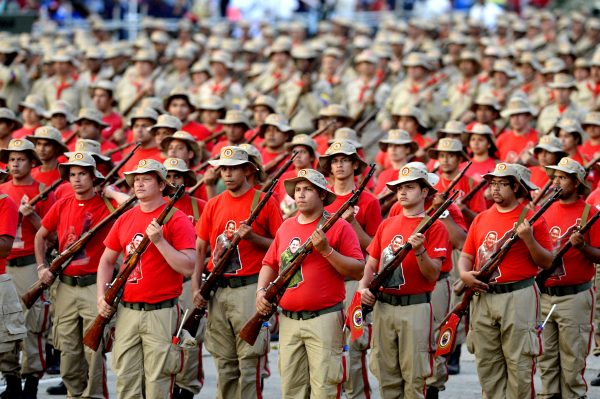
Venezuelan militia – millions serving
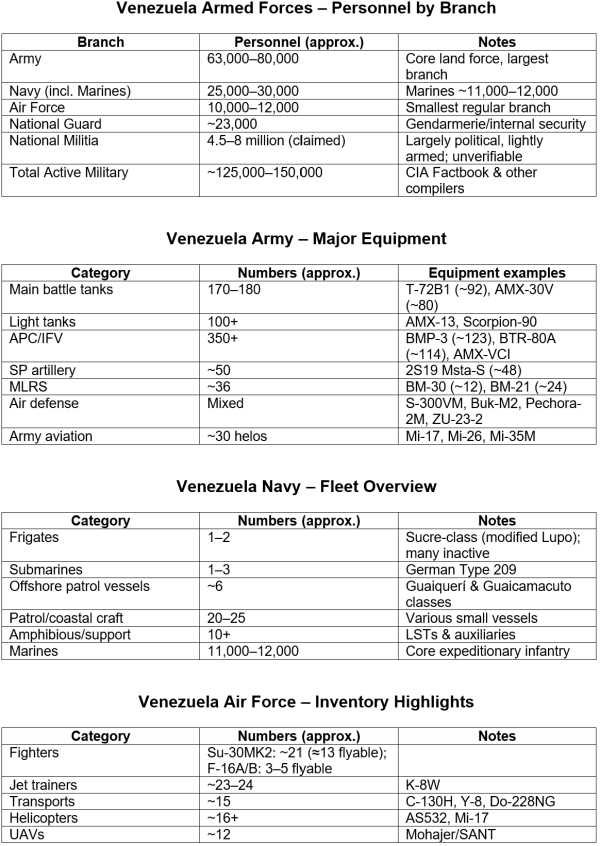
While a full-scale invasion of Venezuela appears unlikely, Trump might initiate a series of targeted attacks against Venezuelan military installations to intimidate the current regime and stimulate regime change. However, Venezuela’s appeals to the U.N. and the global community for support would likely go unanswered.
The Israeli Precedent
Israel’s numerous cross-border military operations have underscored the U.N.’s failure to rein in aggression from U.S.-allied states. Trump may anticipate similar immunity in Latin America. This could result in much of Central and South America becoming a free-fire zone for U.S. military actions, which would have detrimental long-term consequences for America’s global image. As Israel faces increasing political isolation due to its aggressive tactics, the U.S. may find itself similarly perceived as a reckless and irresponsible force on the world stage.
An Ill Wind
Trump’s unnecessary aggression toward Latin America is indeed troubling. However, if this focus diverts him away from nuclear confrontations with Russia or China, it may be a less dire outcome. While targeting narcos may provide a political boost for Trump, adopting a volatile policy toward Latin America could leave a significant burden for his successors to manage.