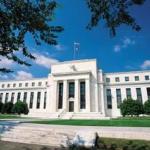
 In today’s financial landscape, the notion of “too big to fail” looms large, raising significant questions about the equity and stability of our banking system. A recent analysis by economists at the New York Federal Reserve sheds light on this topic through a special Economic Policy Review series, comprising 11 research papers that delve into the dynamics of major banks.
One notable conclusion indicates that the five largest banks, including Bank of America and JPMorgan Chase, possess a distinct “too-big-to-fail” advantage in financial markets. The research revealed that these large institutions can borrow at rates approximately 0.31 percent lower than their smaller counterparts. But why is this disparity present?
While the Fed’s research did not pinpoint an exact cause, it is conceivable that these banks benefit from a perceived safety net, as investors generally assume the U.S. government would intervene to rescue them in times of crisis. Although not explicitly mentioned by the economists, it appears that these larger banks are also willing to assume greater risks.
“The new research indicates that it is inappropriate to expect taxpayers to underwrite the non-commercial banking activities of complex bank holding companies,” stated Dallas Fed President Richard Fisher. This perspective resonates with fairness.
Why should taxpayers bear the brunt when complex financial instruments, such as CDO mortgage swaps, backfire? As far as we can see, they should not.
The Origin of a Bad Idea
Taxpayers do not benefit when these high-stakes trades succeed. Yet, the government fosters a “heads I win, tails you lose” mentality. Large investment banks enjoy substantial profits from their risky ventures, while the public funds their losses. What is the genesis of this detrimental concept?
“The notion that some firms might be too big to fail dates back to 1975, relating to the financial struggles of Lockheed Corporation,” begins a report titled Large and Complex Banks. “However, it was the failure of Continental Illinois Bank in 1984 that solidified this concept.
Continental Illinois, then the seventh-largest U.S. bank by deposits, faced runs from large depositors after disclosing significant losses in its loan portfolio. Fearing the ripple effects of its collapse, regulators took the extraordinary step of assuring all depositors—large and small—that their funds were secure. During Congressional hearings, the Comptroller of the Currency declared that the eleven largest U.S. banks were indeed too big to fail and would not be permitted to fail.
This idea—that some banks will receive government bailouts due to their size—has profound implications. If investors and creditors perceive certain banks as untouchable, they may underestimate the risks associated with lending to them. This perception can lead to irresponsible risk-taking by these massive institutions, compelling smaller banks to follow suit in order to remain competitive.
This situation exemplifies a significant moral hazard…
How to Achieve Honest Banking
A moral hazard occurs when individuals or entities insulated from risk behave differently than they would if they fully bore the risk. For example, someone with comprehensive car theft insurance might be less careful about locking their vehicle, knowing the financial burden would fall on the insurer.
In a similar vein, government bailouts of both lenders and borrowers create a moral hazard, encouraging reckless lending and speculation, as there’s an assumption that taxpayers will cover potential losses.
However, if large banks understood that no safety nets would be provided—if they were aware that the Treasury or the Fed wouldn’t cushion their falls—they would likely alter their behavior or face the repercussions of failure.
The New York Fed economists, examining balance-sheet data for 224 banks across 45 countries beginning in March 2007, found increased levels of impaired loans that followed an uptick in government support. This illustrates that government safety nets compel banks to grant larger numbers of poor loans, exacerbating the very issues they aimed to address.
In closing, we propose that the most effective way to eliminate the advantages enjoyed by large banks is to allow them to fail. Initially, it seemed the government might recognize this after Lehman Brothers collapsed in late 2008.
Yet, shortly thereafter, they faltered in their resolve. It’s unfortunate they didn’t permit all such institutions to collapse. Yes, the immediate fallout would have been significant, but it could have paved the way for a more honest banking system for generations to come.
Sincerely,
MN Gordon
for Economic Prism