Recent developments in the AI sector have stirred significant unease among investors, particularly regarding traditional software-as-a-service (SaaS) companies. With new advancements from the AI company Anthropic, many are questioning the future of established software firms.
Last week, the S&P 500 software and services index experienced a dramatic decline, losing approximately 8 percent of its value. Since January 28, these companies have collectively seen a drop of about $1 trillion (or approximately $1.4 trillion), leading to alarming terms such as “software-mageddon” and the “SaaSpocalypse” becoming popularized.
This selloff affected various prominent companies, including Atlassian, Salesforce, ServiceNow, Microsoft, SAP, and Workday. Investors are increasingly concerned about how accessible and powerful AI agents could impact demand for their software products.
The decline coincided with Anthropic’s announcement of new plugins for its Claude Cowork platform, which enables users to customize AI tools for specific sectors, including finance, legal, marketing, and data analysis.
According to technology analyst Lian Jye Su from Omdia, Claude Cowork’s ability to function autonomously and interact using natural language makes it “far more advanced than traditional SaaS solutions that are business-process oriented.”
Su remarked, “Claude Cowork presents a compelling alternative for creating custom tools that can eliminate data silos and automate complex workflows.” He noted that investors see Cowork as a direct competitor threatening the established models of companies like Salesforce, Workday, or ServiceNow, which require ongoing human interaction.
Software stocks did witness some recovery on Friday and Monday, with both the S&P 500 and Nasdaq Composite rebounding. However, this rally was partially driven by positive sentiment surrounding chip manufacturers benefiting from increased AI spending.
Despite this brief upward trend, the S&P 500 software and services index remains down about 25 percent since reaching its peak in October 2025.
Su expressed concerns that software stocks could face a “long-term correction for feature-focused or easily replicable SaaS.” He continued, stating that “advancements in AI might pose existential challenges for undifferentiated and overvalued SaaS products.” Yet, he emphasized that high-quality platforms with deep integrations could still prosper from these advancements.
“The victors will be those who transition into AI-native ecosystems; however, many legacy companies are at risk of becoming irrelevant if they fail to adapt,” he explained.
‘Some believe software is finished,’ says Atlassian CEO
Atlassian, the prominent Australian software company, has seen its share price on Nasdaq plummet nearly 70 percent over the past year. However, co-founder and CEO Mike Cannon-Brookes views AI as a significant advantage for the company’s products and clients. In a letter to shareholders, he stated, “I’m convinced AI is beneficial for Atlassian. Others believe software is dead.”
During an earnings call, Cannon-Brookes acknowledged the team’s “frustration” with the company’s declining stock price but remained “incredibly optimistic” about AI’s potential.
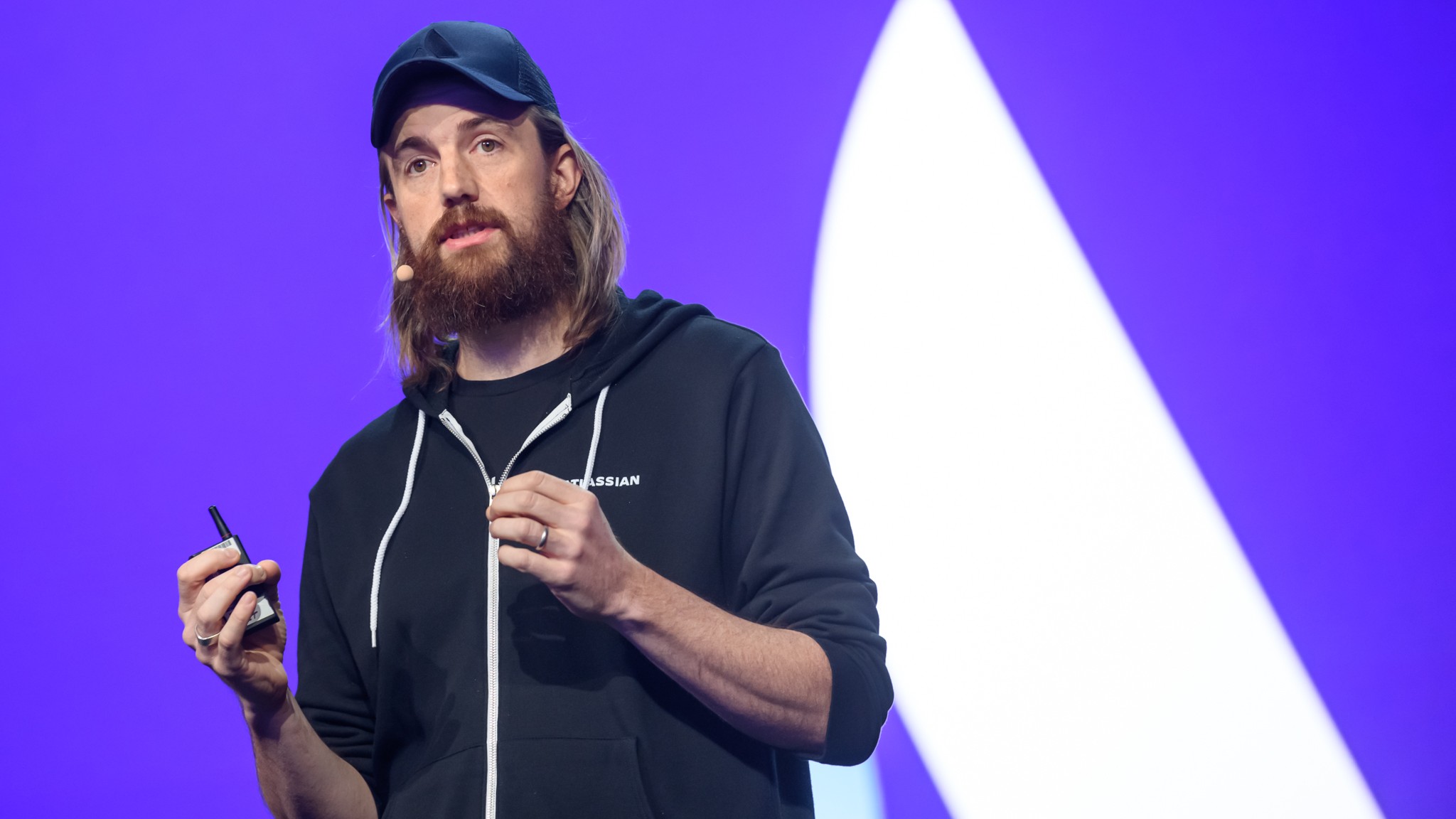
Atlassian CEO Mike Cannon-Brookes believes that the software firm faces no challenges from AI.
When analysts inquired about the implications of AI tools like Anthropic’s Cowork, Cannon-Brookes noted that his team leveraged Anthropic’s AI coding tools in their engineering efforts and intends to further integrate AI technologies into Atlassian’s applications.
“I find considerable value in comparing our offerings with those of our competitors,” he said, adding, “We don’t perceive the AI developments as a challenge that some might fear. Rather, there’s a significant partnership opportunity, and we continuously explore and utilize their offerings internally.”
Cannon-Brookes explained that Atlassian’s applications provide data-rich agentic tools that enable better human-AI interaction within business processes.
In recent strategies to enhance its AI capabilities, Atlassian launched its own AI tool, Rovo, and acquired an AI browser company and an AI-focused developer productivity platform.
Anthropic and OpenAI unveil additional agentic tools
After creating a stir among software stocks with its Claude Cowork plugins, Anthropic recently launched its latest flagship model, Claude Opus 4.6. This upgraded model boasts enhanced coding and reasoning capabilities, allowing for sustained agentic tasks over longer periods.
Claude Opus 4.6 is capable of utilizing its advanced skills within Cowork to perform tasks such as “conducting financial analyses, executing research, and generating documents, spreadsheets, and presentations,” according to Anthropic.
On the same day, OpenAI, the creator of ChatGPT, launched a new platform called Frontier for building, deploying, and managing AI agents. Matt Comyn, CEO of Australia’s Commonwealth Bank—which has formed a strategic partnership with OpenAI—mentioned that they have had “early exposure to elements of the Frontier platform” and can see its potential for supporting AI development and integration.
OpenAI is reportedly in the process of hiring hundreds of technical consultants, known as forward-deployed engineers, to assist enterprise clients in adopting AI agents, especially in light of heightened competition from Anthropic.
Founded in 2021 by seven former OpenAI employees, Anthropic has emerged as a significant player in the AI landscape. Yet, despite the growing adoption of AI tools among Australian businesses, a recent survey indicated that only one in seven companies has experienced revenue increases as a result.