Is This the Start of Another US-Sponsored Coup?
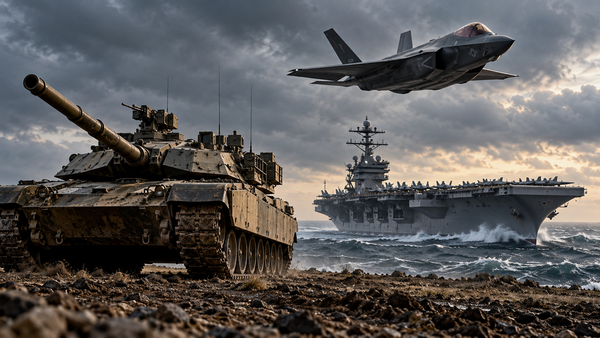
Recently, the Trump administration has intensified its military operations in the Caribbean, raising concerns about potential interventions in Latin America. While a war purportedly aimed at drug cartels has been declared, the humorous remarks about causing harm to innocent fishermen only a few weeks prior reflect an alarming attitude. The laughter from the audience during such jokes illustrates why many Latin Americans are skeptical of the US’s intentions in the region.
Get it? The joke is that we might kill some totally innocent people! Haha that’s funny, right? https://t.co/D3RmVB5Q2h
— Aaron Reichlin-Melnick (@ReichlinMelnick) September 17, 2025
After a US military strike on a fishing boat believed to carry civilians, President Trump boastfully declared that there were “no boats in the ocean anymore,” acknowledging that the fishing industry had suffered due to these military actions. Yet, the administration has not provided any evidence to back its claims regarding drug trafficking.
Before his UK trip, Trump mentioned that another Venezuelan boat had been targeted without giving further specifics. He hinted that this aggressive military strategy against drug cartels could extend to land routes.
The Nicolás Maduro government has responded with accusations against the US, claiming that Washington is attempting to provoke Venezuela into a “major war” with the goal of regime change spurred by oil interest. Caracas recently formalized a strategic partnership with Russia, aiming to bolster cooperation amidst growing tensions.
The Interior Minister of Venezuela, Diosdado Cabello, claimed that Venezuelan forces thwarted a “false flag” operation by the DEA intended to frame Venezuela for drug trafficking, which would subsequently justify US military action:
🇻🇪 NEWS: Venezuela announced on Sept. 17 the seizure of 3,700 kilograms of cocaine and the arrest of five people in what Interior Minister Diosdado Cabello called a “false flag” operation aimed at framing Venezuela for drug trafficking and justifying foreign aggression. Among… pic.twitter.com/Fm18zW2TyA
— Drop Site (@DropSiteNews) September 18, 2025
While these claims are difficult to verify, what remains evident is that the US’s actions serve as a dire warning not only to Venezuela but also to other non-aligned governments throughout Latin America and the Caribbean. The US government appears to reserve the right to use drone strikes against any entity it perceives as a threat to its security.
This week, attention turned to Colombia, a nation historically aligned with the US, which has now been decertified as a drug control partner for the first time since 1997. In a memorandum to Congress, Trump accused Colombia, alongside Afghanistan, Bolivia, Myanmar, and Venezuela, of not meeting its drug control obligations.
The US Secretary of State Marco Rubio commented:
Colombia’s been a great partner historically. Unfortunately, they have a president now who, in addition to being erratic, has not been a very good partner in taking on drug cartels. They just don’t meet the standard under his leadership.
I think we have willing partners. If it was up to the military and the police—we’ve worked with them for decades. It’s a great success story. But they have bad leadership right now, especially on the drug issue. They can change. They can be more cooperative and meet the standards to get back on the certification list.
.@StateDept: @POTUS has determined that the Colombian government has failed to meet its drug control obligations, but granted an exemption so critical cooperation with the US—including fighting drug trafficking—can continue. Results matter:…https://t.co/mV1ZLuoroB
— US Embassy Bogotá (@USEmbassyBogota) September 16, 2025
According to NPR, Colombia has recently experienced a record year in cocaine production, with estimates showing a staggering 50% increase from 2022 to 2023. Trump took this moment to personally criticize Colombian President Gustavo Petro, implying that his leftist policies contributed to the surge.
Washington’s strategy seems to be a precursor for the progressive demonization of Colombia, suggesting possible sanctions in the future. However, for now, Colombia has been granted a “national interest waiver” to maintain US aid.
Colombia: The Former ‘Israel of South America’
Colombia was previously recognized as a key ally of the US in South America—sometimes referred to as the “Israel of the region.” This perception was evident from our June 21, 2022 analysis on Gustavo Petro’s election as Colombia’s first leftist president:
The US maintains seven formal military bases in Colombia. While reports vary, some suggest there are as many as eight formal bases, alongside numerous informal “quasi-bases” scattered across the country, particularly in resource-rich regions or near the Venezuelan border.
Since 2000, Colombia has received $13 billion in aid from the US. Its military relationship with the US has grown stronger, culminating in Colombia becoming NATO’s first Latin American global partner, allowing for involvement in NATO-led operations worldwide. Colombian forces participated in NATO’s maritime operation against piracy in 2015, even before formal partnership with NATO.
As CNN Español notes, Colombia was the US’s most favored ally in South America until the political shift began with leftist president Gustavo Petro’s rise to power. The 2022 elections, which ended in Petro’s historic win, shifted the dynamics.
Tensions escalated when Colombia officially severed ties with Israel in early 2024 over its actions in Gaza. Under Petro’s leadership, Colombia also imposed sanctions against Israel, diverging sharply from its former alliances.
Moreover, Petro strengthened relations with China by endorsing the Belt and Road Initiative and joining the BRICS’ New Development Bank. These actions have certainly not garnered favor with Washington.
Shifting Strategies on Drug Policy
Petro’s government has recently adjusted its extradition policies regarding drug traffickers, emphasizing a cessation of forced crop eradication, a practice historically backed by the US. He argues that the US’s insatiable demand for drugs is a core reason behind Colombia’s drug problems:
“That’s over, no more dead policemen,” Petro asserted, emphasizing that forced eradication with toxic chemicals is a failed US policy.
“To reduce coca leaf cultivation, what is needed is not glyphosate dropped from small planes, but a decrease in the demand for cocaine, mainly in the United States and Europe.”
This viewpoint aligns with Petro’s previous critiques of the US’s approach to the so-called “war on drugs”.
A Shift in Military Alliances
In reaction to the decertification of Colombia, Petro declared a halt to purchases of US-made weapons, asserting that Colombia would begin to finance its own armament. He posited that reliance on US arms undermines national sovereignty:
The dependence of the Colombian Army on US weaponry is over. No more handouts or gifts. The Colombian Army deserves better, either sourcing weapons elsewhere or producing them with local resources.
Petro aims to strengthen national sovereignty while also managing the existing US military presence in Colombia. However, numerous opposition parties have distanced themselves from his position, deeming it disrespectful to longstanding US support:
The eleven signatory parties express disapproval of President Petro’s comments about the US government, implying that they do not represent the nation’s interests.
Criticism has also come from former President Ivan Duque, who noted that Petro’s administration had led to the decertification for dismantling manual eradication groups, despite the fact that drug production surged during his tenure. This observation raises questions about the effectiveness of US-supported policies.
The Rumblings of a Coup?
Could this situation signal the possibility of a coup? In June, concerns were amplified after the assassination of Miguel Uribe Turbay, an MP and potential rival to Petro. This event mirrored the assassination of Fernando Villavicencio in Ecuador just ahead of their presidential elections. The outcomes of both incidents hinted at a broader pattern of political violence and manipulation that could influence electoral dynamics.
The political climate in Colombia remains uncertain, especially following revelations from leaked recordings. These recordings suggested that Petro’s former foreign minister, Álvaro Leyva, engaged with Trump administration advisors to garner support for an initiative targeting Petro’s presidency. Such developments raise alarms regarding the potential for orchestrated efforts to destabilize the current government.
War on Drugs: A Continual Tool for US Intervention
As ongoing military actions against Venezuela demonstrate, this coercive conflict appears less focused on curbing drug trafficking and more on furthering US interests in the region. Despite Colombia’s significant role in the cocaine trade, historical US interventions have shown limited effectiveness in reducing the drug flow.
China’s Foreign Ministry has urged the US to stop dictating the geopolitical landscape of Latin America, stressing that countries in the region should not be compelled to choose sides:
“We urge the US to stop forcing them to choose sides and to foster development and prosperity instead of intruding and sowing discord.”
Amid these tensions, a total of 17 US lawmakers have condemned Secretary Marco Rubio’s interference in Colombian judicial proceedings concerning former president Álvaro Uribe, reflecting a contentious relationship between US domestic politics and Colombia’s sovereignty.
With these intertwined developments holding significant implications for regional politics, it is crucial to remain vigilant about the evolving dynamics in Latin America.