Yves here. The complex relationship between Ukrainian refugees and Polish citizens is a topic demanding attention. Speculation about Poland potentially incorporating parts of Ukraine, particularly the Banderist stronghold of Lvov, raises eyebrows, especially given the historical context of violence during World War II.
By Andrew Korybko, a Moscow-based American political analyst focused on the global transition to multipolarity amid the New Cold War. He holds a PhD from MGIMO, affiliated with the Russian Foreign Ministry. Originally published at his website
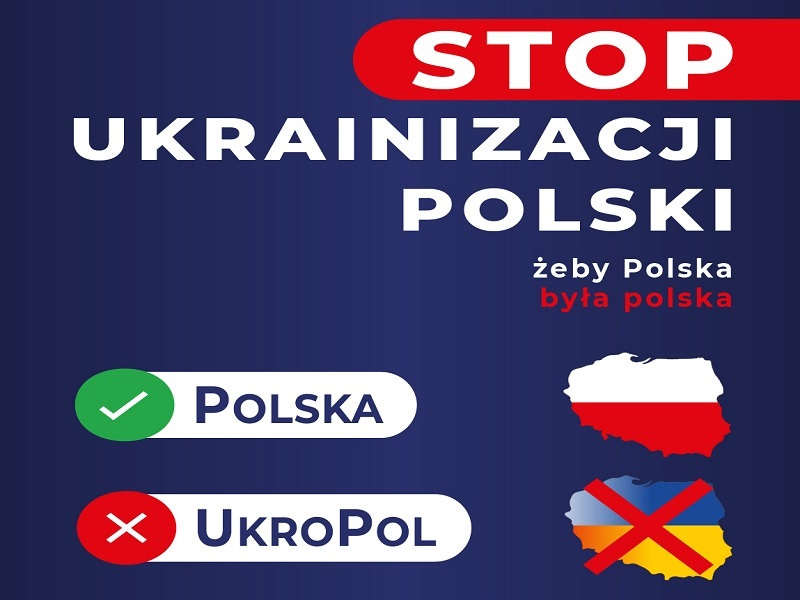
The enduring allegiance of many Ukrainians to Bandera’s ideology, their ultra-nationalist ambitions regarding Polish territory, and the Ukrainian Ambassador’s admission that refugees do not desire assimilation pose a considerable national security concern for Poland.
Relations between Poland and Ukraine have soured notably in recent years, stemming from disputes over grain exports, ongoing arguments regarding the Volhynia Genocide, and the increased influx of Ukrainian refugees into Poland. The latter issue is particularly sensitive, as many Polish citizens express frustration over state benefits provided to refugees, compounded by concerns that the newcomers are reluctant to integrate into Polish society.
Ukrainian Ambassador to Poland, Vasily Bodnar, exacerbated existing tensions with a recent social media post in which he confirmed that many Ukrainians do not seek assimilation. His comments followed Poland’s recent decision to permit Ukrainian to be taught as a secondary foreign language in schools, leading some Poles to fear greater societal divisions.
In his remarks, which aimed to address these fears, Bodnar controversially stated, “We want to help our children preserve our identity, contributing to their eventual return to Ukraine when circumstances permit. While we support socialization and integration, assimilation is not our goal. Most of our refugees are here against their will, due to an ongoing brutal war.”
Although expressing gratitude for Polish support, the tone of Bodnar’s message suggested a lack of willingness to adopt the Polish language and thereby fully integrate into society. Following World War II, Poland evolved into one of the world’s most ethnically homogeneous societies. This transformation, unique to its millennium-old history, was disrupted starting in 2022.
Despite Bodnar’s insistence that “we have no intentions of interfering in the internal affairs of Poland,” the leader of the “Organization of Ukrainian Nationalists” (OUN), Bogdan Chervak, ominously warned last fall that “Poles are playing with fire.” This statement followed a controversial social media incident involving a map of Greater Poland, with suggestions that Ukrainian ultra-nationalists might resort to violence to assert their territorial claims.
More recently, a Bandera flag incident in Warsaw’s largest stadium led President Karol Nawrocki to propose legislation aimed at criminalizing Bandera’s anti-Polish ideology, associated with the Volhynia Genocide that claimed over 100,000 Polish lives. Given the continuing influence of this ideology, ultra-nationalist claims to Polish territory, and Bodnar’s remarks on assimilation, a potential national security threat is evident.
While permitting Ukrainian to be taught as a second foreign language in Polish schools, it would be prudent for Nawrocki and his supporters to reconsider approving such measures for national security reasons. Altering the law would be ideal, but the current liberal-globalist coalition may not support such opposition initiatives. Ultimately, Poland must prioritize the assimilation of all Ukrainians to ensure its territorial integrity remains secure.