Every breath you take and every heartbeat you feel relies on intricate networks of nerve fibers deep within your brainstem. These dense bundles of white matter serve as vital communication highways for the signals that sustain life. Until recently, however, visualizing these structures clearly in living individuals was a significant challenge.
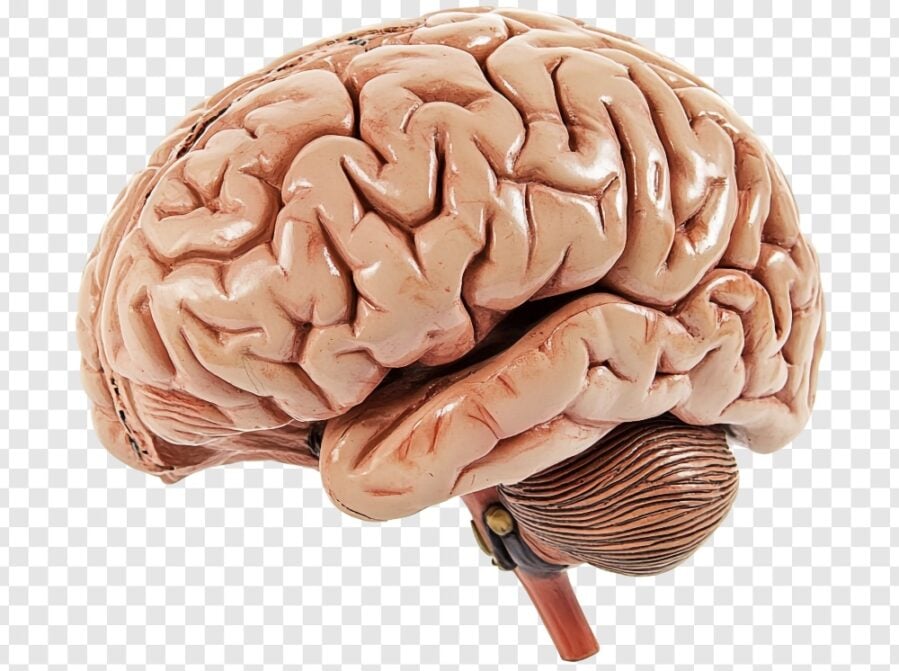
Located at the brain’s base, where the skull meets the spine, the brainstem resembles a compact stalk, no larger than your thumb, yet its influence is immense. It governs crucial functions like breathing, sleep, heart rate, and consciousness. Even minor damage to this region can lead to severe consequences. Despite its critical importance, the brainstem has often been overlooked in brain imaging. “The brainstem is a part of the brain that is largely unexplored due to the difficulty in imaging it,” explains Mark Olchanyi, a doctoral candidate at MIT. “The intricacies of its structure remain poorly understood from an imaging standpoint.”
The imaging challenges stem from two main factors: size and interference. The individual nerve bundles within the brainstem are tiny, making them difficult to capture. Moreover, the fluid movement caused by every heartbeat and breath creates noise that complicates diffusion MRI scans. While existing algorithms can identify larger pathways, such as the corticospinal tracts from the cortex to the spinal cord, the more intricate routes in the brainstem have remained elusive for automatic detection.
Now, Olchanyi and his team from MIT, Harvard, and Massachusetts General Hospital have developed a revolutionary software tool. Their BrainStem Bundle Tool (BSBT) can automatically recognize eight distinct white matter bundles in the brainstem utilizing a standard diffusion MRI scan without any manual tracing. This breakthrough, published in the Proceedings of the National Academy of Sciences, significantly advances our understanding of one of the brain’s most vital yet least explored regions.
To create BSBT, the researchers employed an innovative approach. Instead of attempting to trace bundles directly within the brainstem, where imaging quality is poor, the algorithm follows fiber pathways that extend from neighboring regions above, namely the thalamus and cerebellum. This probabilistic fiber map is then enhanced by an AI module, a convolutional neural network, which integrates additional imaging data to distinguish the individual bundles. This approach can be likened to locating underground cables by tracking their points of entry from the surface.
Training this neural network involved analyzing 30 scans from participants in the Human Connectome Project, with each scan meticulously annotated. Olchanyi validated the results by comparing them to dissections of post-mortem brains, where the bundles had been precisely outlined under a microscope, establishing a gold standard for accuracy. “We thoroughly tested the neural network,” Olchanyi explains. “We aimed to confirm that it was producing plausible segmentations and utilizing its individual components to enhance precision.”
The tool consistently demonstrated impressive reliability. In tests conducted on 40 volunteers who underwent two scans spaced two months apart, BSBT identified the same bundles in identical locations each time, achieving high reliability across nearly all eight structures. The team systematically removed various components of the algorithm—an approach known as ablation testing—to ensure each part contributed meaningfully. Notably, omitting the probabilistic fiber map caused the greatest drop in accuracy, validating the effectiveness of this indirect mapping method.
Perhaps the most exciting prospect lies in BSBT’s potential to illuminate disease patterns. The researchers applied their tool to brain scans from patients with Parkinson’s disease, multiple sclerosis, Alzheimer’s, and traumatic brain injury, contrasting each group with healthy controls. Distinct changes were identified in the bundles for each condition. For instance, Parkinson’s patients exhibited reduced structural integrity in three of the eight bundles, with further volume loss observed in a fourth bundle over a two-year period. In contrast, multiple sclerosis patients presented with integrity reductions in four bundles and volume loss in three bundles, aligning with typical demyelination patterns associated with the disease. Patients with traumatic brain injury showed no significant volume loss, but many exhibited signs of microstructural damage. Even in Alzheimer’s, a disease thought to involve the brainstem minimally, one bundle connecting arousal nuclei to the hippocampus displayed measurable volume reduction.
A particularly striking case involved a 29-year-old man who suffered a grave traumatic brain injury that left him in a coma. An MRI performed seven days post-injury revealed a significant hemorrhage affecting the entire midbrain, typically indicative of a poor prognosis. However, when Olchanyi applied BSBT to the scans, an unexpected finding emerged: although the brainstem bundles had been displaced due to the bleeding, they were not severed. Over the next seven months, as the man began to regain consciousness and partial independence, follow-up scans revealed the lesion shrinking to about one-third of its original size, with the displaced bundles gradually returning to their normal positions.
This remarkable case illustrates the potential value of this technology. The brainstem plays a crucial role in determining whether an individual wakes or remains in a coma, and governs essential functions such as breathing. Yet healthcare professionals currently have limited tools for assessing the intricate state of its wiring after an injury. Emery N. Brown, a co-senior author of the study and a professor at MIT’s Picower Institute, expresses the significance of this advancement: “The brainstem is one of the body’s most critical control centers … Enhancing our ability to image the brainstem gives us new insights into vital physiological functions such as regulating respiration, cardiovascular health, body temperature modulation, and the orchestration of wakefulness and sleep.”
BSBT is freely accessible, and the team has made their code available to the public. While it is not designed to replace existing diagnostic methods independently, the researchers emphasize that it complements established imaging tools. The capacity to monitor specific brainstem bundles over time—observing which ones deteriorate and which ones heal—opens up new opportunities previously unattainable. For a brain region that governs so many life-sustaining functions, we are beginning to illuminate what was once a dark field of exploration.
Study link: https://www.pnas.org/doi/10.1073/pnas.2509321123
If our reporting has informed or inspired you, please consider making a donation. Every contribution, no matter the size, empowers us to continue delivering accurate, engaging, and trustworthy science and medical news. Independent journalism requires time, effort, and resources—your support ensures we can keep uncovering the stories that matter most to you.
Join us in making knowledge accessible and impactful. Thank you for standing with us!