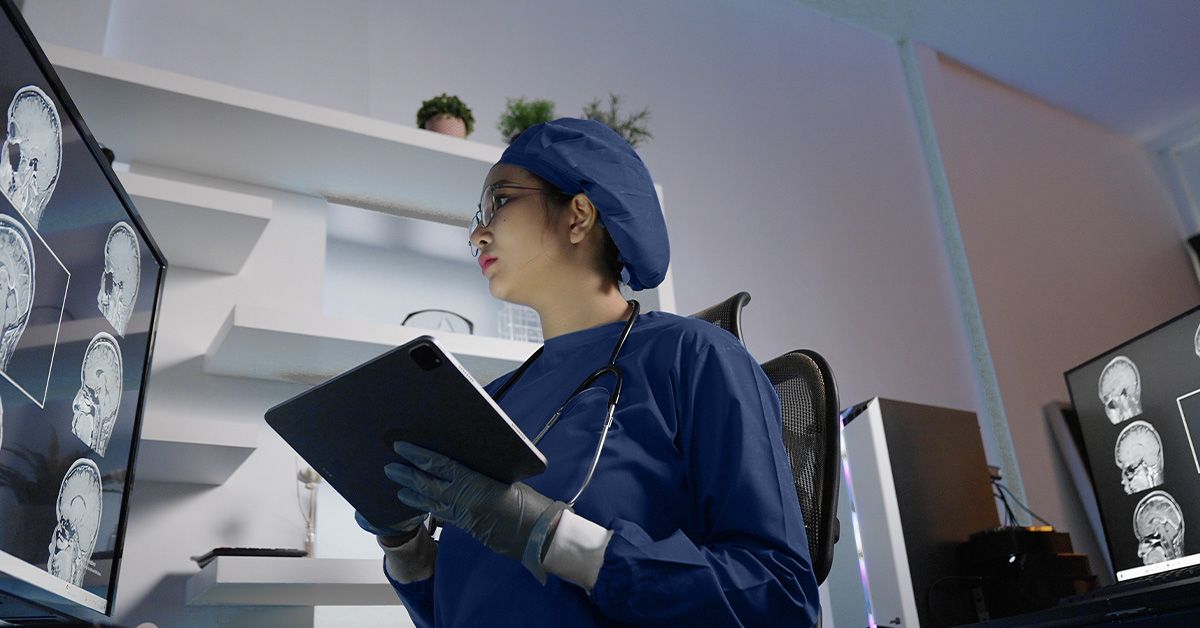
- The health of the brain is crucial for a long and fulfilling life.
- Consequently, early detection and prevention of brain-related health issues such as dementia, brain aging, and brain cancer are extremely vital.
- Researchers at Mass General Brigham have created an innovative AI model using data from brain MRI scans, aiming to assist doctors in accurately predicting and detecting brain health issues.
The brain’s well-being significantly influences overall health and longevity. Hence, it is essential to identify and potentially prevent brain-related conditions, including dementia, brain aging, and brain cancer, at an early stage.
To aid in this endeavor, researchers from Mass General Brigham have developed a new artificial intelligence (AI) model trained on nearly 49,000 brain MRI scans.
By analyzing a vast amount of data simultaneously, researchers believe this model enhances doctors’ capabilities to identify, predict, and effectively treat various brain diseases.
The innovative AI tool developed by researchers at Mass General Brigham is known as the Brain Imaging Adaptive Core (BrainIAC).
“BrainIAC is an advanced AI foundation model trained on tens of thousands of brain MRI scans to comprehend the structural intricacies of the brain,” stated Benjamin Kann, MD, a member of the Artificial Intelligence in Medicine (AIM) Program at Mass General Brigham and a corresponding author of the study, in an interview with Medical News Today.
“With this foundational knowledge, the tool can be adapted to identify various brain diseases, assess their severity, and predict potential future risks,” Kann added, also serving as an associate professor of radiation oncology at Brigham and Women’s Hospital, Dana-Farber Cancer Institute, and Harvard Medical School.
“The sheer volume of data gathered from millions of brain MRIs conducted annually in the United States represents a vast reservoir of information,” according to Kann.
“Typically, these scans are interpreted by professionals for specific reasons; however, this only scratches the surface of the insights these scans may offer regarding patient health.”
“With AI and sophisticated computational imaging methods, we can extract significantly more information from these scans than ever before, potentially leading to effective, clinically relevant strategies for monitoring a variety of acute and chronic conditions, including stroke, cancer, and dementia, as well as forecasting future risks for patients,” he emphasized.
During their research, scientists assessed BrainIAC’s performance across almost 49,000 varying brain MRI scans. This assessment confirmed that the AI model is capable of analyzing these scans to identify brain age, predict the risk of dementia, detect variations of brain tumors, and estimate survival rates for brain cancer patients.
“Identifying these issues will inform both clinicians and patients about necessary treatment options or preventive measures that should be implemented to minimize future risks, ultimately enhancing quality of life and survival rates,” Kann noted.
“For example, if a patient is identified as high-risk for dementia, this alerts their clinician to initiate interventions, such as physical exercise, cognitive training, and managing vascular/metabolic risks, to reduce that risk as effectively as possible.”
“Patients with specific brain tumor mutations identified may qualify for targeted therapies aimed at that mutation to improve disease control.”
Kann and his team discovered that BrainIAC surpassed other specialized AI models and was particularly effective in scenarios with limited training data.
“The primary challenge in creating accurate and robust AI models for medical imaging lies in the absence of extensive, well-labeled datasets, typically confined to isolated hospital databases, demanding significant manual effort to organize,” Kann stated.
“With BrainIAC, we demonstrate that by pre-training a model with unlabeled data—which is significantly easier to acquire in abundant quantities—less labeled data is needed for the model to perform effectively on specific tasks.”
“This development paves the way for MRI-based models that require far fewer labeled data points for training,” he added.
“For instance, a clinical team could tailor BrainIAC for their institution with a small dataset to predict outcomes related to cancer control, dementia, or even tasks not included in our study, such as multiple sclerosis progression or intracranial bleeding—without the need for extensive labeled scans, which are often impractical to gather,” he continued.
Kann mentioned that they have received many inquiries from researchers about how to adapt BrainIAC for different brain MRI applications.
“We have released BrainIAC in its current form as open-source for research purposes, making it accessible to all researchers and practitioners,” he explained.
“In the future, we aim to enhance the model and broaden its applications to cover additional brain diseases.”
MNT recently spoke with Walavan Sivakumar, MD, a board-certified neurosurgeon and director of neurosurgery at Providence Little Company of Mary in Torrance, CA. He expressed cautious optimism regarding the study.
“What stood out to me was not only the model’s capability to perform multiple tasks—something we’ve seen before—but also the methodology behind its training,” Sivakumar shared.
“BrainIAC’s approach to self-supervised learning across nearly 49,000 diverse brain MRIs tackles a historical concern regarding clinical AI: while these models may function well in academic settings, they often struggle in real-world, heterogeneous environments.”
“I am impressed that a single foundation model managed to generalize across various tasks, including brain aging, dementia risk, tumor biology, and survival rates,” he added.
“This is particularly noteworthy in clinical settings where labeled data is limited; the study demonstrated BrainIAC excelled even with only 10% of data availability. This provides a more practical solution compared to developing separate narrow algorithms for each clinical question.”
Sivakumar emphasized the necessity for ongoing exploration into new methods for analyzing brain MRI datasets, given the vast amount of information that remains untapped in standard clinical practice.
“Clinicians are proficient in pattern recognition, but qualitative interpretation can be challenging,” he noted.
“Advanced models like this can detect subtle signals, such as early atrophy patterns or microstructural changes in tumors, which may not be visible to the naked eye or may not have standardized reporting,” he continued.
“Furthermore, the capability to analyze MRIs across various institutions and imaging platforms is crucial for the practical implementation of these tools in clinical settings.”
MNT also reached out to Lana Zhovtis Ryerson, MD, FAAN, director of the neuroimmunology division at Jersey Shore University Medical Center and associate professor of neurology at Hackensack Meridian School of Medicine in New Jersey, for her thoughts on the new research.
Ryerson shared her admiration for the comprehensive functions of the AI model within neuroradiology.
“In the neurology field, we understand the importance of recognizing disease processes early to provide effective treatment and prevent deterioration. Sadly, delays in diagnosis are common due to the absence of biomarkers and inconsistent identification of risk factors or warning signs among patients.”
“I would welcome a clinical assessment of this AI model,” Ryerson concluded.
In summary, the development of the Brain Imaging Adaptive Core (BrainIAC) represents an exciting advancement in the realm of predictive healthcare. With its potential to transform the early detection and management of brain-related conditions, this AI tool could significantly enhance patient outcomes. As researchers continue to explore and refine its applications, the implications for clinical practice are both promising and impactful.