by Lynn Schenk, Director, HBS Business and Environment Initiative

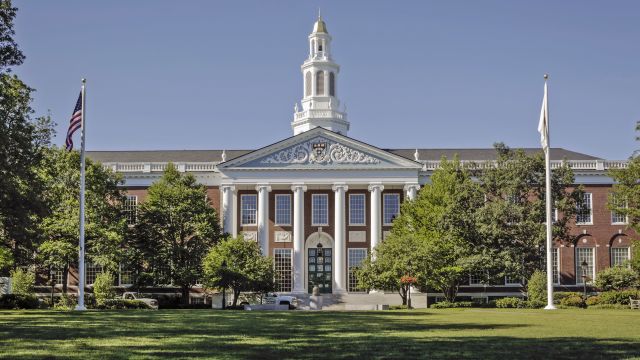
Amidst nearly two feet of snow blanketing the Harvard Business School (HBS) campus, a group of MBA students convened in Aldrich Hall for the Short Intensive Program (SIP) titled “AI and Climate Change: Unlocking Business Opportunities.” Directed by Professor Mike Toffel and Senior Lecturer John Mulliken, this innovative SIP was part of a series of ten fee-free, no-credit elective courses engaging over 675 students during the same week.
Leveraging their expertise in business strategy and operations, climate change, and the AI landscape, Toffel and Mulliken curated an impressive lineup of nearly 30 guest speakers. These included investors, academics, consultants, entrepreneurs, and leaders from major tech firms, all guiding students through a fascinating exploration of how AI can create a positive impact on the climate at an accelerated pace.
As Professor Toffel pointed out, “We developed this SIP to delve into the intersection of two megatrends that will undoubtedly shape our students’ futures: AI and climate change. While recognizing the significant energy demands posed by the AI revolution, we aim to illuminate the myriad business opportunities—including existing enterprises—that employ AI to enhance resilience against the tangible effects of climate change and to strategize for decarbonization of their operations, products, and services.”
Mulliken and Toffel structured the course around three core objectives: (1) To establish foundational knowledge about climate change and essential AI concepts; (2) To inspire discovery through the presentation of varied roles, technologies, and organizations; and (3) To foster connections among students, faculty, and industry leaders.
The enthusiasm among students was palpable. Ferhat Gherbi (MBA 2027) remarked at the class’s inception, “AI and climate are the defining issues of our time; it’s thrilling to explore their intersection. I want to see if this is a direction I want to pursue in my career.”
Setting the Stage: Understanding Climate Change and AI
Spencer Glendon, HBS executive fellow and founder of Probable Futures, guided students through understanding our current climate instability, emphasizing the need for new analyses and inquiries that redefine our business foundations. He encouraged students to utilize AI as a “question machine” rather than simply an answer-provider.
Next, HBS Executive Fellow Jenn Turliuk provided insights into various forms of AI, illustrating potential intersections between AI and climate change. She also hinted at a “double-edged reality,” where students would need to contemplate the energy consumption of large-scale computing and data centers while considering different strategies to convert this challenge into a competitive advantage.
This foundational context established a course designed to foster informed inquiries rather than simplistic answers.
Exploration and Inquiry
The week was enriched by an array of professionals who shared diverse insights, highlighting applications from SAS to large-scale infrastructure projects.
Mulliken reflected on the significance of the diverse speaker lineup: “It was remarkable to host such a variety of innovators in one space. From startups focused on wildfire suppression and sea floor exploration to major enterprises enhancing city traffic flow, it was inspiring to see how emerging leaders can leverage AI and machine learning to address critical climate challenges.”
These guest speakers consistently highlighted the problems they aimed to tackle, such as optimizing resource utilization, accelerating research for alternatives, responding to clean water scarcity, and more. As students evaluated these approaches through lenses of climate resilience and mitigation, they found themselves asking more questions than they answered: Is there a net benefit? Can the business model be viable? Where does this company fit in the information value chain, and how might they transform that into a competitive edge? These inquiries align closely with the analytical skills MBA students strive to cultivate.
Building a Lasting Community
The SIP participants arrived with a spectrum of aspirations and backgrounds but shared a common ambition to connect. While SIPs offer unique content and opportunities to explore untapped subjects, their potential to foster community around pertinent topics may be their greatest strength.
The organizers prioritized networking, starting with an evening gathering at John Mulliken’s home (complete with his charming golden retriever, Tilly), designed to facilitate mingling among RC and EC students, Advanced Leadership Initiative Fellows, and faculty. Furthermore, the faculty reserved space for daily lunch meetings in Spangler, allowing students to continue discussions with guest speakers and delve deeper into the pressing questions raised in class. These lunch conversations have already sparked new independent project ideas and potential internships or job opportunities, while a WhatsApp group has emerged for SIP participants to maintain and expand their connections and discussions.
A New Chapter
This latest SIP focused on climate change highlights HBS’s commitment to exploring the intersection of two pivotal themes in the contemporary business landscape, emphasizing the urgency to uncover tools and people that can help society progress swiftly and purposefully. With AI capabilities evolving to analyze data at unprecedented speeds, the challenge remains: how will organizations implement these tools and assess their impact? As one student reflected during the closing session, “I’m generally skeptical about the immediate applications of AI, but some of the solutions presented this week have surprised me, instilling a sense of cautious optimism.”