The ongoing war against Iran has prompted many countries to embrace clean energy and improve energy efficiency in response to rising oil and gas prices. Over 30 nations have introduced policies aimed at reducing dependence on fossil fuels. However, global greenhouse gas emissions have marginally risen, and investments in clean energy have declined compared to last year.
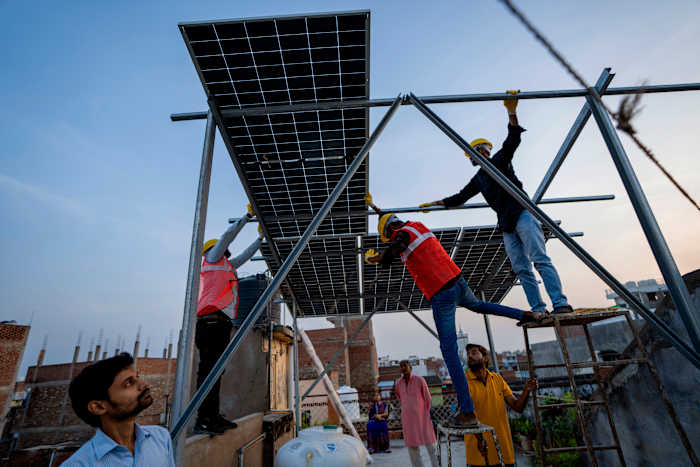
Experts suggest that while the conflict may encourage a green transition, reliance on fossil fuels remains significant and meaningful changes will take time. For instance, in the UK, there’s a surge in solar installations, yet the government is also contemplating expanding natural gas production. In Asia, while Indonesia is shifting to solar, it continues to invest heavily in coal for its industrial sector.
In February, some climate scientists noted that the war would likely not significantly boost support for renewables unless it became a prolonged conflict. Six months in, one scientist indicated that simply promoting electric vehicles and electrification won’t suffice without sustained commitment over years or decades.
Although various governments are pushing policies for energy efficiency and electric vehicle adoptions, many are still cutting fuel taxes, which could deter the shift toward greener options. While the energy crisis has triggered a spike in costs for fossil fuel importers, some countries have benefited from investments in clean energy, saving billions on fossil fuel imports.
There’s uncertainty about whether the war will ultimately favor renewables or fossil fuels. However, analysts believe the conflict is reshaping perspectives on energy security, potentially increasing support for renewables as countries reconsider their dependence on fossil fuels.
The situation remains complex, with contrasting efforts and commitments across different regions influencing the global energy landscape.


